10 Best Architectural Printers 2026 in the United States

Related Products
Up to 10% off

Our technology thoroughly searches through the online shopping world, reviewing hundreds of sites. We then process and analyze this information, updating in real-time to bring you the latest top-rated products. This way, you always get the best and most current options available.

Our Top Picks
Winner
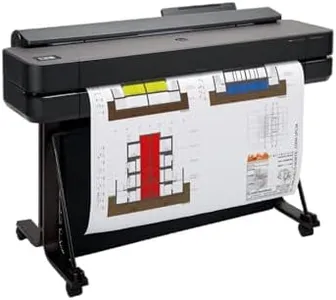
HP DesignJet T650 Large Format 36-inch Plotter Printer, Includes 2-Year Onsite Warranty Support (5HB10T) - New Model
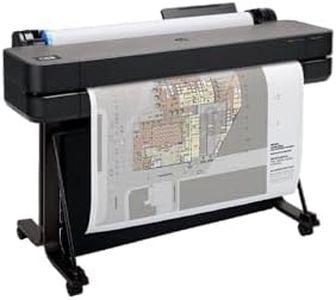
The HP DesignJet T650 is a large-format printer designed for architects, engineers, and construction professionals who need precise, sharp prints for technical drawings, maps, and posters. It supports wide media rolls up to 36 inches and sheets up to 13x19 inches, with automatic switching between sheet and roll feeding, plus a built-in cutter to streamline workflow. The print resolution is a strong point at 2400 x 1200 dpi, ensuring detailed line work and crisp text, which is essential for architectural plans. It prints at a moderate speed of around 2.4 pages per minute for both color and black-and-white, equating to about 82 A1-size prints per hour, balancing quality and productivity well for most office environments.
The printer uses HP's pigment and dye-based 712/713 ink cartridges, designed to deliver durable, vivid prints while also being cost-efficient—maintenance ink consumption is notably low compared to some competitors, helping to reduce ongoing expenses. Connectivity options are versatile, including Wi-Fi, USB 2.0, and Gigabit Ethernet, enabling easy integration into various office setups and remote management through the HP Smart app. Media handling is flexible with a sheet feeder, roll feed, media bin, and automatic cutter included, allowing for multi-size project prints without manual intervention. The included HP Click software simplifies printing different file types commonly used in design and CAD workflows.
On the downside, the printer is quite heavy (over 120 pounds) and large, requiring dedicated space. Print speeds, while reasonable for fine detailed work, may feel slow if very fast volume printing is needed. It supports only printing (no scanning or copying), which might require additional devices for full office functionality. The 2-year onsite warranty and support add value, providing peace of mind for businesses relying on consistent uptime. The HP DesignJet T650 is a reliable, quality-focused printer ideal for architectural and technical professionals who prioritize print accuracy and versatile media handling with manageable running costs.
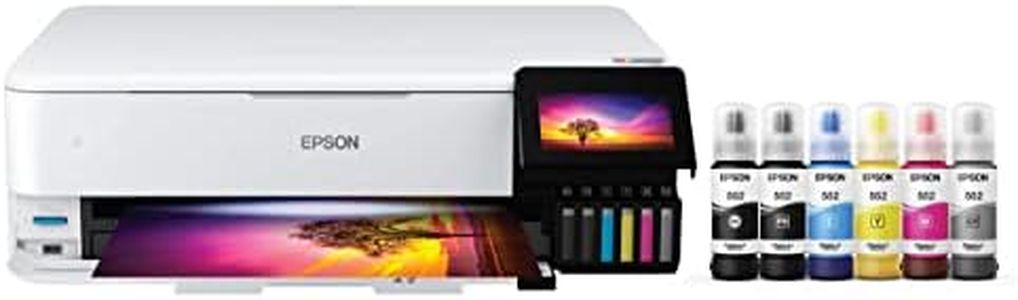
Epson EcoTank Photo ET-8550 Wireless Wide-Format All-in-One Tank Printer | Cartridge-free 6-color wide-format photo print, scan, copy; up to 16 ppm, 13 x 19 in.; ideal for creators and home studios
Most important from
2709 reviews
The Epson EcoTank Photo ET-8550 is a versatile all-in-one printer designed to handle a variety of tasks, including printing, scanning, and copying. It features a high-accuracy printhead and Claria ET Premium 6-color inks, allowing for vibrant colors and sharp text, which is crucial for architectural prints and creative projects. A significant advantage is its cartridge-free printing system, which uses high-yield ink bottles, dramatically reducing the cost of consumables and environmental waste. Specifically, it can print 4x6 photos for just 4 cents each, compared to the higher costs associated with traditional ink cartridges.
Additionally, it offers a broad media handling capacity, supporting borderless prints up to 13x19 inches and other specialty media like cardstock and CD/DVDs. The print speed is fairly competitive, with monochrome prints at 16 ppm and color prints at 12 ppm, along with a quick 15-second turnaround for 4x6 photos. The printer’s connectivity options are robust, featuring wireless, USB, and Ethernet connections, complemented by app support for mobile printing, making it highly convenient for modern users. The inclusion of a 4.3-inch color touchscreen facilitates easy operation.
However, users should be aware of some drawbacks, such as its relatively high upfront cost and a substantial size, which may require considerable desk space. While the print quality is excellent, the speed may not suffice for high-volume printing environments. For architects and creative professionals looking for high-quality prints with economical long-term running costs, the Epson EcoTank Photo ET-8550 is a compelling choice, provided the initial investment and space requirements are manageable.
Most important from
2709 reviews
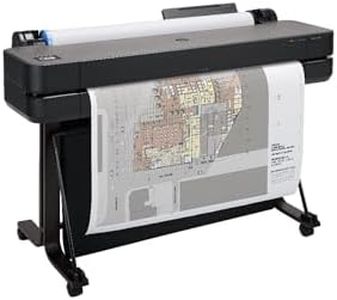
HP DesignJet T630 Large Format 36-inch Plotter Printer, with Auto Sheet Feeder, Media Bin & Stand (5HB11D)
Most important from
43 reviews
The HP DesignJet T630 is a solid choice for architects and engineers needing precise, large-format prints. It supports media up to 36 inches wide, ideal for detailed technical drawings, maps, and posters. Its high print resolution of 2400 x 1200 dpi ensures crisp lines and sharp text, which is essential for your blueprints and renderings. The integrated automatic sheet feeder and media bin simplify switching between roll and sheet paper, which adds convenience when working with varied project sizes.
Connectivity options are flexible, including Ethernet, USB, and Wi-Fi, allowing easy printing from multiple devices and common CAD software. HP’s Click software further streamlines your workflow by handling PDFs and preventing errors—helpful for saving time and reducing waste.
Print speed is modest at about 2 pages per minute, meaning large jobs may take a while. This printer also uses original HP ink cartridges, which can be pricier than third-party options, so keep in mind ongoing consumable costs. The initial setup and size (over 4 feet wide and weighing 123 pounds) mean it’s best suited for a dedicated workspace. For those who prioritize high-quality line accuracy and media versatility for architectural prints without needing very fast output, the HP DesignJet T630 offers a reliable, user-friendly solution with strong connectivity and helpful software support.
Most important from
43 reviews
Buying Guide for the Best Architectural Printers
Choosing the right architectural printer is crucial for professionals who need to produce high-quality, detailed prints of architectural designs, blueprints, and plans. The right printer can save time, reduce costs, and ensure that your prints are accurate and professional. When selecting an architectural printer, consider the following key specifications to ensure you get the best fit for your needs.FAQ
Most Popular Categories Right Now


