10 Best Bird Watching Cameras 2026 in the United States

Related Products
Up to 13% off

Our technology thoroughly searches through the online shopping world, reviewing hundreds of sites. We then process and analyze this information, updating in real-time to bring you the latest top-rated products. This way, you always get the best and most current options available.

Our Top Picks
Winner
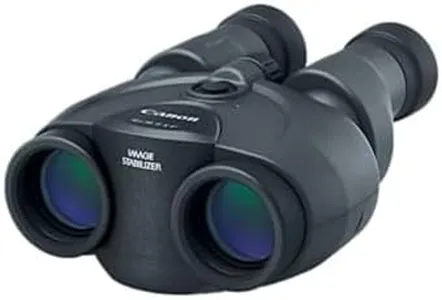
Canon 10x30 Image Stabilization II Binoculars
Most important from
378 reviews
The Canon 10x30 Image Stabilization II Binoculars are compact and portable, making them an excellent choice for bird-watching enthusiasts on the move. The standout feature is the superb image stabilization, borrowed from Canon's EF lenses, ensuring steady viewing even at the maximum 10x magnification. This is particularly useful for bird-watchers who need to follow quick and unpredictable movements without losing focus or experiencing image shake.
The 30mm objective lens, combined with Porro II prisms, provides clear and bright images, while the doublet field-flattener lens ensures sharpness across the entire field of view, minimizing distortion at the edges. Users with glasses will appreciate the long eye relief, which adds to the comfort during prolonged use. The design is also thoughtful, with a non-glossy and low-reflective finish to avoid startling birds and other wildlife. Battery efficiency has been improved, which means longer sessions between battery changes, enhancing the user experience.
However, there are some limitations. The 10x magnification, while powerful, might be less versatile than variable zoom options, especially if you need a wider field of view in certain situations. The weather sealing is not mentioned, which could be a concern for users in varying outdoor conditions. At 1.62 pounds, they are light, but there are lighter models on the market if extreme portability is a priority. Despite these minor drawbacks, the Canon 10x30 Image Stabilization II Binoculars are a strong contender for bird-watchers seeking a reliable and well-rounded pair of binoculars.
Most important from
378 reviews
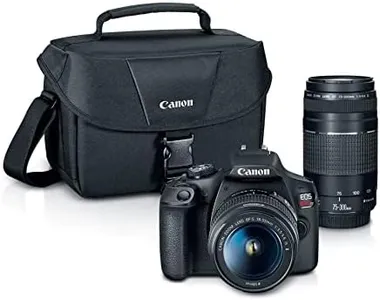
Canon EOS Rebel T7 DSLR Camera Double Zoom Lens Kit with EF-S 18-55mm and EF 75-300mm Lenses, 24.1 Megapixel CMOS (APS-C) Sensor, Full HD Videos, Wi-Fi, Beginner Photographers, Digital Camera, Black
Most important from
8526 reviews
The Canon EOS Rebel T7 DSLR Camera, featuring a dual-lens kit with EF18-55mm and EF 75-300mm lenses, offers several benefits for bird-watching enthusiasts. Its 24.1 Megapixel CMOS (APS-C) sensor ensures high-quality images, and the built-in image stabilization helps produce clear shots even when zoomed in. The zoom capability, especially with the 75-300mm lens, is excellent for capturing birds at a distance.
However, the camera only has a 9-point autofocus system, which might not be as quick or accurate for fast-moving birds compared to models with more focus points. Additionally, the burst mode of 3 fps may not be sufficient for capturing rapid bird movements effectively. The weather sealing is another important factor for outdoor use, and unfortunately, this camera lacks water resistance, making it less ideal in wet conditions.
Despite these limitations, the camera is relatively portable with a reasonable weight of 3 pounds and offers good battery life with an average of 500 photos per charge. The EOS Rebel T7 is also user-friendly with built-in Wi-Fi and NFC for easy sharing and remote control. In summary, this camera is a good entry-level option for bird-watchers looking for high resolution and decent zoom capacity, but the limited autofocus points, burst speed, and lack of weather sealing may be drawbacks for more serious or advanced bird photography.
Most important from
8526 reviews
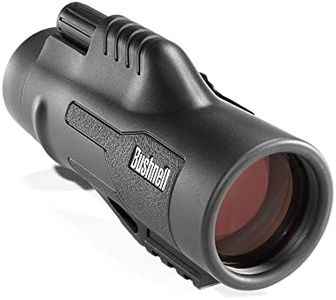
Bushnell Legend 10x42 Ultra HD Monocular, Optical Performance for Hunting and Wildlife Observation
Most important from
474 reviews
The Bushnell Legend 10x42 Ultra HD Monocular is a solid choice for bird watchers seeking clear and sharp views without the complexity of a camera. Its 10x magnification offers a good balance between detail and field of view, suitable for spotting birds at a distance. The advanced ED Prime glass and Ultra Wide Band Coating enhance image clarity and color, especially in low light, which is helpful for early morning or late afternoon birding.
Though it doesn't have image stabilization or burst mode like a camera, its rugged and waterproof design protects it from weather, ensuring it can handle rainy or foggy conditions during outdoor excursions. The fast and smooth manual focusing system makes it easy to adjust quickly to moving subjects, though it lacks autofocus found in some digital bird-watching cameras. Weighing about 374 grams and being compact enough to fit in a backpack or large pocket, it performs well in terms of portability. Battery requirements are minimal since it’s optical, not electronic, meaning longer use without worrying about power draining.
If you're looking for digital zoom, image capture, or video features, this monocular won’t meet those needs. It is best suited for bird watchers who want a straightforward, high-quality optical tool with durable build and excellent vision rather than a multi-functional camera device.
Most important from
474 reviews
Buying Guide for the Best Bird Watching Cameras
Choosing the right camera for bird watching can greatly enhance your experience and help you capture stunning images of birds in their natural habitat. When selecting a bird-watching camera, it's important to consider several key specifications that will impact the quality of your photos and your overall satisfaction with the camera. Understanding these specs will help you make an informed decision and find the best fit for your needs.FAQ
Most Popular Categories Right Now


