We Use CookiesWe use cookies to enhance the security, performance, functionality and for analytical and promotional activities. By continuing to browse this site you are agreeing to our privacy policy

10 Best Boat GPS Depth Finders 2026 in the United States
How do we rank products for you?

Our technology thoroughly searches through the online shopping world, reviewing hundreds of sites. We then process and analyze this information, updating in real-time to bring you the latest top-rated products. This way, you always get the best and most current options available.

headphones-stars

Our Top Picks

#1

Winner

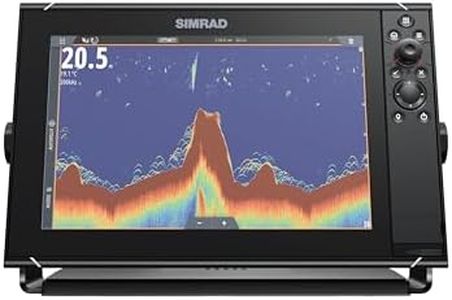
Simrad NSS16 Evo3S - 16-inch Multifunction Fish Finder Chartplotter with Preloaded C-MAP US Enhanced Charts

Rating
10.0
Chosen by1,162
Display Size and Resolution
Ease of Use
Sonar Technology

Most important from
36 reviews

Display Size and Resolution
The large 16-inch screen delivers a crisp, clear view that makes navigation and fish finding effortless even in bright sunlight.
Ease of Use
The combination of touchscreen and physical buttons provides flexible, intuitive control that feels as easy to use as a smartphone.
Sonar Technology
Advanced sonar features like Active Imaging and StructureScan 3D offer detailed underwater views that help locate fish precisely.
Connectivity and Integration
Integration with other boat systems allows seamless monitoring and control of engine performance and onboard devices from one interface.

The Simrad NSS16 Evo3S is a strong choice if you want a large, clear display combined with reliable GPS and advanced fish-finding features. Its 16-inch full HD screen offers a crisp view that’s easy to read even in bright conditions, which is a big plus on the water. The built-in GPS uses preloaded C-MAP US Enhanced charts, providing accurate navigation for both inland and coastal areas.

Thanks to a powerful processor, the unit handles sonar technology well, including Active Imaging and StructureScan 3D, giving detailed underwater views to help locate fish and understand the depth range effectively. Integration with other boat systems is a nice feature, letting you monitor engine performance and control onboard devices through one interface. The touchscreen is responsive and works alongside physical buttons, so you can choose your preferred control method, making it fairly easy to use.

Weighing 15 pounds and requiring dashboard mounting means it’s not very portable, and installation might need some professional help. This device fits best with anglers or boaters who want a high-quality, feature-rich chartplotter and fish finder in a fixed setup, while casual users might find it more complex and heavier than smaller, simpler models.

Rating
10.0
Chosen by1,162
Display Size and Resolution
Ease of Use
Sonar Technology

Most important from
36 reviews

Display Size and Resolution
The large 16-inch screen delivers a crisp, clear view that makes navigation and fish finding effortless even in bright sunlight.
Ease of Use
The combination of touchscreen and physical buttons provides flexible, intuitive control that feels as easy to use as a smartphone.
Sonar Technology
Advanced sonar features like Active Imaging and StructureScan 3D offer detailed underwater views that help locate fish precisely.
Connectivity and Integration
Integration with other boat systems allows seamless monitoring and control of engine performance and onboard devices from one interface.
#2

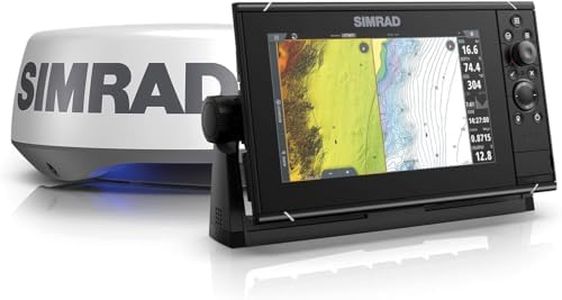
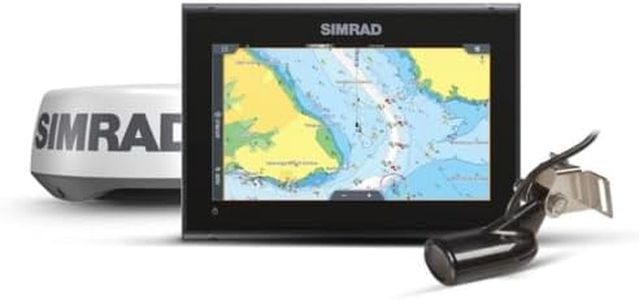
Simrad NSS9 Evo3S - 9-inch Multifunction Fish Finder Chartplotter with HALO20+ Radar, Preloaded C-MAP US Enhanced Charts

The Simrad NSS9 Evo3S is a solid choice for boaters seeking a multifunction fish finder and chartplotter with a clear, 9-inch high-definition display that makes reading maps and sonar data easy. Its built-in GPS is accurate and comes preloaded with detailed C-MAP US Enhanced charts, which is great for both inland and coastal navigation. The device supports advanced sonar technology including Active Imaging and StructureScan 3D, helping anglers spot fish and underwater structures with impressive clarity.

The included HALO 20+ radar adds safety by improving visibility in crowded or poor weather conditions and can even help identify weather changes or feeding birds. Thanks to its powerful iMX 8 processor, screen transitions and system responses are smooth and quick. Users also benefit from vessel-wide integration, allowing monitoring of engines and other onboard systems, which is a nice bonus for managing your boat efficiently. The unit is designed for durability with waterproofing suitable for marine environments, though it weighs about 43 pounds, so installation requires some effort and space.

The system offers many advanced features that might seem complex at first, but the included mounting options and sun cover assist with practical use. This device is well-suited for serious anglers and boaters who want a reliable, feature-rich navigation and fish-finding system, with the understanding that beginners should be prepared to invest time learning all its capabilities.

#3

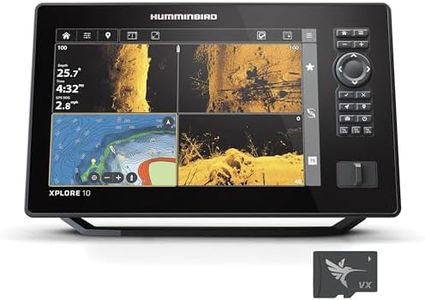
Humminbird XPLORE 10 GPS Fish Finder, MEGA Side Imaging+ & HD Touchscreen (Control Head Only)

Rating
7.9
Ease of Use
Connectivity and Integration
Durability and Waterproofing

Most important from
48 reviews

Ease of Use
The unit offers a huge array of features and is easy to use once you take the time to learn it.
Connectivity and Integration
The handheld remote and foot unit add great convenience and control options.
Durability and Waterproofing
This fish finder outperforms expensive competitors, especially in durability and warranty support.
Mapping and Charting Capabilities
Advanced mapping features are now included without extra cost, covering all U.S. states comprehensively.

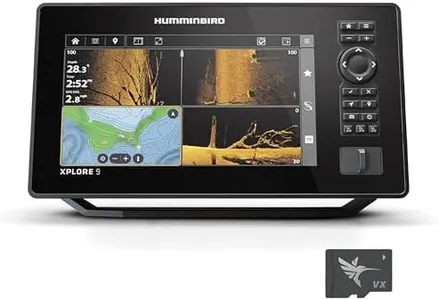
The Humminbird XPLORE 10 GPS Fish Finder is a solid choice for anglers looking for a large, easy-to-read 10.1-inch touchscreen paired with a sharp color TFT display. Its MEGA Side Imaging+ sonar technology offers excellent detail with a 200-foot range on both sides, allowing you to spot fish and underwater structures clearly. The MEGA Down Imaging+ also covers depths up to 200 feet, which suits most freshwater and nearshore fishing needs. Built-in Dual Spectrum CHIRP sonar enhances fish detection, providing better clarity and target separation. The GPS is reliable with a detailed preloaded basemap covering thousands of lakes and coastal areas, plus additional map cards for US and Canada, helping you navigate easily and mark key spots. One standout feature is the AutoChart Live, which lets you create real-time custom maps showing depth contours and bottom features, a big plus for discovering new fishing areas.

Connectivity is versatile, including Bluetooth for wireless anchor control and smartphone alerts, and Ethernet networking to link with compatible Minn Kota motors and other devices. The unit offers a user-friendly interface with both touchscreen and keypad controls, making it accessible even if you prefer physical buttons. It's built to be durable and waterproof, designed to withstand tough marine conditions. This version is a control head only and doesn’t include a transducer, so you’ll need to purchase that separately. While it has a three-year warranty, it weighs nearly 5 pounds, which might be heavier than some competitors. For those seeking a comprehensive, high-performance fish finder with excellent sonar and mapping features and smooth integration with other boating gear, the Humminbird XPLORE 10 presents a dependable option.

Rating
7.9
Ease of Use
Connectivity and Integration
Durability and Waterproofing

Most important from
48 reviews

Ease of Use
The unit offers a huge array of features and is easy to use once you take the time to learn it.
Connectivity and Integration
The handheld remote and foot unit add great convenience and control options.
Durability and Waterproofing
This fish finder outperforms expensive competitors, especially in durability and warranty support.
Mapping and Charting Capabilities
Advanced mapping features are now included without extra cost, covering all U.S. states comprehensively.

Buying Guide for the Best Boat GPS Depth Finders

Choosing the right boat GPS depth finder can significantly enhance your boating experience, whether you're fishing, cruising, or just exploring. A GPS depth finder combines the functionalities of a GPS system and a depth finder, helping you navigate and understand underwater topography. To make an informed decision, you need to consider several key specifications that will determine how well the device meets your needs. Here are the most important specs to consider and how to choose the best fit for you.
Display Size and ResolutionThe display size and resolution of a boat GPS depth finder are crucial because they determine how easily you can read the information on the screen. Larger displays with higher resolutions provide clearer and more detailed images, which can be especially helpful in bright sunlight or rough conditions. Display sizes typically range from 4 inches to over 12 inches. If you need a compact device for a small boat, a smaller screen might suffice. However, for larger boats or if you require detailed imaging, opt for a larger, high-resolution display.
GPS AccuracyGPS accuracy is important for precise navigation and location tracking. It determines how accurately the device can pinpoint your position on the water. High-accuracy GPS systems can provide location data within a few meters, which is essential for activities like fishing where exact positioning is crucial. Look for devices that offer high-sensitivity GPS receivers and support for multiple satellite systems (like GPS, GLONASS, and Galileo) to ensure the best accuracy.
Depth RangeThe depth range of a depth finder indicates how deep it can accurately measure. This is important for understanding underwater topography and avoiding hazards. Depth ranges can vary widely, from a few hundred feet to several thousand feet. If you are boating in shallow waters, a device with a lower depth range will suffice. However, for deep-sea fishing or exploring deeper waters, choose a depth finder with a higher depth range to ensure accurate readings.
Sonar TechnologySonar technology is used to detect objects underwater and measure depth. There are different types of sonar, including traditional 2D sonar, CHIRP sonar, and side/down imaging sonar. Traditional sonar provides basic depth readings, while CHIRP sonar offers more detailed and accurate images by using a range of frequencies. Side and down imaging sonar provide detailed views of the underwater environment to the sides and below your boat. Choose the type of sonar based on your specific needs: basic depth readings, detailed imaging, or comprehensive underwater views.
Mapping and Charting CapabilitiesMapping and charting capabilities allow you to view and navigate using detailed maps and charts. Some GPS depth finders come with preloaded maps, while others allow you to download additional maps. Advanced models may offer features like contour mapping, which shows the shape of the underwater terrain. If you frequently navigate unfamiliar waters, look for a device with robust mapping and charting features to help you plan routes and avoid hazards.
Connectivity and IntegrationConnectivity and integration features allow your GPS depth finder to connect with other devices and systems on your boat. This can include Bluetooth, Wi-Fi, and NMEA 2000 compatibility. These features enable you to share data, update software, and integrate with other marine electronics like radar and autopilot systems. If you have a complex setup or plan to expand your boat's electronics, choose a device with strong connectivity and integration options.
Ease of UseEase of use is an important consideration, especially if you are not very tech-savvy. Look for a GPS depth finder with an intuitive interface, easy-to-navigate menus, and clear instructions. Touchscreen controls can be more user-friendly than button-based interfaces. Additionally, consider devices with customizable settings and quick access to frequently used features. A user-friendly device will make your boating experience more enjoyable and less stressful.
Durability and WaterproofingDurability and waterproofing are essential for any marine electronics, as they will be exposed to harsh conditions, including water, salt, and sun. Look for devices with high waterproof ratings (such as IPX7 or higher) to ensure they can withstand being submerged in water. Additionally, consider the build quality and materials used in the device to ensure it can handle rough conditions and last for many years. A durable and waterproof GPS depth finder will provide reliable performance in all weather conditions.

FAQ

Most Popular Categories Right Now