10 Best Clamp Multimeters 2026 in the United States

Related Products
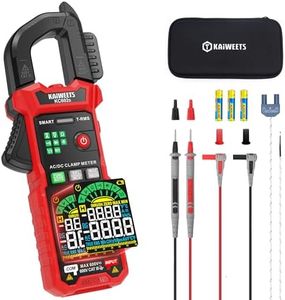
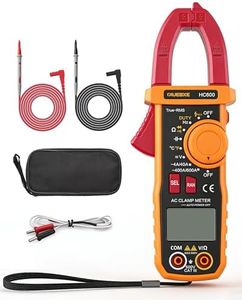
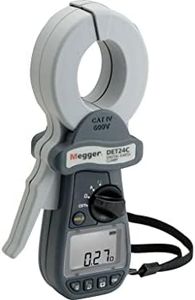

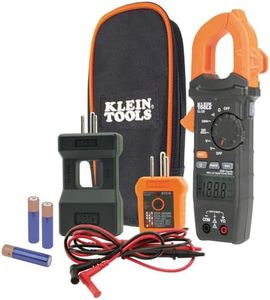
Our technology thoroughly searches through the online shopping world, reviewing hundreds of sites. We then process and analyze this information, updating in real-time to bring you the latest top-rated products. This way, you always get the best and most current options available.

Our Top Picks
Winner
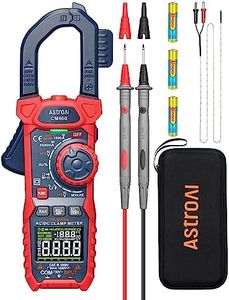
AstroAI Inrush Digital Clamp Meter Multimeter 1000A TRMS 6000 Counts, Amp Voltage Tester with VFD, LOZ Mode; Measures AC/DC Current Voltage Temperature Resistance Capacitance Frequency Continuity NCV
Most important from
323 reviews
The AstroAI Inrush Digital Clamp Meter Multimeter stands out for its versatility and accurate measurements. With a current measurement range of up to 1000 A for both AC and DC, and voltage measurement capabilities up to 1000 V DC/750 V AC, it is well-suited for a variety of tasks including industrial electrical testing, high-power equipment maintenance, and solar PV projects. The inclusion of inrush current measurement is particularly helpful for diagnosing startup issues in motors, although it is limited to AC current only. This might be a drawback if you need to test DC inrush current specifically.
The VFD and LoZ modes enhance its accuracy in measuring currents and voltages on variable frequency drives and eliminate ghost voltages, respectively, which can be highly beneficial in complex electrical environments. Additional functions like temperature, resistance, capacitance, frequency, continuity, and NCV detection further expand its usability. The NCV feature adds a layer of safety by allowing voltage testing without physical contact. The device is thoughtfully designed with a backlit LCD and flashlight, improving readability in low-light conditions.
Data hold, max/min, auto/manual ranging selection, and REL/ZERO functions enhance its convenience and ease of use. It complies with high safety standards (IEC 61010-1, CAT IV 600V, CAT III 1000V), making it reliable for professional use. This multimeter is lightweight, making it portable and easy to handle during fieldwork.
Most important from
323 reviews
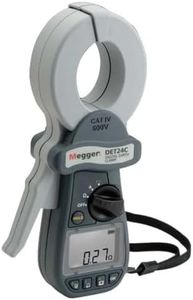
Megger DET14C Digital Earth Test Clamp-On Ground Resistance Meter, with Data Storage
The Megger DET14C is designed specifically for measuring ground resistance without disconnecting the grounding system, making it quite handy for electricians and maintenance professionals. Its large elliptical clamp can comfortably fit around various ground conductors, and the smooth clamp surfaces help ensure reliable contact. Safety is a strong point here, with a CAT IV 600V rating, meaning it can safely handle high-voltage environments commonly found in electrical installations.
The meter includes a noise filter which helps reduce interference for more accurate readings, and it can store data with time and date stamps—useful for keeping track of measurements over time. While the product focuses on earth resistance (ohmmeter) rather than broad current or voltage ranges, it meets the essential needs for ground testing well. The intelligent data hold function indicates it’s user-friendly for reading results.
Though the unit is somewhat heavy at 2.2 pounds, which might affect portability slightly, it excels within its category, especially for those prioritizing safety and reliable ground resistance measurement rather than being a multitool for all electrical tests.
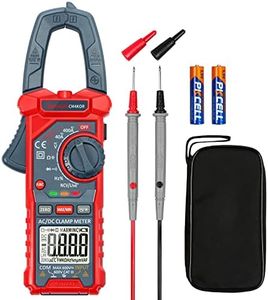
AstroAI Digital Clamp Meter Multimeter 4000 Counts Auto-ranging Amp Tester Measuring AC/DC Voltage & Current, Resistance, Capacitance, Frequency, Continuity, Live Wire Test, NCV Detection, Blue
Most important from
3233 reviews
The AstroAI Digital Clamp Meter offers a solid set of features for both household and light industrial electrical tasks. It can measure AC/DC current and voltage, resistance, capacitance, frequency, and more, making it quite versatile. The inclusion of non-contact voltage detection with audible and visual alerts is a handy safety feature, helping users identify live wires without direct contact. Its display is backlit with a flashlight, which is useful for working in dim conditions, and additional functions like data hold, max/min readings, and auto power off add convenience and help conserve battery life.
The jaw opening is designed to fit around single wires easily, allowing safe current measurement without interrupting circuits, although it is not suitable for clamping whole cords for current. Safety-wise, it meets the overvoltage category III 600V standard, which is suitable for most residential and commercial applications. The device uses 2 AAA batteries, which may require frequent replacement compared to rechargeable options.
It is a dependable clamp meter for general electrical troubleshooting and maintenance, especially if you want a tool that balances ease of use with a variety of measurement functions.
Most important from
3233 reviews
Buying Guide for the Best Clamp Multimeters
Choosing the right clamp multimeter can be a bit overwhelming given the variety of models and features available. A clamp multimeter is a versatile tool used to measure electrical parameters such as current, voltage, and resistance without needing to disconnect the circuit. To make an informed decision, it's important to understand the key specifications and how they relate to your specific needs. Here are some essential specs to consider when selecting a clamp multimeter.FAQ
Most Popular Categories Right Now


