We Use CookiesWe use cookies to enhance the security, performance, functionality and for analytical and promotional activities. By continuing to browse this site you are agreeing to our privacy policy

10 Best Marine GPS Systems 2026 in the United States
How do we rank products for you?

Our technology thoroughly searches through the online shopping world, reviewing hundreds of sites. We then process and analyze this information, updating in real-time to bring you the latest top-rated products. This way, you always get the best and most current options available.

headphones-stars

Our Top Picks

#1

Winner

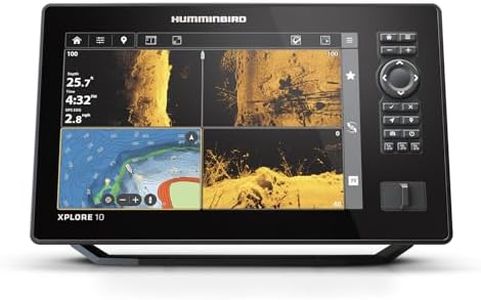
Humminbird XPLORE 10 GPS Fish Finder with Transducer, MEGA Side Imaging+ & HD Touchscreen

Rating
10.0
Chosen by1,172
User Interface and Ease of Use

Most important from
93 reviews

User Interface and Ease of Use
The device offers excellent quality and delivers exactly what anglers need for fishing and navigation.

The Humminbird XPLORE 10 GPS Fish Finder is a strong choice for anglers and boating enthusiasts who want detailed underwater information combined with reliable navigation. Its 10.1-inch full HD touchscreen offers bright, clear visuals, making it easier to see fish and underwater structures even in bright sunlight. The device’s MEGA Side Imaging+ sonar provides an impressive 200-foot range on each side, with sharp detail that helps spot fish and underwater features accurately.

GPS navigation is solid, featuring built-in maps of over 10,000 lakes and compatibility with popular chart systems like Navionics, which is great for both freshwater and coastal use. The AutoChart Live feature lets users create real-time maps of water depth and bottom conditions, a helpful tool for exploring new waters. Connectivity options including Bluetooth, Ethernet, and NMEA 2000 compatibility allow smooth integration with other marine equipment, such as trolling motors and radar.

The unit is designed with durability in mind and is suitable for marine conditions, although exact waterproof ratings are not specified. Some users might find the dual control method—touchscreen plus keypad—initially complex, but it adds versatility once familiar. Weighing under 5 pounds and including essential mounting hardware and a transducer, it’s relatively easy to install. Priced higher than basic fish finders, this model delivers advanced features that serious anglers will appreciate, especially those who want both fishing and navigation capabilities in one device.

Rating
10.0
Chosen by1,172
User Interface and Ease of Use

Most important from
93 reviews

User Interface and Ease of Use
The device offers excellent quality and delivers exactly what anglers need for fishing and navigation.
#2

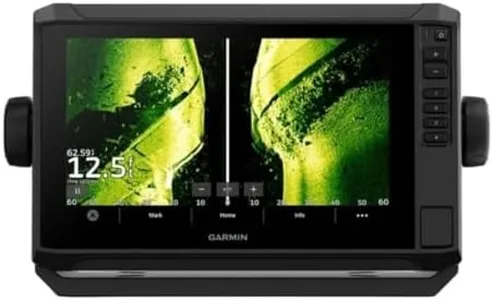
Garmin ECHOMAP UHD2 94sv with GT56 Transducer, 9" Touchscreen Chartplotter, Garmin Navionics+ U.S. Coastal

Rating
9.4
Display Size
Chartplotter Integration
Connectivity

Most important from
78 reviews

Display Size
Side imaging resolution is a night and day difference compared to older models, offering clearer and longer-distance scans.
Chartplotter Integration
Preloaded maps provide immediate access to detailed charts.
Connectivity
Works well right out of the box and even better once linked to the app.
User Interface and Ease of Use
Installation is straightforward, and customization options enhance user experience.

The Garmin ECHOMAP UHD2 94sv is a solid choice for boating and fishing enthusiasts looking for a reliable marine GPS system. Its standout feature is the 9-inch touchscreen, which is bright and easy to read even in direct sunlight, making navigation a breeze. The touchscreen interface is user-friendly, allowing for quick and easy access to charts and settings. Additionally, its built-in Navionics+ coastal charts provide detailed and accurate mapping, which is crucial for safe navigation along the U.S. coastline.

The inclusion of the GT56 transducer means you get high-quality traditional, ClearVü, and SideVü scanning sonars, offering clear and detailed underwater views. This feature is particularly beneficial for fishing, as it helps identify fish and underwater structures with ease. Connectivity is another strong point, with built-in Wi-Fi allowing you to share sonar data, waypoints, and routes wirelessly with other ECHOMAP UHD2 units. It also connects to the Force trolling motor, enabling you to control the motor directly from the chartplotter, which adds a layer of convenience and efficiency.

On the downside, the unit's weight of 8.08 pounds may be a bit heavy for some users, and its larger size could require more space on the dashboard. The price point may also be higher compared to other similar units, which could be a consideration for budget-conscious buyers. However, with robust features, it offers good value for those willing to invest in a high-quality marine GPS system. This model is best suited for serious boaters and fishers who need reliable, detailed, and easy-to-use navigation and sonar capabilities.

Rating
9.4
Display Size
Chartplotter Integration
Connectivity

Most important from
78 reviews

Display Size
Side imaging resolution is a night and day difference compared to older models, offering clearer and longer-distance scans.
Chartplotter Integration
Preloaded maps provide immediate access to detailed charts.
Connectivity
Works well right out of the box and even better once linked to the app.
User Interface and Ease of Use
Installation is straightforward, and customization options enhance user experience.
#3

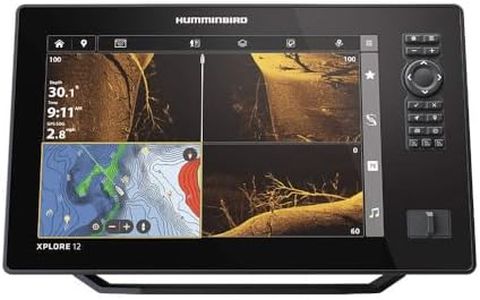
Humminbird XPLORE 12 GPS Fish Finder with Transducer, MEGA Side Imaging+ & HD Touchscreen

Rating
9.1
Chartplotter Integration
Connectivity
User Interface and Ease of Use

Most important from
93 reviews

Chartplotter Integration
The integration with trolling motor controls is intuitive, making boat navigation and fishing easier.
Connectivity
While Bluetooth connection to trolling motors would be a nice addition, current connectivity options remain effective.
User Interface and Ease of Use
Installation is straightforward and plug-and-play, with all necessary components included for a hassle-free setup.

The Humminbird XPLORE 12 GPS Fish Finder is a solid choice for anglers and boaters who want detailed underwater views and reliable navigation. Its large 12.1-inch HD touchscreen offers sharp visuals, making it easy to read maps and sonar images even in bright daylight. The combination of MEGA Side Imaging+ and MEGA Down Imaging+ sonar technologies provides clear and detailed fish and structure detection up to 200 feet deep, which is impressive for most freshwater and coastal fishing spots.

The built-in GPS paired with pre-loaded maps and compatibility with popular chart cards like LakeMaster and Navionics helps users navigate confidently across thousands of lakes and coastal waters. Connectivity is another strong point, with Bluetooth, Ethernet, and NMEA 2000 support allowing integration with other marine electronics like trolling motors and autopilots. The user interface is friendly, offering both touchscreen and physical buttons, which is handy in rough conditions or if you prefer traditional controls.

At around 6.3 pounds and designed for tabletop mounting, it suits small to medium boats well but might not fit seamlessly on all console layouts. The included three-year warranty adds peace of mind. This fish finder and GPS combo is a great option for fishing enthusiasts who want advanced sonar and reliable navigation features without complicated setup, though those needing ultra-rugged gear or very compact units should consider other options.

Rating
9.1
Chartplotter Integration
Connectivity
User Interface and Ease of Use

Most important from
93 reviews

Chartplotter Integration
The integration with trolling motor controls is intuitive, making boat navigation and fishing easier.
Connectivity
While Bluetooth connection to trolling motors would be a nice addition, current connectivity options remain effective.
User Interface and Ease of Use
Installation is straightforward and plug-and-play, with all necessary components included for a hassle-free setup.

Buying Guide for the Best Marine GPS Systems

Choosing the right marine GPS system is crucial for ensuring safe and efficient navigation on the water. A marine GPS system helps you determine your exact location, plot routes, and avoid hazards. When selecting a marine GPS system, it's important to consider several key specifications to ensure it meets your needs and enhances your boating experience.
Display SizeThe display size of a marine GPS system refers to the diagonal measurement of the screen. This spec is important because it affects how easily you can read the information on the screen, especially in varying light conditions. Display sizes typically range from 4 inches to over 12 inches. Smaller displays (4-7 inches) are more compact and suitable for smaller boats or limited dashboard space. Medium displays (8-10 inches) offer a balance between visibility and space, making them ideal for mid-sized boats. Larger displays (11 inches and above) provide the best visibility and are great for larger vessels with ample dashboard space. Choose a display size that fits your boat's layout and ensures you can easily read the screen while navigating.
Chartplotter IntegrationChartplotter integration refers to the GPS system's ability to display detailed nautical charts and maps. This feature is important because it helps you visualize your route, identify landmarks, and avoid underwater hazards. Some GPS systems come with preloaded charts, while others require you to purchase and download them separately. Basic chartplotters provide essential navigation information, suitable for casual boaters. Advanced chartplotters offer more detailed maps, 3D views, and additional features like tide information, which are beneficial for serious navigators and fishermen. Consider your navigation needs and how detailed you want your maps to be when choosing a system with chartplotter integration.
GPS AccuracyGPS accuracy refers to how precisely the system can determine your location. This spec is crucial for safe navigation, especially in challenging conditions or unfamiliar waters. GPS accuracy is typically measured in meters, with most modern systems offering accuracy within 3-5 meters. Basic systems provide sufficient accuracy for general navigation, while high-precision systems offer enhanced accuracy, which is important for activities like fishing, where exact positioning is critical. Assess your navigation requirements and choose a system with the appropriate level of accuracy for your boating activities.
ConnectivityConnectivity refers to the GPS system's ability to connect with other devices and networks, such as smartphones, tablets, and marine radios. This spec is important because it allows you to share data, access updates, and integrate with other onboard systems. Basic connectivity options include USB and Bluetooth, suitable for simple data transfer and device pairing. Advanced systems offer Wi-Fi and NMEA 2000 compatibility, enabling seamless integration with a wide range of marine electronics and real-time data sharing. Consider how you plan to use your GPS system and whether you need advanced connectivity features for a more integrated boating experience.
Durability and Waterproof RatingDurability and waterproof rating indicate how well the GPS system can withstand harsh marine environments. This spec is important because it ensures the system remains functional and reliable in wet and rough conditions. Waterproof ratings are typically expressed as IPX ratings, with IPX7 meaning the device can withstand immersion in water up to 1 meter for 30 minutes, and IPX8 offering even higher protection. Basic systems with lower ratings are suitable for casual use in calm conditions, while higher-rated systems are essential for serious boaters who encounter rough seas and heavy rain. Choose a GPS system with a durability and waterproof rating that matches the conditions you expect to face on the water.
User Interface and Ease of UseThe user interface and ease of use refer to how intuitive and user-friendly the GPS system is. This spec is important because it affects how quickly and easily you can access and interpret navigation information. Systems with simple, straightforward interfaces are ideal for beginners and casual boaters, while more complex systems with customizable options and advanced features may appeal to experienced navigators. Consider your level of comfort with technology and how much time you want to spend learning to use the system when choosing a GPS with the right user interface for you.

FAQ

Most Popular Categories Right Now