We Use CookiesWe use cookies to enhance the security, performance, functionality and for analytical and promotional activities. By continuing to browse this site you are agreeing to our privacy policy

5 Best Rooftop Air Conditioning Units 2026 in the United States
How do we rank products for you?

Our technology thoroughly searches through the online shopping world, reviewing hundreds of sites. We then process and analyze this information, updating in real-time to bring you the latest top-rated products. This way, you always get the best and most current options available.

headphones-stars

Our Top Picks

#1

Winner

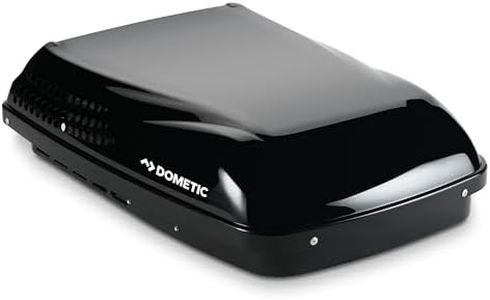
DOMETIC PENGUIN II 13,500 BTU LOW PROFILE ROOFTOP AIR CONDITIONER, DUCTED OR NON-DUCTED APPLICATION - ADB REQUIRED.

Rating
10.0
Chosen by1,137
Cooling Capacity (BTU)
Noise Level (dB)
Installation and Maintenance

Most important from
120 reviews

Cooling Capacity (BTU)
Installed without much trouble on a 14-year-old motorhome, using the original thermostat and controller. Cools well after some adjustments.
Noise Level (dB)
While effective at cooling, this unit is notably loud, similar to older models.
Installation and Maintenance
Customer service was helpful in correcting an initial mistake with the order, allowing for a smooth replacement that was completed in under an hour.

The Dometic Penguin II 13,500 BTU Low Profile Rooftop Air Conditioner stands out due to its sleek design and high cooling capacity, making it a good fit for anyone needing reliable cooling in an RV. At 13,500 BTUs, it provides sufficient cooling power for most recreational vehicle spaces. The low profile design, at just over 11 inches high, is excellent for reducing wind resistance and improving aerodynamics, which can be beneficial while driving.

This unit can be installed in both ducted and non-ducted applications, offering flexibility based on your RV’s setup. It requires an inside ceiling assembly and control kit that are sold separately. In terms of noise, the specifications mention an incredibly low noise level at 1 dB, though this seems unusually low and may not be accurate.

The unit has a SEER of 2.75, which is on the lower end, indicating it may not be the most energy-efficient option available. It operates at 120 volts and has a wattage of 1731, so it should be compatible with most RV electrical systems without issue. Weighing 99 pounds, it's fairly manageable for installation, though it may require two people to handle safely. This air conditioner is best suited for RV owners looking for a low-profile, high-capacity unit and who are prepared for potentially higher energy use and additional installation components.

Rating
10.0
Chosen by1,137
Cooling Capacity (BTU)
Noise Level (dB)
Installation and Maintenance

Most important from
120 reviews

Cooling Capacity (BTU)
Installed without much trouble on a 14-year-old motorhome, using the original thermostat and controller. Cools well after some adjustments.
Noise Level (dB)
While effective at cooling, this unit is notably loud, similar to older models.
Installation and Maintenance
Customer service was helpful in correcting an initial mistake with the order, allowing for a smooth replacement that was completed in under an hour.
#2

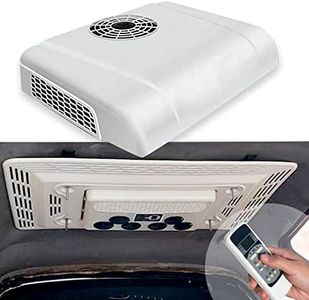
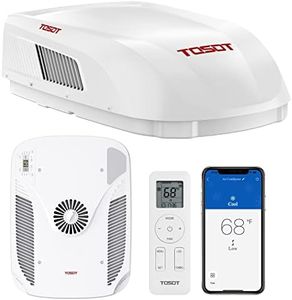
TOSOT GO Cool RV Air Conditioner 15000 BTU, Non-Ducted Camper Rooftop AC Unit with Heat Pump, WiFi and Remote Control, White

Rating
9.4
Noise Level (dB)
Installation and Maintenance

Most important from
45 reviews

Noise Level (dB)
The unit operates extremely quietly, both inside and outside the camper.
Installation and Maintenance
Installation is straightforward and can be completed in just a few hours with easy-to-follow directions.

The TOSOT GO Cool RV Air Conditioner offers a substantial 15,000 BTU cooling capacity, making it suitable for RVs ranging from 16 to 24 feet and spaces up to 600 sq ft. This unit also features a powerful 12,000 BTU heating capacity, ensuring comfort in both hot and cold climates. With an Energy Efficiency Ratio (EER) of 8.5, it delivers efficient performance, which is beneficial for energy consumption but does not qualify for Energy Star ratings.

Its noise level is relatively moderate at 52 dB, which is acceptable but not exceptionally quiet. The inclusion of smart WiFi control allows for convenient operation via smartphone, adding to its user-friendly design. Installation is straightforward due to its non-ducted configuration, fitting standard rooftop vent openings, though it is not compatible with RVs with ductwork. The unit's versatility in handling outdoor temperatures from 23°F to 115°F makes it suitable for various climates.

On the downside, it is somewhat heavy at 112.4 pounds and has relatively high annual energy consumption at 4526 kWh. The TOSOT GO Cool RV Air Conditioner is a solid choice for those seeking efficient cooling and heating in flexible climates, especially if ease of installation and smart control are priorities.

Rating
9.4
Noise Level (dB)
Installation and Maintenance

Most important from
45 reviews

Noise Level (dB)
The unit operates extremely quietly, both inside and outside the camper.
Installation and Maintenance
Installation is straightforward and can be completed in just a few hours with easy-to-follow directions.
#3

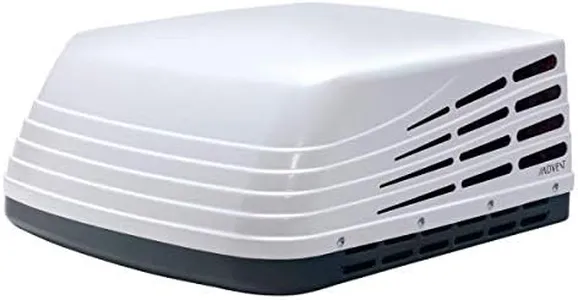
ASA Electronics ACM135 Advent Air 13,500 BTU Roof Top AC, White

Rating
8.8
Noise Level (dB)
Installation and Maintenance

Most important from
305 reviews

Noise Level (dB)
The AC unit stands up well to summer heat while maintaining a quieter operation compared to older models.
Installation and Maintenance
Installation is straightforward and can be completed in a couple of hours, with the only challenge being lifting the unit onto the roof.

The ASA Electronics ACM135 Advent Air rooftop air conditioning unit offers a cooling capacity of 13,500 BTUs, making it suitable for most medium-sized RVs and similar applications. It operates on 115 Volt AC power and features a sturdy, metal-constructed base pan, ensuring durability.

The unit includes a premium, watertight vent opening gasket with six dense foam support pads, which helps to prevent leaks and provides additional stability during operation. The installation process is relatively straightforward, fitting standard 14.25" x 14.25" vent openings, and there’s an optional plug-in heat strip available if heating is also required. One of the notable features is the three-speed fan, providing flexibility in airflow control.

The unit uses R 410A refrigerant, which is common and effective in cooling applications. Maintenance is simplified with a washable filter, which can be easily cleaned and reused. The unit is relatively heavy at 50 pounds, which may require assistance during installation. In terms of climate compatibility, the 13,500 BTU capacity should be sufficient for moderate climates, but may struggle in extremely hot conditions. This rooftop AC unit is best suited for users looking for a reliable and moderately powerful cooling solution for their RVs or similar applications.

Rating
8.8
Noise Level (dB)
Installation and Maintenance

Most important from
305 reviews

Noise Level (dB)
The AC unit stands up well to summer heat while maintaining a quieter operation compared to older models.
Installation and Maintenance
Installation is straightforward and can be completed in a couple of hours, with the only challenge being lifting the unit onto the roof.

Buying Guide for the Best Rooftop Air Conditioning Units

Choosing the right rooftop air conditioning unit is crucial for ensuring comfort and efficiency in your space. These units are designed to cool large areas and are often used in commercial buildings, but they can also be suitable for residential use. When selecting a rooftop air conditioning unit, it's important to consider several key specifications to ensure you get the best fit for your needs. Understanding these specifications will help you make an informed decision and ensure that your unit performs optimally.
Cooling Capacity (BTU)Cooling capacity, measured in British Thermal Units (BTU), indicates the amount of heat the unit can remove from a space per hour. This is a critical spec because it determines how effectively the unit can cool your area. Units with higher BTU ratings can cool larger spaces. For small spaces, a unit with 5,000 to 12,000 BTU might be sufficient, while larger commercial spaces may require units with 20,000 BTU or more. To pick the right one, consider the size of the area you need to cool and choose a unit with a BTU rating that matches or slightly exceeds that requirement.
Energy Efficiency Ratio (EER)The Energy Efficiency Ratio (EER) measures the efficiency of the air conditioning unit. It is calculated by dividing the cooling capacity (BTU) by the power input (watts). A higher EER indicates a more efficient unit, which can lead to lower energy bills. EER values typically range from 8 to 12. For better energy savings, look for units with an EER of 10 or higher. If energy efficiency is a priority for you, especially in a commercial setting where the unit will run frequently, opt for a unit with a higher EER.
Airflow (CFM)Airflow, measured in cubic feet per minute (CFM), indicates how much air the unit can circulate through your space. This is important for ensuring even cooling and maintaining air quality. Units with higher CFM ratings can move more air, which is beneficial for larger spaces. For smaller areas, a unit with 400 to 600 CFM might be adequate, while larger spaces may require 1,000 CFM or more. Consider the size and layout of your space to determine the appropriate CFM rating for your needs.
Noise Level (dB)The noise level of an air conditioning unit, measured in decibels (dB), is an important consideration, especially if the unit will be installed in a residential area or a quiet commercial environment. Lower dB ratings indicate quieter operation. Units typically range from 50 to 70 dB. For a quieter environment, look for units with a noise level below 60 dB. If noise is not a major concern, you may have more flexibility in your choice.
Installation and MaintenanceThe ease of installation and maintenance is another key factor to consider. Some units are designed for straightforward installation and have features that make maintenance easier, such as accessible filters and self-diagnostic systems. This is important because it can save you time and money in the long run. If you prefer a hassle-free experience, look for units that are known for their ease of installation and have good reviews regarding maintenance.
Climate CompatibilityClimate compatibility refers to how well the unit can perform in different weather conditions. Some units are designed to operate efficiently in extreme temperatures, whether hot or cold. This is important if you live in an area with harsh weather conditions. Check the unit's specifications to ensure it can handle the climate in your region. If you live in a place with extreme temperatures, choose a unit that is rated for high performance in those conditions.

FAQ

Most Popular Categories Right Now