We Use CookiesWe use cookies to enhance the security, performance, functionality and for analytical and promotional activities. By continuing to browse this site you are agreeing to our privacy policy

10 Best Wireless Guitar Systems For Bass Guitars 2026 in the United States
How do we rank products for you?

Our technology thoroughly searches through the online shopping world, reviewing hundreds of sites. We then process and analyze this information, updating in real-time to bring you the latest top-rated products. This way, you always get the best and most current options available.

headphones-stars

Our Top Picks

#1

Winner

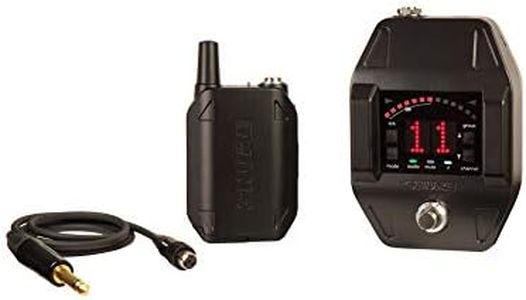
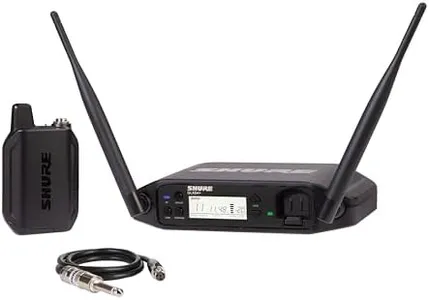
Shure GLXD16 Rechargeable Wireless System for Guitarists and Bassists with GLXD6 Digital Guitar Pedal Receiver, GLXD1 Bodypack Transmitter and WA305 Instrument Cable

Rating
10.0
Chosen by1,181
Frequency Range
Operating Range
Battery Life

Most important from
188 reviews

Frequency Range
The system delivers flawless wireless performance with zero interference or dropouts, even in congested 2.4 GHz environments by automatically switching to the clearer 5.8 GHz band.
Operating Range
The reception range is very strong, suitable for typical stage sizes, and only shows minor dropouts at extreme distances beyond 100 feet.
Battery Life
Battery life is exceptional, easily lasting through multiple gigs with hours to spare, and quick charging provides significant playtime after just 15 minutes.
Build Quality
The receiver and beltpack transmitter are built like tanks—heavy, solid metal construction designed to withstand the rigors of live performance.
Ease of Use
LinkFreq Automatic Frequency Management works seamlessly, scanning and locking on to the cleanest channel, making setup effortless and reliable every time.

The Shure GLXD16 Rechargeable Wireless System is designed with bass and guitar players in mind, offering a solid mix of performance and convenience. Operating on a globally license-free 2.4 GHz digital frequency band, it effectively reduces interference, giving you a clear, uninterrupted sound during your performance. The system provides a full frequency response from 20 Hz to 20 kHz, which is great for capturing the rich tones of a bass guitar. Its digital signal format and LinkFreq Automatic Frequency Management help maintain a stable connection by scanning for open channels and switching seamlessly, minimizing dropouts on stage.

Battery life is a strong point here, with the included lithium-ion rechargeable battery offering up to 11.5 hours of continuous use—plenty for most gigs or rehearsals. It also supports quick charging, providing about 1.5 hours of use after just 15 minutes of charging, which is very handy. Battery life is tracked in real-time on a display, so you won’t be caught off guard. Build quality is robust, with the system including a pedal-style receiver and a bodypack transmitter that's lightweight and comfortable to wear. The package comes with everything needed to get started, including instrument cables and a charger, which adds to its ease of use. Multiple charging options, including USB and car chargers, increase flexibility on the go.

The system weighs nearly 4 pounds, which might be a bit bulky compared to smaller wireless setups. While it supports up to four compatible channels, it might be limiting in larger multi-band setups. Also, although latency isn’t explicitly stated, Shure’s digital systems generally maintain low latency suitable for live playing. The Shure GLXD16 is an excellent choice for bassists seeking reliable, interference-resistant wireless freedom with long battery life and solid sound quality. It’s user-friendly and well-built, making it a dependable companion for gigs and practice sessions.

Rating
10.0
Chosen by1,181
Frequency Range
Operating Range
Battery Life

Most important from
188 reviews

Frequency Range
The system delivers flawless wireless performance with zero interference or dropouts, even in congested 2.4 GHz environments by automatically switching to the clearer 5.8 GHz band.
Operating Range
The reception range is very strong, suitable for typical stage sizes, and only shows minor dropouts at extreme distances beyond 100 feet.
Battery Life
Battery life is exceptional, easily lasting through multiple gigs with hours to spare, and quick charging provides significant playtime after just 15 minutes.
Build Quality
The receiver and beltpack transmitter are built like tanks—heavy, solid metal construction designed to withstand the rigors of live performance.
Ease of Use
LinkFreq Automatic Frequency Management works seamlessly, scanning and locking on to the cleanest channel, making setup effortless and reliable every time.
#2

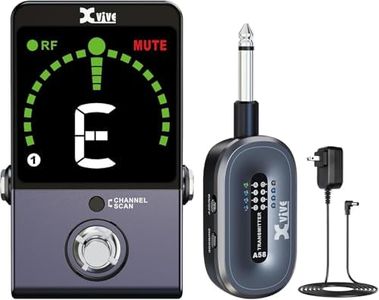
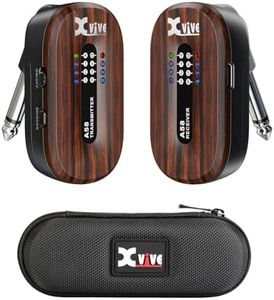
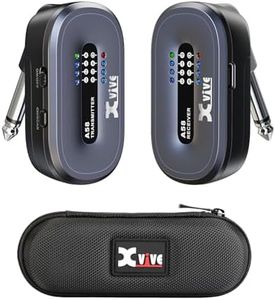
Xvive P58 Wireless Guitar Pedal System 5.8GHz Wireless Guitar Transmitter and Chromatic tuner Pedal Receiver for Active or Passive Pickup Bass Guitar Piezo-Electric Acoustic Guitar

Rating
9.7
Latency
Battery Life
Frequency Range

Most important from
28 reviews

Latency
The system delivers clear sound with virtually no delay, making it feel just like playing with a cable.
Battery Life
Battery life lasts quite a while and charging is simple, especially with the clever Y-split charging cable that powers both units simultaneously.
Frequency Range
The 5.8 GHz frequency band ensures a stable connection with zero dropouts, even in congested environments and across multiple gigs.
Interference Resistance
Auto channel selection works well when set up properly, minimizing interference and simplifying wireless frequency management.
Build Quality
Compact and lightweight design fits easily on pedalboards without adding bulk or weight.
Operating Range
Reliable range up to 100 feet provides freedom of movement on stage and during practice.
Ease of Use
This wireless system inspires confidence to ditch cables entirely, even for professional gigging bass players.

The Xvive P58 Wireless Guitar Pedal System is a solid choice for bass guitarists looking to cut the cable without compromising sound. It operates on a 5.8 GHz true diversity system, which helps reduce interference and gives you a reliable connection up to 100 feet away—great for both stage and practice settings. The sound quality is impressive, offering high-resolution 24-bit/48kHz audio across the full audible range (20Hz to 20kHz), which means your bass tones will stay clear and full.

The system supports both active and passive pickups, so it works well whether your bass has a standard or high-output pickup, adding to its versatility. One handy feature is the chromatic tuner built into the receiver pedal, making tuning quick and convenient without extra gear. Battery-wise, it uses a rechargeable lithium-ion battery, which is included. The setup is user-friendly, with channel scan and matching functions to help you find the best wireless frequency easily, reducing the risk of signal dropouts or interference from other devices.

The build is compact and lightweight, making it easy to fit on pedalboards without adding much weight. Wireless systems at this price point generally introduce minimal delay, but if you’re highly sensitive to latency, this might be worth testing before purchase. The Xvive P58 is a well-rounded wireless system that balances quality sound, reliable range, and practical features, making it suitable for bass players seeking hassle-free wireless freedom.

Rating
9.7
Latency
Battery Life
Frequency Range

Most important from
28 reviews

Latency
The system delivers clear sound with virtually no delay, making it feel just like playing with a cable.
Battery Life
Battery life lasts quite a while and charging is simple, especially with the clever Y-split charging cable that powers both units simultaneously.
Frequency Range
The 5.8 GHz frequency band ensures a stable connection with zero dropouts, even in congested environments and across multiple gigs.
Interference Resistance
Auto channel selection works well when set up properly, minimizing interference and simplifying wireless frequency management.
Build Quality
Compact and lightweight design fits easily on pedalboards without adding bulk or weight.
Operating Range
Reliable range up to 100 feet provides freedom of movement on stage and during practice.
Ease of Use
This wireless system inspires confidence to ditch cables entirely, even for professional gigging bass players.
#3

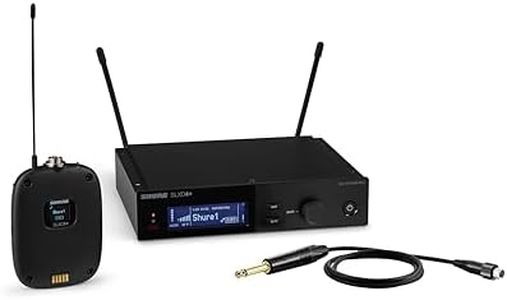
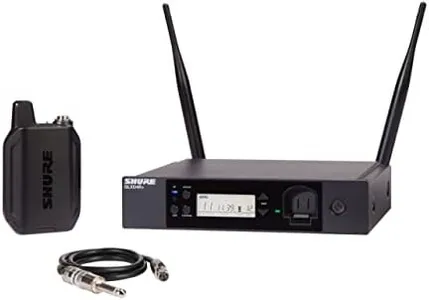
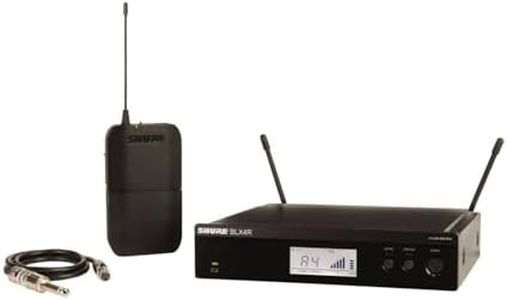
Shure SLXD14+ Wireless System - Includes SLXD4+ Receiver, SLXD1+ Bodypack with WA305 Cable for Guitar/Bass, Bluetooth Monitoring, Feedback Reduction, WWB and Mobile App Control, G57 Band

The Shure SLXD14+ wireless system is a solid choice for bass guitarists looking for reliable wireless freedom on stage or in the studio. It offers excellent sound quality with 24-bit digital audio and a dynamic range above 118 dB, ensuring your bass tones come through clear and natural. The system’s 138 MHz tuning range supports up to 14 simultaneous setups, which means it handles interference well and suits busy performance environments.

With automatic frequency linking and remote control of settings via the included apps, setup and adjustments are straightforward even if you’re not tech-savvy. Battery life is decent, providing up to 8 hours on two AA batteries, which is enough for most gigs or practice sessions. The build is durable and ergonomic, designed for long use without discomfort. Security-wise, AES-256 encryption protects your signal from unauthorized access, adding peace of mind.

If you want a dependable, high-quality wireless system with modern connectivity and strong interference management, the SLXD14+ fits well, especially for serious musicians playing bass in various live or recording settings.

Buying Guide for the Best Wireless Guitar Systems For Bass Guitars

Choosing the right wireless guitar system for your bass guitar can greatly enhance your performance by providing freedom of movement and eliminating the hassle of cables. When selecting a wireless system, it's important to consider several key specifications to ensure you get the best fit for your needs. Understanding these specs will help you make an informed decision and find a system that delivers reliable performance, sound quality, and convenience.
Frequency RangeThe frequency range of a wireless system determines the range of audio frequencies it can transmit. This is important because bass guitars produce lower frequencies than regular guitars. A system with a wide frequency range, especially one that covers the lower end, will ensure that the deep tones of your bass are transmitted accurately. Look for systems that specifically mention compatibility with bass guitars or have a frequency range that goes down to at least 20 Hz.
Operating RangeThe operating range is the maximum distance over which the wireless system can transmit a signal without losing quality. This is crucial for live performances where you might move around the stage. Systems with a short range (up to 50 feet) are suitable for small venues or practice spaces, while medium range systems (50-100 feet) are good for mid-sized venues. For large stages or outdoor performances, look for systems with a long range (over 100 feet) to ensure consistent signal transmission.
Battery LifeBattery life indicates how long the wireless system can operate on a single charge or set of batteries. This is important to avoid interruptions during performances. Short battery life (up to 4 hours) might be sufficient for practice sessions, while medium battery life (4-8 hours) is better for rehearsals and small gigs. For long performances or tours, look for systems with long battery life (over 8 hours) to ensure you don't run out of power mid-show.
LatencyLatency is the delay between when you play a note and when the sound is heard through the amplifier. Low latency is crucial for maintaining the timing and feel of your performance. High latency (over 10 milliseconds) can be noticeable and disruptive, especially for fast playing styles. Look for systems with low latency (under 5 milliseconds) to ensure a seamless playing experience.
Build QualityBuild quality refers to the durability and robustness of the wireless system. This is important for ensuring the system can withstand the rigors of frequent use and transportation. Systems with plastic housings are generally lighter and more affordable, but may not be as durable. Metal housings offer better durability and are more suitable for professional use. Consider your usage patterns and choose a system that can handle your performance environment.
Ease of UseEase of use encompasses how simple it is to set up and operate the wireless system. This is important for minimizing setup time and avoiding technical issues during performances. Systems with automatic frequency selection and simple controls are ideal for beginners or those who prefer a hassle-free experience. More advanced systems may offer additional features but can be more complex to operate. Choose a system that matches your technical comfort level.
Interference ResistanceInterference resistance refers to the system's ability to avoid signal disruption from other wireless devices. This is important for ensuring a clear and uninterrupted signal. Systems operating on UHF bands generally offer better resistance to interference compared to VHF bands. Digital systems also tend to have better interference resistance. If you perform in environments with many wireless devices, prioritize systems with strong interference resistance.

FAQ

Most Popular Categories Right Now