We Use CookiesWe use cookies to enhance the security, performance, functionality and for analytical and promotional activities. By continuing to browse this site you are agreeing to our privacy policy

10 Best Attic TV Antennas 2025 in the United States

How do we rank products for you?

Our technology thoroughly searches through the online shopping world, reviewing hundreds of sites. We then process and analyze this information, updating in real-time to bring you the latest top-rated products. This way, you always get the best and most current options available.

headphones-stars

Our Top Picks

#1

Winner

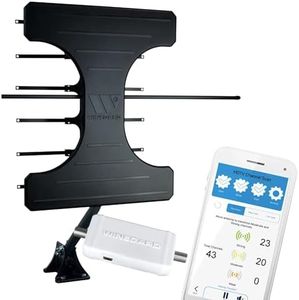
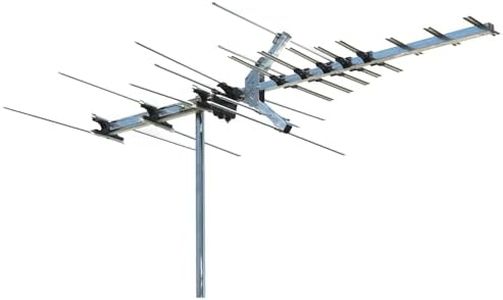
Winegard Elite Pro Outdoor VHF/UHF HDTV Antenna with Bluetooth Signal Meter and Integrated Channel Finder, Up to 70 Mile Range

Rating
10.0
Chosen by1,215
Range
Frequency Bands
Size and Installation

Most important from
765 reviews

Range
Achieves over 60 channels quickly, even from distances exceeding 35 miles with challenging terrain like hills and mountains.
Frequency Bands
Some users report disappointing VHF reception and fewer channels compared to other Winegard models designed specifically for VHF.
Size and Installation
The antenna’s compact footprint belies its powerful performance, making it a reliable choice for long-range HDTV reception.

The Winegard Elite Pro is a strong choice for anyone looking to pick up free over-the-air TV channels from a distance, with a claimed range of up to 70 miles. It covers both VHF and UHF frequency bands and comes with a built-in 20dB amplifier that boosts signal strength, helping to capture clearer HDTV signals, including 4K UHD where available. The antenna size is moderately large (about 5 x 17.5 x 30 inches) and weighs around 4.5 pounds, so it’s better suited for outdoor attic installation or a sturdy mounting spot rather than cramped indoor spaces.

What really sets this antenna apart is its Bluetooth-connected app, which acts like a smart signal meter. This feature guides you step-by-step with visual and audio feedback to find the best antenna placement, minimizing frustrating trial and error. This makes setup easier, especially for users who aren’t familiar with antennas. The antenna’s design focuses on maximizing the number of channels and fine-tuning reception, with a user-friendly interface that helps locate the strongest signals without constant repositioning.

There are some limitations to consider, such as the antenna’s size and outdoor placement requirement which might not suit all homes. Additionally, some users may find the setup process a bit techy despite the app assistance. The Winegard Elite Pro is well-suited for those who want a reliable, long-range HDTV antenna with smart technology to help get the most free channels, especially if you have space to install it outdoors or in an attic.

Rating
10.0
Chosen by1,215
Range
Frequency Bands
Size and Installation

Most important from
765 reviews

Range
Achieves over 60 channels quickly, even from distances exceeding 35 miles with challenging terrain like hills and mountains.
Frequency Bands
Some users report disappointing VHF reception and fewer channels compared to other Winegard models designed specifically for VHF.
Size and Installation
The antenna’s compact footprint belies its powerful performance, making it a reliable choice for long-range HDTV reception.
#2

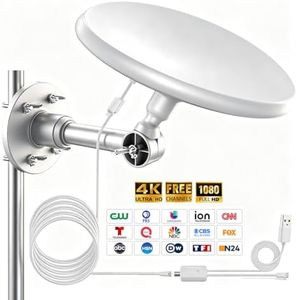
Winegard A3-2000 Air 360 Omnidirectional Over The Air Antenna - White

Rating
9.7
Range
Antenna Type
Size and Installation

Most important from
233 reviews

Range
The antenna delivers surprisingly strong reception in suburban dead zones, pulling in multiple digital channels clearly.
Antenna Type
Its omnidirectional design eliminates the need for precise aiming, simplifying setup significantly.
Size and Installation
Installation is straightforward and hassle-free, even replacing older antennas with minimal effort.
Amplification
Comes with all necessary hardware and accessories, including a powered wall plate and coax cable, making it a complete kit out of the box.

The Winegard A3-2000 Air 360 is an omnidirectional TV antenna designed for attic or indoor use, making it a good choice for users wanting to avoid outdoor installation. Its 360-degree reception means you don’t have to aim it precisely at broadcast towers, which simplifies setup, especially in areas with signals coming from multiple directions. The antenna supports both television and radio frequencies, adding versatility.

Its size is moderately compact for an attic antenna, measuring about 18.75 x 18.5 x 9.5 inches and weighing just over 5 pounds, so it won’t take up too much space or be too heavy to mount in an attic. The unit's universal fit and white color make it easy to blend in and install in various attic settings.

This antenna is a solid pick if you want a straightforward, no-aim option for receiving local broadcasts inside your attic, especially in moderate to strong signal areas. If you’re in a fringe signal zone or need long-range reception, you may want to consider additional amplification or a higher-gain antenna.

Rating
9.7
Range
Antenna Type
Size and Installation

Most important from
233 reviews

Range
The antenna delivers surprisingly strong reception in suburban dead zones, pulling in multiple digital channels clearly.
Antenna Type
Its omnidirectional design eliminates the need for precise aiming, simplifying setup significantly.
Size and Installation
Installation is straightforward and hassle-free, even replacing older antennas with minimal effort.
Amplification
Comes with all necessary hardware and accessories, including a powered wall plate and coax cable, making it a complete kit out of the box.
#3

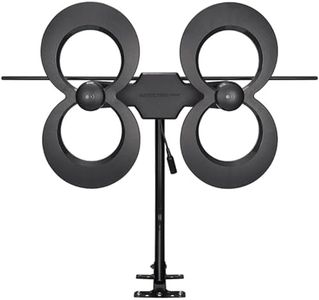
Winegard Platinum Series HD7694P Long Range TV Antenna (Outdoor / Attic, 4K Ultra-HD Ready, ATSC 3.0 Ready, High-VHF / UHF) - 45 Mile Range HD Antenna

Rating
8.8
Range
Antenna Size
Amplification

Most important from
1472 reviews

Range
The antenna's high gain on both VHF and UHF frequencies significantly outperforms smaller indoor antennas, making it ideal for those living 50 miles from broadcast towers.
Antenna Size
The antenna's large size, while challenging to install, translates to substantial signal gain and better reception quality, especially when mounted high and outdoors.
Amplification
Avoiding supplemental signal amplifiers can lead to better performance, as amplifiers may cause issues in areas close to TV transmitters.
Installation Ease
Proper installation is crucial; unfolding the elements correctly and connecting the balun properly are key to achieving optimal performance.

The Winegard Platinum Series HD7694P Long Range TV Antenna is designed for those who need a reliable solution for receiving digital TV signals in HD quality. With a range of 45 miles, it is suitable for both outdoor and attic installations, making it versatile and adaptable to different environments. It supports both High-VHF and UHF frequencies, ensuring a wide range of channels and strong signal reception.

The antenna is also 4K Ultra-HD and ATSC 3.0 ready, which means it is future-proof and can handle the latest broadcasting standards for ultra-clear picture quality and additional content features. One of the standout qualities is its high gain on both VHF and UHF frequencies, which helps in achieving uninterrupted digital TV reception. The precision-mounted electronics further enhance the efficiency of the signal transfer, ensuring a more reliable viewing experience.

However, the antenna's size (6.5 x 6.5 x 78 inches) may pose a challenge for some users during installation, especially in confined attic spaces. It weighs 6.7 pounds, which is relatively light but still requires careful mounting. It might be beneficial to use it with an amplifier, such as the Winegard Boost XT LNA-200, to maximize range and signal reliability. Installation is relatively straightforward, but some users may find it easier with professional help, particularly for outdoor setups.

Rating
8.8
Range
Antenna Size
Amplification

Most important from
1472 reviews

Range
The antenna's high gain on both VHF and UHF frequencies significantly outperforms smaller indoor antennas, making it ideal for those living 50 miles from broadcast towers.
Antenna Size
The antenna's large size, while challenging to install, translates to substantial signal gain and better reception quality, especially when mounted high and outdoors.
Amplification
Avoiding supplemental signal amplifiers can lead to better performance, as amplifiers may cause issues in areas close to TV transmitters.
Installation Ease
Proper installation is crucial; unfolding the elements correctly and connecting the balun properly are key to achieving optimal performance.

Buying Guide for the Best Attic TV Antennas

Choosing the right attic TV antenna can significantly improve your television viewing experience by providing better reception and access to more channels. When selecting an attic TV antenna, it's important to consider several key specifications to ensure you get the best fit for your needs. Understanding these specifications will help you make an informed decision and enjoy clear, uninterrupted TV signals.
RangeThe range of an attic TV antenna refers to the maximum distance it can effectively receive signals from broadcast towers. This spec is crucial because it determines how many channels you can access and the quality of the reception. Antennas with a range of up to 30 miles are suitable for urban areas with nearby broadcast towers. For suburban areas, a range of 30-60 miles is ideal, while rural areas may require antennas with a range of 60 miles or more. To pick the right range, consider the distance between your home and the nearest broadcast towers.
Frequency BandsTV antennas can receive signals on different frequency bands, primarily VHF (Very High Frequency) and UHF (Ultra High Frequency). VHF channels are typically channels 2-13, while UHF channels are 14-69. Some antennas are designed to receive both VHF and UHF signals, while others may only support one band. It's important to choose an antenna that supports the frequency bands used by the channels you want to watch. If you want access to a wide range of channels, a dual-band antenna that supports both VHF and UHF is a good choice.
Antenna TypeThere are different types of attic TV antennas, including directional, multi-directional, and omnidirectional antennas. Directional antennas focus on signals from one direction, providing a stronger signal from that direction but requiring precise aiming. Multi-directional antennas can receive signals from multiple directions, making them more versatile but potentially less powerful. Omnidirectional antennas receive signals from all directions, offering the most flexibility but generally having a shorter range. Choose the antenna type based on your location and the direction of the broadcast towers relative to your home.
GainGain is a measure of an antenna's ability to amplify the received signal, expressed in decibels (dB). Higher gain antennas can provide better reception, especially in areas with weak signals. Antennas with a gain of 5-10 dB are suitable for areas with strong signals, while those with a gain of 10-15 dB are better for areas with moderate signals. For areas with weak signals, look for antennas with a gain of 15 dB or higher. Consider the signal strength in your area to determine the appropriate gain for your antenna.
Size and InstallationThe size of the antenna can affect both its performance and ease of installation. Larger antennas generally have better reception capabilities but may be more challenging to install in an attic space. Smaller antennas are easier to install but may not provide the same level of performance. Consider the available space in your attic and your comfort level with installation when choosing the size of your antenna. Additionally, some antennas come with mounting hardware and installation guides, which can make the process easier.
AmplificationSome attic TV antennas come with built-in amplifiers to boost the signal strength, which can be particularly useful in areas with weak signals or long distances from broadcast towers. Amplified antennas can provide clearer reception and access to more channels. However, in areas with strong signals, amplification may not be necessary and could even cause signal overload. Determine whether you need an amplified antenna based on the signal strength in your area and the distance to the broadcast towers.

FAQ

Most Popular Categories Right Now