We Use CookiesWe use cookies to enhance the security, performance, functionality and for analytical and promotional activities. By continuing to browse this site you are agreeing to our privacy policy

10 Best Bass Practice Amps 2026 in the United States
How do we rank products for you?

Our technology thoroughly searches through the online shopping world, reviewing hundreds of sites. We then process and analyze this information, updating in real-time to bring you the latest top-rated products. This way, you always get the best and most current options available.

headphones-stars

Our Top Picks

#1

Winner

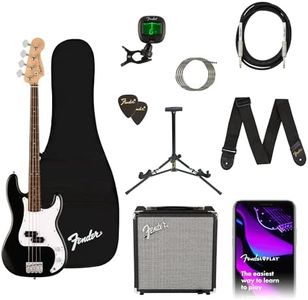
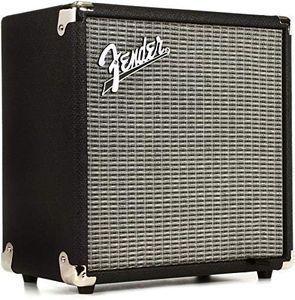
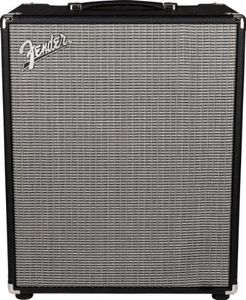
Fender Rumble 2370500000 200 v3 Bass Combo Amplifier, Black

Rating
10.0
Chosen by1,242
Wattage
Portability
Tone Controls

Most important from
113 reviews

Wattage
It provides plenty of volume for home use and small gigs, rarely needing to be cranked to full power even with a full band.
Portability
Its lightweight design makes it surprisingly easy to carry around without feeling bulky or heavy.
Tone Controls
The tone controls are simple yet effective, enabling quick adjustments that bring out the best in your bass.
Built-in Effects
The 4-band EQ and built-in overdrive offer a wide range of tones, from vintage distortion to crisp highs, allowing for versatile sound shaping.
Auxiliary Input and Headphone Jack
Auxiliary input is a great feature for jamming along with tracks, enhancing practice sessions significantly.

The Fender Rumble 2370500000 200 v3 is a solid choice for bass players seeking a versatile and powerful practice amp. With 200 watts of power and a large 15-inch speaker, it delivers strong volume and deep bass tones that suit both home practice and small gigs. The amp is surprisingly lightweight at about 28 pounds, making it fairly portable despite its size.

Tone shaping is flexible thanks to its 4-band EQ and a special overdrive circuit that lets you explore sounds from classic gritty growls to modern punchy slaps. It doesn’t have many built-in effects beyond the overdrive, so if you want a lot of different effects, you might need pedals. For private practice, it includes a headphone jack that mutes the speaker, which is great for quiet sessions. You can also plug in an MP3 player via the auxiliary input to jam along with your favorite tracks.

The controls are straightforward, so even beginners can quickly dial in their sound. One minor drawback is its size; while lighter than many similar amps, it may still be a bit bulky for some users who need extreme portability. This amp offers a solid balance of power, tone flexibility, and practical features that suit most bass players looking for a reliable practice amplifier.

Rating
10.0
Chosen by1,242
Wattage
Portability
Tone Controls

Most important from
113 reviews

Wattage
It provides plenty of volume for home use and small gigs, rarely needing to be cranked to full power even with a full band.
Portability
Its lightweight design makes it surprisingly easy to carry around without feeling bulky or heavy.
Tone Controls
The tone controls are simple yet effective, enabling quick adjustments that bring out the best in your bass.
Built-in Effects
The 4-band EQ and built-in overdrive offer a wide range of tones, from vintage distortion to crisp highs, allowing for versatile sound shaping.
Auxiliary Input and Headphone Jack
Auxiliary input is a great feature for jamming along with tracks, enhancing practice sessions significantly.
#2

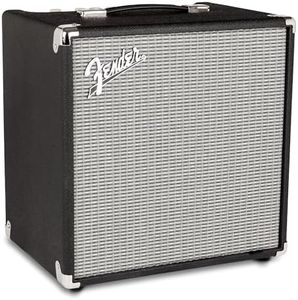
Fender Rumble 40 V3 Bass Amp for Bass Guitar, 40 Watts, with 2-Year Warranty Speaker, with Overdrive Circuit and Mid-Scoop Contour Switch

Rating
9.4
Wattage
Speaker Size
Portability

Most important from
1316 reviews

Wattage
Its 40 watts of power and 10-inch speaker provide ample volume for home practice and small jam sessions without being overpowering.
Speaker Size
Its 40 watts of power and 10-inch speaker provide ample volume for home practice and small jam sessions without being overpowering.
Portability
Compact and reasonably lightweight, the amp is portable enough for moving between practice spaces and small gigs.
Tone Controls
The amp delivers excellent tone control with features like the mid-scoop contour and overdrive circuit, allowing for a rich and dynamic bass sound.
Built-in Effects
While it lacks extensive built-in effects, the straightforward design focuses on dependable quality and essential connectivity options, including auxiliary input and headphone jack for silent practice.
Auxiliary Input and Headphone Jack
While it lacks extensive built-in effects, the straightforward design focuses on dependable quality and essential connectivity options, including auxiliary input and headphone jack for silent practice.

The Fender Rumble 40 V3 is a solid choice for bass players looking for a reliable practice amp with 40 watts of power and a 10-inch Fender Special Design speaker. This wattage provides good volume for home practice and small jam sessions without being overwhelming. Its compact size and relatively light weight (around 21 pounds) make it reasonably portable, although not the smallest option available.

The amp includes useful tone-shaping features like a mid-scoop contour switch and an overdrive circuit, allowing players to dial in a richer, more dynamic bass tone. It lacks a wide range of built-in effects, which might limit creative sound options for those who rely heavily on effects while practicing. Connectivity-wise, it offers essential inputs and outputs, including an auxiliary input and headphone jack, which are great for silent practice or playing along with backing tracks. The removable grille adds a nice touch for customization or maintenance.

With a strong customer rating of 4.7 out of 5 and backed by Fender's 2-year warranty, this amp delivers dependable quality. It is best suited for beginner to intermediate players who want a straightforward amp with good tone control and enough power for personal use and small group settings. However, it might not satisfy those needing extensive built-in effects or an ultra-portable design.

Rating
9.4
Wattage
Speaker Size
Portability

Most important from
1316 reviews

Wattage
Its 40 watts of power and 10-inch speaker provide ample volume for home practice and small jam sessions without being overpowering.
Speaker Size
Its 40 watts of power and 10-inch speaker provide ample volume for home practice and small jam sessions without being overpowering.
Portability
Compact and reasonably lightweight, the amp is portable enough for moving between practice spaces and small gigs.
Tone Controls
The amp delivers excellent tone control with features like the mid-scoop contour and overdrive circuit, allowing for a rich and dynamic bass sound.
Built-in Effects
While it lacks extensive built-in effects, the straightforward design focuses on dependable quality and essential connectivity options, including auxiliary input and headphone jack for silent practice.
Auxiliary Input and Headphone Jack
While it lacks extensive built-in effects, the straightforward design focuses on dependable quality and essential connectivity options, including auxiliary input and headphone jack for silent practice.
#3

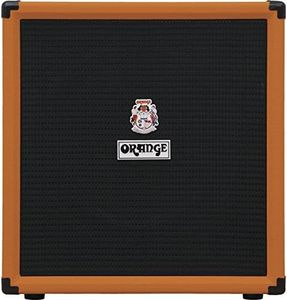
Orange Crush Bass 100W Bass Guitar Combo Amp, Orange

Rating
8.2
Wattage
Portability
Tone Controls

Most important from
58 reviews

Wattage
Even at low volume levels, this amp performs impressively well for practice sessions.
Portability
The amp is quite heavy, making transport challenging but reflecting its solid build and power.
Tone Controls
The gain blend feature delivers a perfect balance of grit without losing smooth low-end tones.
Built-in Effects
Though distortion might not be used often, the option encourages creative sound exploration.

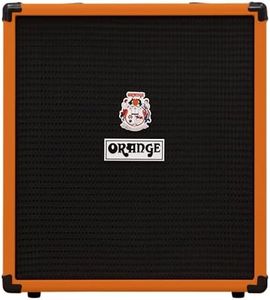
The Orange Crush100 Bass Combo is a powerful 100-watt amp with a single large 15-inch speaker, making it well-suited for bass players who want strong, clear sound for practice and small gigs. Its 3-band active EQ with a parametric mid control lets you shape your tone precisely, which is great if you like dialing in specific sounds. The bi-amp-inspired blend and gain controls give you extra flexibility, and these can be adjusted with a footswitch, adding convenience when playing. It also includes a balanced output for connecting to other equipment and a buffered effects loop, which helps maintain sound quality when using pedals.

At 61 pounds and measuring 24 x 26 x 18 inches, it’s not very portable compared to smaller practice amps, making it better suited for home or studio use rather than easy transport. It lacks built-in effects like reverb or chorus, so you might need extra pedals if you want those sounds. The amp features standard 6.35mm jacks and allows you to plug in headphones or an auxiliary input, which is handy for silent practice or playing along with music. This amp is a solid choice if you want high wattage, good tone control, and professional features in a combo amp, but if portability or built-in effects are a priority, you might want to explore lighter, more compact options.

Rating
8.2
Wattage
Portability
Tone Controls

Most important from
58 reviews

Wattage
Even at low volume levels, this amp performs impressively well for practice sessions.
Portability
The amp is quite heavy, making transport challenging but reflecting its solid build and power.
Tone Controls
The gain blend feature delivers a perfect balance of grit without losing smooth low-end tones.
Built-in Effects
Though distortion might not be used often, the option encourages creative sound exploration.

Buying Guide for the Best Bass Practice Amps

When choosing a bass practice amp, it's important to consider your specific needs and preferences. A practice amp is designed to help you improve your skills and enjoy playing your bass guitar at home or in a small practice space. The right amp will provide you with the sound quality, volume, and features that suit your practice routine. Here are some key specifications to consider when selecting a bass practice amp.
WattageWattage refers to the power output of the amp and is measured in watts. This spec is important because it determines how loud the amp can get. For practice amps, wattage typically ranges from 10 to 50 watts. Lower wattage amps (10-20 watts) are suitable for quiet practice sessions in small rooms, while higher wattage amps (30-50 watts) can provide more volume and headroom, which is useful if you occasionally play with others or in larger spaces. Choose a wattage that matches your practice environment and volume needs.
Speaker SizeThe speaker size, measured in inches, affects the tone and projection of the amp. Common speaker sizes for practice amps are 8, 10, and 12 inches. Smaller speakers (8 inches) tend to produce a tighter, more focused sound, which is great for practicing in confined spaces. Larger speakers (10-12 inches) offer a fuller, richer tone with better low-end response, which can be more satisfying for bass players. Consider the type of sound you prefer and the space you have available when choosing the speaker size.
PortabilityPortability refers to how easy it is to transport the amp. This is important if you plan to move your amp between different practice locations or take it to lessons. Lighter and more compact amps are easier to carry around. Look for features like a built-in handle or a compact design to enhance portability. If you mostly practice in one place, portability might be less of a concern.
Tone ControlsTone controls allow you to shape the sound of your bass. Common controls include bass, mid, and treble knobs, which adjust the low, mid, and high frequencies, respectively. Some amps also have additional features like contour or presence controls. These controls are important for dialing in your preferred sound and adapting to different playing styles or genres. If you like to experiment with your tone, look for an amp with versatile tone controls.
Built-in EffectsSome practice amps come with built-in effects like reverb, chorus, or overdrive. These effects can add variety to your practice sessions and help you explore different sounds without needing additional pedals. If you enjoy experimenting with different effects, look for an amp that includes them. However, if you prefer a straightforward, clean sound, you might not need built-in effects.
Auxiliary Input and Headphone JackAn auxiliary input allows you to connect external devices like a smartphone or MP3 player to play along with your favorite tracks. A headphone jack lets you practice quietly without disturbing others. These features are important for versatile practice options and silent practice. If you often play along with backing tracks or need to practice quietly, make sure your amp has these inputs.

FAQ

Most Popular Categories Right Now