10 Best Cell Phone Signal Boosters 2026 in the United States

Related Products
Up to 10% off
Our technology thoroughly searches through the online shopping world, reviewing hundreds of sites. We then process and analyze this information, updating in real-time to bring you the latest top-rated products. This way, you always get the best and most current options available.

Our Top Picks
Winner
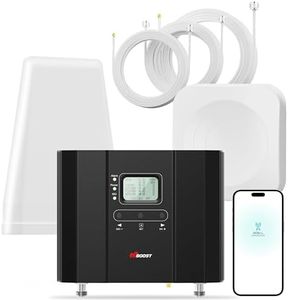
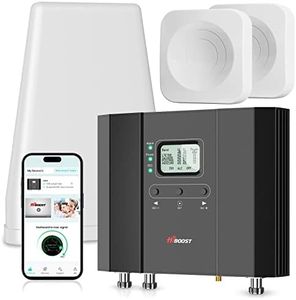
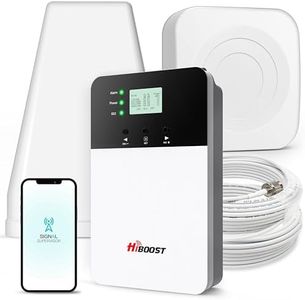
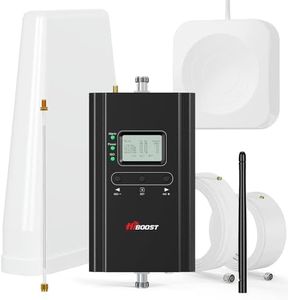
Hiboost Cell Phone Booster for Home Office and 2-Story, Professional 5G 4G Signal Booster Covering 12000 sq.ft, 2 Antennas for Multi-Room, Compatible with All Carriers, App Support & FCC Approved
Most important from
682 reviews
The HiBoost 15K 2.0 booster is designed to improve cell signal across large homes or offices, covering up to 10,000 square feet with up to 70 dB gain. This makes it suitable for multiroom, multi-story buildings where weak signal affects calls, texts, or streaming. It supports all major U.S. carriers and works with both 4G LTE and some 5G signals, but it only boosts 5G frequencies transmitted within existing 4G bands; newer 5G bands like mmWave aren’t supported yet. This is common for many boosters currently. The system includes two indoor antennas which help spread the boosted signal more evenly in multiple rooms or floors.
Installation is user-friendly and doesn’t require drilling, thanks to a window cable for the outdoor antenna. The HiBoost app and LCD screen guide you through setup and let you monitor signal strength easily. The use of low-loss 400 cable helps maintain signal quality, especially in weak-signal areas. It also features automatic gain control to optimize performance without manual adjustments. While the booster is somewhat heavy and a bit larger than simpler models, this is expected given its higher coverage and power.
The included 3-year warranty and accessible customer support are helpful for troubleshooting. If you live in a large home or office with a weak cell signal and want a reliable, carrier-compatible solution that’s relatively easy to install and monitor, this booster is a strong option. Just make sure your outdoor signal is at least 1 bar and that your 5G provider uses 4G bands for their 5G service if 5G support is important to you.
Most important from
682 reviews
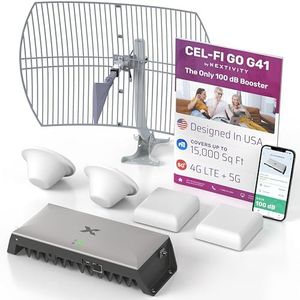
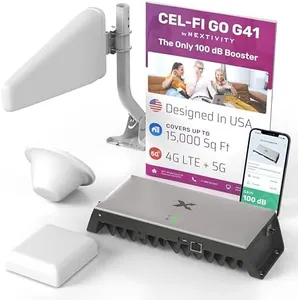
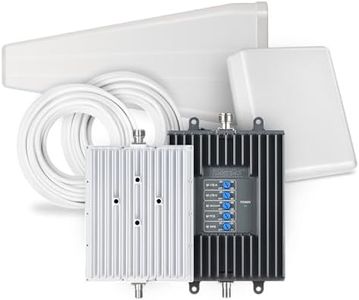
Nextivity CEL-FI GO G41 Cell Phone Booster for Home 4G, 5G, AT&T, Verizon & T-Mobile Up to 15,000 Sq Ft Coverage 100 dB Cell Phone Signal Booster FCC Approved (2X Antenna with Grid)
Most important from
688 reviews
The Nextivity CEL-FI GO G41 is a strong choice if you need to improve cell phone signal in a large home or office, covering up to 15,000 square feet. It supports major US carriers like AT&T, Verizon, and T-Mobile, and works with both 4G LTE and 5G technologies, thanks to its 4th generation, 5G-ready chipset. This means it’s future-proof for current and upcoming network improvements. Its 100 dB gain is significantly higher than many competitors, meaning it boosts weak signals more effectively and can reduce dropped calls and slow data speeds across a wide area.
The kit includes multiple antennas (two dome and two panel indoor antennas, plus one outdoor antenna) giving flexibility in installation to suit different building layouts. Installation isn’t overly complicated but may require some outdoor antenna mounting on a pole, which might need basic tools or professional help for best results. It supports multiple users simultaneously, making it suitable for households or small offices with several phones.
On the downside, it doesn’t integrate with smart home devices, which might be a drawback if you want remote monitoring or control. Also, while it’s FCC certified ensuring it meets regulatory standards, it’s still important to check compatibility with your specific carrier and location for optimal performance. If you want a reliable and powerful signal booster for a large area, the CEL-FI GO G41 offers excellent coverage and strong signal improvement, though it requires some effort to set up and isn’t designed for smart home integration.
Most important from
688 reviews
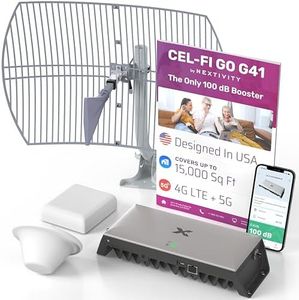
CEL-FI GO G41 | Cell Phone Booster for Home | 4G, 5G, AT&T, Verizon & T-Mobile | Up to 15,000 Sq Ft Coverage | 100 dB Cell Phone Signal Booster | FCC Approved (1x Antenna w/Grid)
Most important from
688 reviews
The CEL-FI GO G41 is a solid choice for anyone looking to boost their cell signal at home, especially if you use AT&T, Verizon, or T-Mobile. It offers excellent coverage, capable of reaching up to 15,000 square feet, which means it can cover an entire house rather than just one room. This is thanks to its high gain of 100 dB, which is much stronger than many other boosters on the market. The booster supports both 4G and the latest 5G technologies, making it future-proof for faster data and fewer dropped calls.
Installation is fairly straightforward since it comes with both a dome and a panel antenna, letting you choose what fits your space best. However, the unit is quite heavy at 24 pounds, so placement might require some planning. It’s fully FCC approved, ensuring it meets safety and performance standards. The device is designed mainly for smartphones and might not be ideal for very large commercial spaces or multiple simultaneous users beyond a typical household.
If stable and strong cell signal inside your home is important to you, the CEL-FI GO G41 offers powerful performance with easy carrier compatibility.
Most important from
688 reviews
Buying Guide for the Best Cell Phone Signal Boosters
Choosing the right cell phone signal booster can significantly improve your mobile connectivity, especially in areas with weak signals. A signal booster works by amplifying the existing cell signal, making it stronger and more reliable. To find the best fit for you, it's important to understand the key specifications and how they align with your needs.FAQ
Most Popular Categories Right Now


