10 Best Compact Mirrorless Cameras 2026 in the United States



Related Products
Up to 22% off
Recommended lists

Our technology thoroughly searches through the online shopping world, reviewing hundreds of sites. We then process and analyze this information, updating in real-time to bring you the latest top-rated products. This way, you always get the best and most current options available.

Our Top Picks
Winner
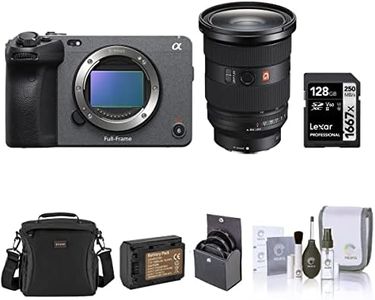
Sony Alpha FX3 ILME-FX3 | Full-frame Cinema Line Camera
Most important from
215 reviews
The Sony Alpha FX3 is a compact full-frame mirrorless camera designed primarily for professional video creators who want high-quality cinematic footage in a portable body. It features a large 35mm full-frame sensor with excellent sensitivity and over 15 stops of dynamic range, meaning it can capture rich details in both bright and dark areas. The camera’s resolution is 10.2 megapixels, which is lower than many still-focused cameras but optimized for video performance. You can record 4K video at up to 120 frames per second with 10-bit color depth, allowing smooth slow-motion and vibrant color grading.
This model supports Sony E-mount lenses, giving you access to a wide variety of lenses from Sony and third parties. Its autofocus system is advanced, combining 627 points with both contrast and phase detection, enabling fast and accurate focus tracking—very helpful for moving subjects in video. It also includes sensor-shift image stabilization to reduce shake for smoother handheld shooting. Battery life is decent for a video-centric mirrorless camera and it comes with a good set of connectivity options like Wi-Fi, NFC, USB-C, and full-size HDMI for easy connection to external monitors or accessories. The compact design is enhanced with practical mounting points and an XLR handle for professional audio input.
The downsides are that the still photo resolution is relatively low compared to many mirrorless cameras, so it’s less ideal if you want high-resolution photos as a priority. Also, the price and complexity of features mean it’s best suited to experienced users or professionals focused on video production rather than casual photographers. If your main goal is a lightweight, highly capable 4K video camera with solid autofocus and stabilization in a small package, the FX3 represents a strong choice.
Most important from
215 reviews
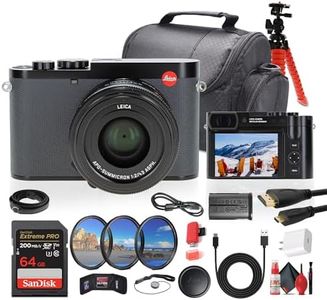
Leica Q3 43 Compact Portable Powerful Digital Camera (19084) + 64GB Memory Card + Camera Bag + Lens Filter Kit + Flexible Tripod + Cleaning Kit + USB-C Cable + USB-C Adapter + HDMI/Micro Cable + More
The Leica Q3 is a high-end compact mirrorless camera that stands out with its impressive 60MP full-frame sensor, delivering extremely sharp and detailed images, great for photographers wanting professional-quality photos. Its fixed 43mm f/2 lens is fast and sharp, ideal for portraits and everyday shooting with beautiful background blur and accurate colors. Autofocus uses phase detection, which is quick and reliable for tracking moving subjects. The camera also offers optical image stabilization, helping reduce blur from shaky hands or movement.
For video, the Q3 supports advanced options like 8K and 4K recording with high color quality, making it a strong choice for content creators who want the best video quality in a compact form. The camera is weather-resistant, so it can handle a bit of rain or dust, adding to its versatility outdoors. Battery life is decent but not exceptional, which is common for cameras with large sensors and high-res video capabilities; carrying extra batteries might be necessary for long shoots. Connectivity options include Wi-Fi and USB-C, allowing easy file transfer and remote control, which are useful features for modern workflows.
The fixed lens limits flexibility compared to cameras with interchangeable lenses, so if you want zoom or different focal lengths, this might not be the best pick. The camera is somewhat pricey and weighs over 6 pounds including accessories, which makes it less ideal for casual or travel users looking for ultra-light gear. It is best suited for serious photographers and videographers who prioritize image quality, sharp optics, and advanced video in a portable package, but it may be less appealing to beginners or those needing versatile zoom lenses.
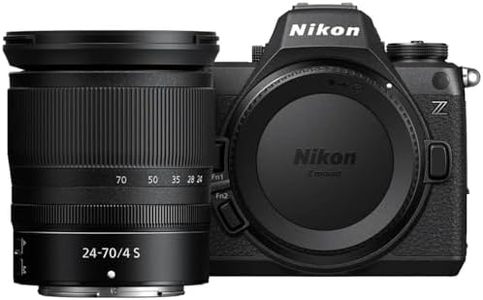
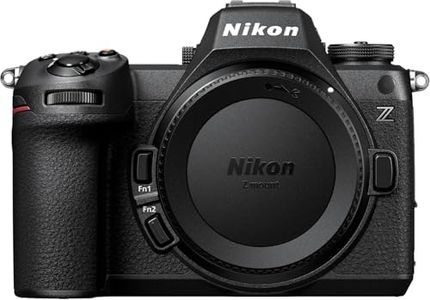
Nikon Z6 III with 24-70mm f/4 Lens | Full-Frame mirrorless Stills/Video Camera with 6K/60p Internal RAW Recording | Nikon USA Model
Most important from
48 reviews
The Nikon Z6 III is a compelling choice for both photography enthusiasts and professionals looking for a compact mirrorless camera that excels in both stills and video. One of its standout features is the impressive 6K/60p internal RAW video recording, which provides outstanding quality for videographers. The camera also offers various frame rates, including 4K/120p and Full HD/240p slow-motion options, making it versatile for creative projects.
The camera's electronic viewfinder (EVF) is top-notch, boasting a max brightness of 4000 nits, which ensures a clear view even in bright sunlight. With a resolution of 5760k dots and a refresh rate of 120 fps, users can expect smooth and detailed visuals, ideal for tracking fast-moving subjects. The autofocus system has seen significant improvements, featuring advanced multi-subject recognition driven by deep learning technology, which allows for precise focusing even in challenging lighting conditions.
While the Z6 III shines in many areas, there are a few drawbacks. The battery life, while decent, may not be sufficient for extended shooting sessions, particularly when using high-resolution video features. Additionally, the camera’s weight and size may not be as compact as some other mirrorless options, which could be a consideration for those prioritizing portability. In terms of lens compatibility, it comes with the NIKKOR Z 24-70mm f/4 S, a solid all-around lens, but users looking for a broader range of lenses may need to invest in additional options. The ISO range is impressive, reaching up to 204800, but high ISO performance can vary, and it’s essential to use it thoughtfully to avoid noise. The Nikon Z6 III is a powerful compact mirrorless camera that caters well to both photographers and videographers, offering advanced features and excellent performance, though potential buyers should consider battery life and portability based on their specific needs.
Most important from
48 reviews
Buying Guide for the Best Compact Mirrorless Cameras
Choosing the right compact mirrorless camera can be a rewarding experience, as these cameras offer a great balance between portability and high-quality image capture. To make an informed decision, it's important to understand the key specifications and how they align with your photography needs. Here are the main specs to consider and how to navigate them.FAQ
Most Popular Categories Right Now


