We Use CookiesWe use cookies to enhance the security, performance, functionality and for analytical and promotional activities. By continuing to browse this site you are agreeing to our privacy policy

10 Best Fertilizer For Outdoor Plants 2026 in the United States
How do we rank products for you?

Our technology thoroughly searches through the online shopping world, reviewing hundreds of sites. We then process and analyze this information, updating in real-time to bring you the latest top-rated products. This way, you always get the best and most current options available.

headphones-stars

Our Top Picks

#1

Winner

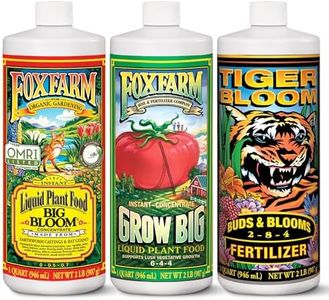
FoxFarm Soil Liquid Trio Pack - Big Bloom, Grow Big, Tiger Bloom Fertilizers Supports Vigorous Plant Growth, Bud Development & Abundant Fruit - Complete Liquid Plant Food Set - 3 Quart Bottles

Rating
10.0
Chosen by1,123
Type of Fertilizer
Application Method

Most important from
24198 reviews

Type of Fertilizer
The combination of Big Bloom, Grow Big, and Tiger Bloom creates a complete feeding program that supports plants through every growth stage, resulting in strong roots, healthy foliage, and abundant blooms.
Application Method
Clear, easy-to-follow instructions make the feeding schedule simple to implement, even for beginners.

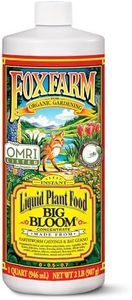
The FoxFarm Soil Liquid Trio Pack offers a complete set of liquid fertilizers designed to support outdoor plants through all growth stages. It includes Tiger Bloom, Grow Big, and Big Bloom formulas, each tailored for specific needs like strong growth, flower and fruit development, and overall plant health. The N-P-K ratio varies across these products to match different stages: Grow Big has higher nitrogen for leafy growth, Tiger Bloom focuses on phosphorus and potassium for blooms, and Big Bloom provides gentle nourishment suitable for all phases.

Being liquid, these fertilizers deliver nutrients quickly and can be mixed easily with water, making them suitable for various outdoor plants such as tomatoes, roses, and vegetables. They also maintain a low pH, which helps keep micronutrients stable and available for plants. However, this set is synthetic rather than organic, which might be a drawback if you prefer natural options. Also, liquid fertilizers require more frequent application compared to slow-release granules, so you should be prepared for regular feeding.

The formulas are greenhouse-tested and come from a reputable brand, giving good reliability. This trio is a strong choice for gardeners looking for flexible, comprehensive nutrition for a wide range of outdoor plants, especially if you want to support plants through every growth phase with a proven, easy-to-use liquid fertilizer system.

Rating
10.0
Chosen by1,123
Type of Fertilizer
Application Method

Most important from
24198 reviews

Type of Fertilizer
The combination of Big Bloom, Grow Big, and Tiger Bloom creates a complete feeding program that supports plants through every growth stage, resulting in strong roots, healthy foliage, and abundant blooms.
Application Method
Clear, easy-to-follow instructions make the feeding schedule simple to implement, even for beginners.
#2

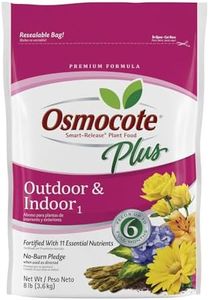
Osmocote Smart-Release Plant Food Plus Outdoor & Indoor1, 8 lb.

Rating
9.7
Application Method

Most important from
4756 reviews

Application Method
The slow-release formula means no need for frequent fertilizing—just apply once and water.

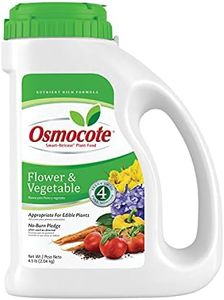
Osmocote Smart-Release Plant Food Plus is a granular fertilizer designed for a wide range of plants, both outdoor and indoor, including flowers, vegetables, shrubs, and trees. Its standout feature is a unique resin coating that slowly releases nutrients over up to six months, reducing the need for frequent fertilizing and supporting steady plant growth. It supplies 11 essential nutrients, going beyond the basic nitrogen, phosphorus, and potassium (N-P-K) to support comprehensive plant health.

The fertilizer is synthetic but formulated with a “no-burn” promise, so when used as directed, it’s gentle on plants and unlikely to cause damage. Application is straightforward—just mix according to pot size or square footage, making it user-friendly even for beginners. It covers a fairly large area (up to 300 sq. ft. per 8 lbs), which is convenient for medium-sized gardens. Those seeking fully organic options may want to consider alternatives.

This product is a solid choice for gardeners wanting a low-maintenance, consistent feeding option for outdoor plants, especially if they prefer granular products that deliver nutrients steadily without frequent application.

Rating
9.7
Application Method

Most important from
4756 reviews

Application Method
The slow-release formula means no need for frequent fertilizing—just apply once and water.
#3

Farmer’s Secret Fruit & Bloom Booster Fertilizer - Super Concentrated - Boosts Flowering and Yield on All Varieties of Fruits, Vegetables and Flowers (16oz)

Rating
9.7
Organic vs. Synthetic
Application Method
N-P-K Ratio

Most important from
3230 reviews

Organic vs. Synthetic
Organic formulation supports strong, greener plants without synthetic additives, appealing to natural gardening preferences.
Application Method
Easy to mix and apply, it integrates smoothly into regular gardening routines without any unpleasant colors or odors.
N-P-K Ratio
Excellent value for money with a concentrated formula that can be diluted for multiple applications over several seasons.

Farmer’s Secret Fruit & Bloom Booster is a super concentrated liquid fertilizer designed to enhance flowering and fruit production in a variety of outdoor plants including fruits, vegetables, and flowers. Its strength lies in boosting root health to improve nutrient uptake, which supports more vibrant blooms and higher yields. The product is easy to use with a simple dilution ratio (1 teaspoon per 2 gallons of water) and can be applied by watering or spraying every 2-4 weeks, making it convenient for regular garden care.

This organic fertilizer is ideal for gardeners interested in natural products. The liquid form allows for quick absorption and the formula is compatible with many plant types and soil conditions, allowing gardeners to achieve improved flowering and fruit production without dealing with complex feeding schedules.

With a strong reputation and popularity in the garden fertilizer category, Farmer’s Secret Fruit & Bloom Booster is well-suited for home gardeners aiming to support their plants’ growth and maximize yields.

Rating
9.7
Organic vs. Synthetic
Application Method
N-P-K Ratio

Most important from
3230 reviews

Organic vs. Synthetic
Organic formulation supports strong, greener plants without synthetic additives, appealing to natural gardening preferences.
Application Method
Easy to mix and apply, it integrates smoothly into regular gardening routines without any unpleasant colors or odors.
N-P-K Ratio
Excellent value for money with a concentrated formula that can be diluted for multiple applications over several seasons.

Buying Guide for the Best Fertilizer For Outdoor Plants

Choosing the right fertilizer for your outdoor plants is crucial for their growth and health. Fertilizers provide essential nutrients that plants need to thrive, and selecting the right one can make a significant difference in your garden's success. When picking a fertilizer, consider the type of plants you have, the soil condition, and the specific needs of your garden. Understanding the key specifications of fertilizers will help you make an informed decision and ensure your plants get the nutrients they need.
N-P-K RatioThe N-P-K ratio represents the percentage of nitrogen (N), phosphorus (P), and potassium (K) in the fertilizer. These are the primary nutrients that plants need. Nitrogen promotes leafy growth, phosphorus supports root development and flowering, and potassium enhances overall plant health and disease resistance. For leafy vegetables, a higher nitrogen content is beneficial, while flowering plants and root crops may require more phosphorus and potassium. Choose a balanced ratio for general garden use or a specific ratio tailored to your plant's needs.
Type of FertilizerFertilizers come in various forms, including granular, liquid, and slow-release. Granular fertilizers are easy to apply and provide nutrients over time, making them suitable for general garden use. Liquid fertilizers are fast-acting and ideal for quick nutrient boosts, often used for container plants or during the growing season. Slow-release fertilizers gradually release nutrients over several months, reducing the need for frequent applications. Consider your gardening habits and the specific needs of your plants when choosing the type of fertilizer.
Organic vs. SyntheticOrganic fertilizers are made from natural materials like compost, manure, and bone meal, and they improve soil structure and microbial activity. They release nutrients slowly and are environmentally friendly. Synthetic fertilizers are chemically manufactured and provide nutrients quickly, which can be beneficial for immediate plant needs. However, they may not improve soil health in the long term. If you prefer sustainable gardening practices, opt for organic fertilizers. For quick results or specific nutrient deficiencies, synthetic fertilizers can be effective.
MicronutrientsIn addition to the primary nutrients (N-P-K), plants also need micronutrients like iron, manganese, zinc, copper, and boron in smaller amounts. These micronutrients are essential for various physiological functions and overall plant health. Some fertilizers include micronutrients, while others do not. If your soil is deficient in certain micronutrients, choose a fertilizer that provides a comprehensive nutrient profile. Soil testing can help determine if your garden needs additional micronutrients.
Application MethodThe method of applying fertilizer can affect its effectiveness. Some fertilizers are designed to be mixed into the soil, while others are applied to the soil surface or as foliar sprays. Soil-applied fertilizers are suitable for long-term nutrient supply, while foliar sprays provide quick nutrient absorption through the leaves. Consider the ease of application and the specific needs of your plants when choosing a fertilizer. For example, foliar sprays can be useful for addressing nutrient deficiencies quickly, while soil-applied fertilizers are better for sustained growth.
Soil pH CompatibilitySoil pH affects nutrient availability to plants. Some fertilizers are formulated to work best within specific pH ranges. Acidic soils (low pH) may require fertilizers that help raise the pH, while alkaline soils (high pH) may need fertilizers that lower the pH. Understanding your soil's pH can help you choose a fertilizer that complements your soil conditions and ensures optimal nutrient uptake by your plants. Soil testing kits are available to determine your soil's pH level.

FAQ

Most Popular Categories Right Now