We Use CookiesWe use cookies to enhance the security, performance, functionality and for analytical and promotional activities. By continuing to browse this site you are agreeing to our privacy policy

10 Best Industrial Weed Killer 2026 in the United States
How do we rank products for you?

Our technology thoroughly searches through the online shopping world, reviewing hundreds of sites. We then process and analyze this information, updating in real-time to bring you the latest top-rated products. This way, you always get the best and most current options available.

headphones-stars

Our Top Picks

#1

Winner

Round Up Pro Weed Killer 2.5 Gallon

Rating
10.0
Chosen by1,406
Formulation
Selectivity
Application Rate

Most important from
2728 reviews

Formulation
Thicker viscosity than store-bought concentrates, offering better control over tough weeds.
Selectivity
Kills all unwanted growth effectively; not a single plant sprayed has survived.
Application Rate
A little goes a very long way; following the instructions is key to its success.

Round Up Pro Weed Killer 2.5 Gallon is a versatile and widely used product in various settings, from agricultural farming to industrial vegetation management, and even around residential and commercial properties. One of its major strengths is its active ingredient, Glyphosate, which is highly effective in controlling a broad spectrum of weeds. This non-selective herbicide means it will kill most plants it comes in contact with, making it suitable for large-scale weed management tasks but not for use in selective plant areas where desirable plants may be affected.

The formulation is liquid, making it easy to apply and rainfast within just one hour, ensuring that it remains effective shortly after application even if it rains. However, this product can be quite potent and may have a significant environmental impact if not used carefully, as Glyphosate is known for its potential to harm non-target plants and possibly affect soil health over time. The residual effect is relatively short, meaning it does not provide long-term weed prevention, which might require more frequent applications.

The application rate should be carefully followed to avoid overuse and potential environmental harm. Weighing in at 26 pounds for a 2.5-gallon container, it’s a considerable volume, making it a good option for large-scale or repeated use. This product is highly ranked within its category, reflecting its popularity and reliability among users. Suitable for those needing a powerful solution for extensive weed control, but caution is advised regarding its environmental impact and non-selective nature.

Rating
10.0
Chosen by1,406
Formulation
Selectivity
Application Rate

Most important from
2728 reviews

Formulation
Thicker viscosity than store-bought concentrates, offering better control over tough weeds.
Selectivity
Kills all unwanted growth effectively; not a single plant sprayed has survived.
Application Rate
A little goes a very long way; following the instructions is key to its success.
#2

Compare-N-Save 75324 Herbicide, 1-gallon, white

Rating
9.4
Selectivity
Residual Effect
Environmental Impact

Most important from
19461 reviews

Selectivity
Careful application needed to avoid killing desirable plants, as it is non-selective and potent.
Residual Effect
Long-lasting effect, preventing new weeds from sprouting for an extended period.
Environmental Impact
Lower environmental impact compared to some other herbicides, allowing for mindful gardening.

The Compare-N-Save 75324 Herbicide is a highly effective industrial weed killer noted for its strong active ingredient, glyphosate, which makes up 41% of the formulation. This contributes to its ability to deliver visible weed control results within 2 to 4 days, a quick turnaround that many users will find appealing. Additionally, the product is rainproof within 2 hours of application, making it resilient to changing weather conditions and ensuring that it remains effective shortly after use.

With a coverage area of over 25,000 square feet and the ability to make up to 85 gallons of ready-to-use spray, it is suited for large-scale weed killing operations, making it a good fit for those with extensive land or industrial needs. The herbicide is packaged in a 1-gallon container. Glyphosate, the active ingredient, has been a subject of environmental and health concerns, which might be a point of concern for environmentally conscious users. The product's non-selective nature means it will kill most plants it comes into contact with, making it unsuitable for use in areas where desirable plants are present.

Users should also follow proper application rates and safety guidelines to avoid potential risks associated with overuse. The Compare-N-Save 75324 Herbicide is a powerful and efficient option for those needing substantial weed control but requires careful handling and consideration of its environmental impact.

Rating
9.4
Selectivity
Residual Effect
Environmental Impact

Most important from
19461 reviews

Selectivity
Careful application needed to avoid killing desirable plants, as it is non-selective and potent.
Residual Effect
Long-lasting effect, preventing new weeds from sprouting for an extended period.
Environmental Impact
Lower environmental impact compared to some other herbicides, allowing for mindful gardening.
#3

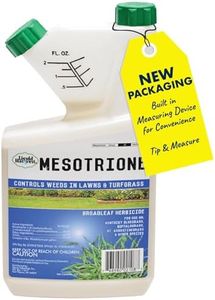
Liquid Harvest Mesotrione - 32oz - Mesotrione Concentrate (Compare to Tenacity) - Pre and Post-Emergent Weed Killer for Lawn and Turf Grasses

Rating
8.5
Active Ingredient
Formulation
Selectivity

Most important from
1014 reviews

Active Ingredient
This herbicide delivers impressive results on stubborn crabgrass, turning it yellowish-white within a week without harming the lawn.
Formulation
The liquid formulation allows for easy and accurate measuring, making it simple to apply even in smaller sprayers.
Selectivity
Selective action is evident as the product controls weeds while leaving cool-season turf grasses like Kentucky Bluegrass unharmed.
Application Rate
Using the product with a surfactant and dye helps ensure precise application and enhances the overall treatment experience.
Environmental Impact
The visible dye additive fades quickly and washes off sidewalks easily, aiding in careful and targeted spraying.

Liquid Harvest Mesotrione is a liquid herbicide known for its active ingredient mesotrione, which works by blocking photosynthesis in weeds. It targets a broad range of 46 weed species, including common troublesome ones like crabgrass, dandelion, and clover, making it versatile for lawn and turf use. The product works as both a pre- and post-emergent treatment, meaning it can prevent weed seeds from germinating as well as kill existing weeds. It is best suited for cool-season turf grasses like Kentucky Bluegrass and Tall Fescue, but should be avoided on some warm-season grasses such as bermudagrass unless dormant.

One important application note is the need for watering after treatment if there is no rainfall within 10 days to activate the herbicide effectively. The residual effect allows for extended weed control but requires careful adherence to application rates to avoid turf damage. The liquid formulation makes it easy to measure and apply, although its relatively slow full effect (2-3 weeks) means patience is necessary.

In terms of environmental impact, mesotrione breaks down naturally but users should always follow guidelines to minimize runoff or unintended plant damage. This product is a solid choice for industrial or large-scale turf maintenance focused on broadleaf and grassy weeds, especially where selective weed control is important. However, it demands attention to timing, watering, and turf compatibility to achieve the best results.

Rating
8.5
Active Ingredient
Formulation
Selectivity

Most important from
1014 reviews

Active Ingredient
This herbicide delivers impressive results on stubborn crabgrass, turning it yellowish-white within a week without harming the lawn.
Formulation
The liquid formulation allows for easy and accurate measuring, making it simple to apply even in smaller sprayers.
Selectivity
Selective action is evident as the product controls weeds while leaving cool-season turf grasses like Kentucky Bluegrass unharmed.
Application Rate
Using the product with a surfactant and dye helps ensure precise application and enhances the overall treatment experience.
Environmental Impact
The visible dye additive fades quickly and washes off sidewalks easily, aiding in careful and targeted spraying.

Buying Guide for the Best Industrial Weed Killer

Choosing the right industrial weed killer is crucial for effectively managing unwanted vegetation in large areas such as farms, industrial sites, and public spaces. The right product will help you maintain a clean and safe environment while minimizing the impact on desirable plants and the surrounding ecosystem. To make an informed decision, you need to understand the key specifications and how they align with your specific needs.
Active IngredientThe active ingredient is the chemical component that targets and kills the weeds. This spec is important because different active ingredients work in various ways and are effective against different types of weeds. Common active ingredients include glyphosate, 2,4-D, and dicamba. If you need to target a broad spectrum of weeds, a product with glyphosate might be suitable. For specific types of weeds, such as broadleaf weeds, 2,4-D could be more effective. Choose an active ingredient based on the types of weeds you need to control.
FormulationFormulation refers to the physical form of the weed killer, such as liquid, granular, or concentrate. This spec is important because it affects how the product is applied and its effectiveness. Liquid formulations are easy to apply and are quickly absorbed by weeds, making them ideal for immediate results. Granular formulations are spread over the soil and are activated by moisture, providing longer-lasting control. Concentrates need to be diluted before use and offer flexibility in application rates. Choose a formulation based on your application method and the area you need to treat.
SelectivitySelectivity indicates whether the weed killer targets only specific types of plants (selective) or all vegetation (non-selective). This spec is important because it determines the impact on surrounding plants. Selective weed killers are ideal for areas where you want to preserve certain plants while eliminating weeds, such as lawns or crop fields. Non-selective weed killers are best for areas where you want to clear all vegetation, such as driveways or industrial sites. Choose selectivity based on whether you need to protect desirable plants.
Residual EffectResidual effect refers to how long the weed killer remains active in the soil after application. This spec is important because it affects the duration of weed control and the potential impact on future planting. Short-residual weed killers break down quickly and are suitable for areas where you plan to replant soon. Long-residual weed killers provide extended control but may prevent new plants from growing for several months. Choose a residual effect based on your long-term vegetation management plans.
Application RateApplication rate is the amount of product needed to treat a specific area, usually measured in gallons or pounds per acre. This spec is important because it affects the cost and efficiency of weed control. Higher application rates may provide more effective control but can be more expensive and labor-intensive. Lower application rates are more economical but may require more frequent applications. Choose an application rate that balances effectiveness with your available resources and the size of the area you need to treat.
Environmental ImpactEnvironmental impact refers to the potential effects of the weed killer on the surrounding ecosystem, including soil health, water quality, and non-target organisms. This spec is important because it helps you choose a product that aligns with your environmental stewardship goals. Products with lower environmental impact are formulated to minimize harm to beneficial insects, wildlife, and water sources. Choose a weed killer with a low environmental impact if you are concerned about sustainability and protecting the ecosystem.

FAQ

Most Popular Categories Right Now