We Use CookiesWe use cookies to enhance the security, performance, functionality and for analytical and promotional activities. By continuing to browse this site you are agreeing to our privacy policy

10 Best Multitrack Recorder 2026 in the United States
How do we rank products for you?

Our technology thoroughly searches through the online shopping world, reviewing hundreds of sites. We then process and analyze this information, updating in real-time to bring you the latest top-rated products. This way, you always get the best and most current options available.

headphones-stars

Our Top Picks

#1

Winner

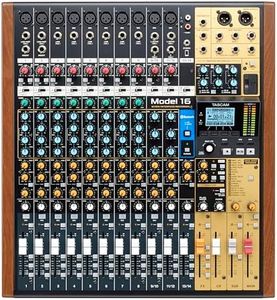
Tascam Model 16 All-In-One 16-track Mixing and Recording Studio, Analog Mixer, Digital Recorder, USB Audio Interface

Rating
10.0
Chosen by1,253
Number of Tracks
Recording Quality
Storage Capacity

Most important from
94 reviews

Number of Tracks
Despite the advertised 16 channels, the actual usable inputs are effectively about 12 due to virtual tracks and limited EQ or aux capabilities on some channels, which may catch some users off guard.
Recording Quality
This device quickly proves to be a powerful and reliable workhorse once you get familiar with its flow, delivering clean and consistent multitrack recording with flexible routing options.
Storage Capacity
Recording directly to an internal SD card and then mixing on a computer perfectly balances the best of low-tech and high-tech worlds for a smooth creative process.
Connectivity Options
Multiple output mixes add valuable flexibility, enhancing the ability to manage various monitoring and mixing scenarios.
User Interface and Ease of Use
The blend of analog mixer feel and digital recording offers a versatile combination that minimizes disruptions often caused by complex computer software during recording sessions.

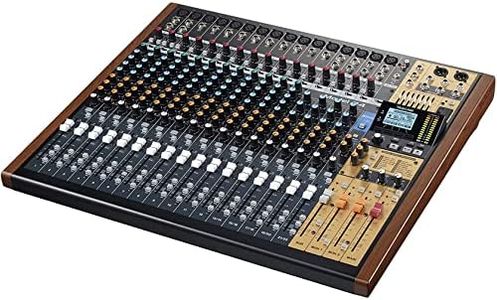
The Tascam Model 16 is a solid choice for musicians and small studios needing a versatile multitrack recorder with 16 tracks, which allows for recording multiple instruments or vocals separately. Its recording quality supports up to 48kHz/24-bit WAV files, providing clear and professional sound. Storage is flexible, using SD cards (including SDHC and SDXC) which are easy to swap and store, but you need at least Class 10 cards for smooth operation. Weighing about 1 pound and sized reasonably, it offers decent portability for a desktop unit, though it's not pocket-sized.

The built-in USB audio interface is a strong plus, letting you connect easily to your computer for further editing or mixing with popular software. It has 14 inputs including 10 high-quality mic preamps, which is great if you want to connect several microphones or instruments at once. Connectivity includes USB and Bluetooth, broadening your options for integrating other gear. On the user interface side, the Model 16 combines an analog mixer feel with digital recording controls, which can be friendly for those familiar with mixing desks but might take a short learning curve for complete beginners.

It also offers punch in/out recording for up to 8 tracks simultaneously, useful for fixing parts without redoing whole takes. However, it lacks extensive built-in effects or processing compared to some other units, so you might need external gear or software for more creative sound shaping. Taken together, the Tascam Model 16 serves users wanting a reliable, multi-input recorder and mixer combo with good audio quality and flexible connectivity, but if you want heavy onboard effects or ultra-compact design, you might want to look elsewhere.

Rating
10.0
Chosen by1,253
Number of Tracks
Recording Quality
Storage Capacity

Most important from
94 reviews

Number of Tracks
Despite the advertised 16 channels, the actual usable inputs are effectively about 12 due to virtual tracks and limited EQ or aux capabilities on some channels, which may catch some users off guard.
Recording Quality
This device quickly proves to be a powerful and reliable workhorse once you get familiar with its flow, delivering clean and consistent multitrack recording with flexible routing options.
Storage Capacity
Recording directly to an internal SD card and then mixing on a computer perfectly balances the best of low-tech and high-tech worlds for a smooth creative process.
Connectivity Options
Multiple output mixes add valuable flexibility, enhancing the ability to manage various monitoring and mixing scenarios.
User Interface and Ease of Use
The blend of analog mixer feel and digital recording offers a versatile combination that minimizes disruptions often caused by complex computer software during recording sessions.
#2

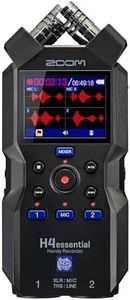
Zoom H4essential 4-Track Handy Recorder with 32-Bit Float, Accessibility, Stereo Microphones, 2 XLR/TRS Combo Inputs, Record to SD Card, USB Interface, for Musicians, Podcasters, Filmmakers

Rating
9.7
Recording Quality
Portability
Connectivity Options

Most important from
575 reviews

Recording Quality
The 32-bit float recordings provide professional-level audio even in less-than-ideal environments.
Portability
The device is slightly bulky, so it might not be the best choice for those seeking a pocket-sized recorder.
Connectivity Options
Although it consumes batteries quickly, using a USB adapter for power is a practical solution.
User Interface and Ease of Use
Navigating the menu is straightforward, and the battery life is sufficient for extended recording sessions.

The Zoom H4essential 4-Track Handy Recorder is a versatile device that caters well to musicians, podcasters, and other audio recording enthusiasts. One of its standout features is the 4-track 32-bit float recording capability, which ensures high-quality audio without the need to adjust gain settings. This makes the recording process simpler, especially for beginners or those who prefer a hassle-free setup. The built-in X/Y microphones can capture sound levels up to 130 dB SPL, and the two XLR/TRS combo inputs with ultra-clean preamps provide flexibility for various recording scenarios.

Recording quality is impressive, supporting up to 96kHz sample rate, and recordings can be stored on an SD card or transferred via USB to a PC, Mac, iOS, or Android device. The ability to record to an SD card and over USB simultaneously adds another layer of convenience for users who need to back up their recordings instantly. The audio guidance function is a thoughtful addition, enhancing accessibility for visually impaired users.

In terms of portability, the Zoom H4essential is compact and lightweight, making it easy to carry around. However, it might feel slightly bulky for some users who are looking for extremely compact devices. The user interface is generally straightforward, but newcomers might need a bit of time to get accustomed to all its features and settings. On the downside, the built-in effects and processing options are somewhat limited compared to more advanced models, which might be a drawback for users looking for extensive on-board editing capabilities. Additionally, some might find its price point a bit high for the features it offers. Nonetheless, it remains a strong contender in its category, especially for those prioritizing ease of use and high recording quality.

Rating
9.7
Recording Quality
Portability
Connectivity Options

Most important from
575 reviews

Recording Quality
The 32-bit float recordings provide professional-level audio even in less-than-ideal environments.
Portability
The device is slightly bulky, so it might not be the best choice for those seeking a pocket-sized recorder.
Connectivity Options
Although it consumes batteries quickly, using a USB adapter for power is a practical solution.
User Interface and Ease of Use
Navigating the menu is straightforward, and the battery life is sufficient for extended recording sessions.
#3

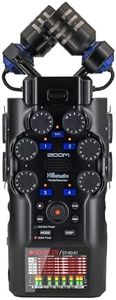
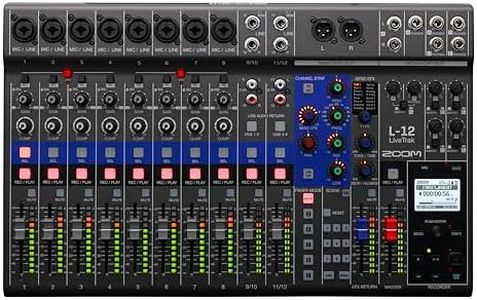
Zoom LiveTrak L-20

Rating
9.7
Number of Tracks
Recording Quality
Storage Capacity

Most important from
215 reviews

Number of Tracks
It records clean, crisp audio to 22 tracks simultaneously, with playback levels matching monitoring levels seamlessly.
Recording Quality
Zoom LiveTrak L-20 handles both live and studio settings with ease, delivering results that are very pleasing to the ear.
Storage Capacity
The memory card feature simplifies transferring recordings to a DAW for further processing.
Portability
The L-20 is compact and not too small to use, making it highly functional without being cumbersome.
Built-in Effects and Processing
The effects section works fine, but more modulation options like flanger or phaser would be nice.
Connectivity Options
TRS Master Outs in addition to XLR would be a welcome addition.
User Interface and Ease of Use
Combining recording level and live level on a single VU meter is an ingenious design choice.

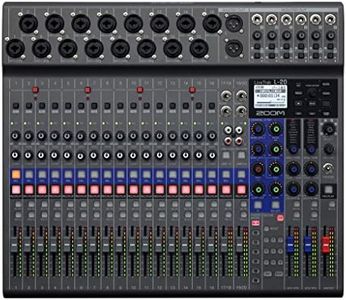
The Zoom LiveTrak L-20 Digital Mixer & Multitrack Recorder impresses with its ability to handle 20 discrete channels, offering up to 22 tracks of high-quality recording at 24-bit/96 kHz. This makes it suitable for complex recording sessions where clarity and detail are crucial. The inclusion of 6 customizable headphone outputs allows for individual mixes tailored to different performers, which is a significant advantage for live recording setups. Additionally, there is a dedicated output for the sound engineer, enhancing the monitoring capabilities.

The built-in effects with adjustable parameters provide versatility, enabling users to sculpt their sound directly on the device without needing external processors. The device also serves as a 22-in/4-out USB audio interface, making it compatible with DAWs and streaming software, adding to its functionality for studio use. Wireless control via a free iOS app offers convenience, although it requires an optional adapter.

On the downside, the Zoom LiveTrak L-20 is relatively bulky with dimensions of 17.5 x 15.3 x 3.25 inches, which might hinder its portability. It also requires a corded electric power source, potentially limiting its use in mobile recording scenarios. Despite its weight being manageable at 9.76 ounces, users should consider if the size fits their workflow. Connectivity is limited to USB, which might not suit users needing more diverse connection options. The user interface, while comprehensive, may have a steep learning curve for beginners. This multitrack recorder is ideal for musicians, producers, and engineers who need a robust, feature-rich device for both live and studio recording environments.

Rating
9.7
Number of Tracks
Recording Quality
Storage Capacity

Most important from
215 reviews

Number of Tracks
It records clean, crisp audio to 22 tracks simultaneously, with playback levels matching monitoring levels seamlessly.
Recording Quality
Zoom LiveTrak L-20 handles both live and studio settings with ease, delivering results that are very pleasing to the ear.
Storage Capacity
The memory card feature simplifies transferring recordings to a DAW for further processing.
Portability
The L-20 is compact and not too small to use, making it highly functional without being cumbersome.
Built-in Effects and Processing
The effects section works fine, but more modulation options like flanger or phaser would be nice.
Connectivity Options
TRS Master Outs in addition to XLR would be a welcome addition.
User Interface and Ease of Use
Combining recording level and live level on a single VU meter is an ingenious design choice.

Buying Guide for the Best Multitrack Recorder

Choosing the right multitrack recorder can significantly enhance your music production experience. A multitrack recorder allows you to record multiple audio tracks separately and then mix them together to create a final product. When selecting a multitrack recorder, it's important to consider your specific needs, such as the number of tracks you need, the quality of the recordings, and the features that will make your recording process smoother and more efficient. Here are some key specifications to consider when choosing a multitrack recorder.
Number of TracksThe number of tracks refers to how many separate audio tracks you can record and play back simultaneously. This is important because it determines how complex your recordings can be. If you're a solo artist, a recorder with 8 to 16 tracks might be sufficient. However, if you're recording a full band or complex compositions, you might need 24 tracks or more. Consider the scope of your projects and choose a recorder that can handle your needs.
Recording QualityRecording quality is measured in bit depth and sample rate. Higher bit depth and sample rate result in better sound quality. Common values are 16-bit/44.1kHz (CD quality) and 24-bit/96kHz (high-resolution audio). If you're producing professional music, aim for higher values like 24-bit/96kHz. For casual recording or demos, 16-bit/44.1kHz might be sufficient. Think about the level of audio fidelity you require for your projects.
Storage CapacityStorage capacity determines how much audio you can record before needing to offload or delete files. This is usually measured in gigabytes (GB). Larger storage is beneficial for long recording sessions or high-quality recordings that take up more space. If you plan to record lengthy sessions or multiple projects without frequently transferring files, opt for a recorder with ample storage. For shorter or less frequent recordings, a smaller capacity might suffice.
PortabilityPortability refers to the ease with which you can transport and use the recorder in different locations. If you need to record on the go or in various settings, a compact and lightweight recorder is ideal. For studio use, portability might be less of a concern, and you can opt for a larger, more feature-rich model. Consider where and how you will be using the recorder to determine the importance of portability.
Built-in Effects and ProcessingMany multitrack recorders come with built-in effects and processing options, such as reverb, compression, and equalization. These features can enhance your recordings and reduce the need for external equipment. If you prefer to have a wide range of effects at your fingertips, look for a recorder with comprehensive built-in options. If you already have external effects processors or prefer to add effects during post-production, this might be less critical.
Connectivity OptionsConnectivity options include inputs and outputs for microphones, instruments, and other audio equipment, as well as USB or MIDI connections for interfacing with computers and other devices. More connectivity options provide greater flexibility in how you can use the recorder. If you plan to connect multiple devices or integrate the recorder into a larger setup, ensure it has the necessary inputs and outputs. For simpler setups, fewer connectivity options might be sufficient.
User Interface and Ease of UseThe user interface and ease of use are crucial for a smooth recording experience. A well-designed interface with intuitive controls can make the recording process more efficient and enjoyable. Look for a recorder with a clear display, easy-to-navigate menus, and accessible controls. If you're new to recording, a user-friendly interface is especially important. More experienced users might prioritize advanced features over simplicity.

FAQ

Most Popular Categories Right Now