We Use CookiesWe use cookies to enhance the security, performance, functionality and for analytical and promotional activities. By continuing to browse this site you are agreeing to our privacy policy

10 Best PC gaming monitors 2026 in the United States
How do we rank products for you?

Our technology thoroughly searches through the online shopping world, reviewing hundreds of sites. We then process and analyze this information, updating in real-time to bring you the latest top-rated products. This way, you always get the best and most current options available.

headphones-stars

Our Top Picks

#1

Winner

Samsung 27” Odyssey OLED G5 (G50SF) QHD & QD-OLED Gaming Monitor, 180Hz Refresh Rate, 0.03ms (GtG) Response Time, NVIDIA G-Sync Compatible, AMD FreeSync™, LS27FG500SNXZA

Rating
10.0
Chosen by1,496
Resolution
Panel Type
Refresh Rate

Most important from
172 reviews

Resolution
The OLED display delivers stunning vibrancy and sharpness that impresses immediately upon use.
Panel Type
This monitor offers excellent color accuracy and contrast, showcasing Samsung's high-quality OLED technology.
Refresh Rate
The 180Hz refresh rate combined with OLED’s responsiveness provides smooth and fluid gameplay, even for competitive gamers.

The Samsung 27” Odyssey OLED G5 is a strong choice for PC gamers looking for vibrant visuals and smooth gameplay. Its QHD (2560x1440) resolution offers a sharp and detailed picture on a 27-inch screen, which is a comfortable size for most setups. The QD-OLED panel stands out by delivering excellent color accuracy and high brightness, making games appear vivid and lifelike. The monitor's matte screen surface helps reduce reflections, so you can focus without distraction.

Performance-wise, the 180Hz refresh rate combined with an ultra-fast 0.03ms response time means motion is incredibly smooth and responsive—great for fast-paced games where every millisecond counts. With compatibility for NVIDIA G-Sync and AMD FreeSync, it also helps prevent screen tearing and lag, ensuring visuals stay fluid. One unique feature is the OLED Safeguard system that actively manages heat to protect against burn-in, a common concern with OLED screens during long gaming sessions. While this reduces risk, some gamers might still be cautious about OLED longevity compared to traditional LED monitors.

Additionally, the monitor supports HDR10 for better contrast and depth, and the Pantone validation means colors are reproduced very accurately, which could also appeal to creative users. Auto Source Switch+ makes connecting multiple devices easy, switching inputs without hassle. OLED gaming monitors like this tend to be pricier than their LED counterparts, and although the burn-in protection helps, some gamers might prefer to avoid potential OLED issues altogether. The 16:9 aspect ratio and QHD resolution are standard but don't offer ultra-wide or 4K options if you're looking for those. This Samsung Odyssey OLED G5 suits gamers who want top-tier color and fast response in a solid 27-inch size, with built-in safeguards for OLED screens, making it a compelling option if you prioritize image quality and smooth gameplay.

Rating
10.0
Chosen by1,496
Resolution
Panel Type
Refresh Rate

Most important from
172 reviews

Resolution
The OLED display delivers stunning vibrancy and sharpness that impresses immediately upon use.
Panel Type
This monitor offers excellent color accuracy and contrast, showcasing Samsung's high-quality OLED technology.
Refresh Rate
The 180Hz refresh rate combined with OLED’s responsiveness provides smooth and fluid gameplay, even for competitive gamers.
#2

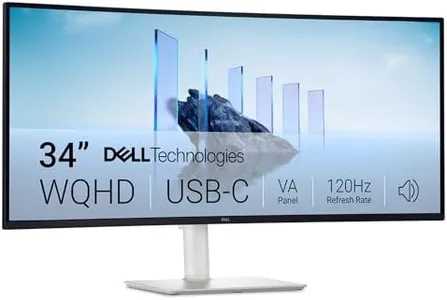
Dell 34 Plus USB-C Curved Monitor - S3425DW - 34-inch (3440 x 1440) up to 120 Hz 21:9 Display, VA Panel, AMD FreeSync Premium, 99% sRGB, 95% DCI-P3, Integrated Speakers, 3000:1 Contrast Ratio

Rating
10.0
Resolution
Refresh Rate

Most important from
267 reviews

Resolution
Colors are vibrant and text appears sharp, creating a visually striking and immersive ultrawide experience.
Refresh Rate
The 120Hz refresh rate delivers a noticeably smoother experience compared to standard 60Hz displays, making gaming and general use feel fluid and responsive.

The Dell 34 Plus USB-C Curved Monitor (S3425DW) is a solid choice for gamers looking for an immersive ultrawide experience. It features a large 34-inch curved screen with a 21:9 aspect ratio and a sharp 3440 x 1440 (1440p) resolution, which gives extra horizontal space great for gaming and multitasking. Its VA panel offers deep blacks and a strong 3000:1 contrast ratio, enhancing visual depth especially in darker scenes. The refresh rate goes up to 120Hz, paired with AMD FreeSync Premium, which helps reduce screen tearing and provides smoother motion during gameplay. The response time of 0.03ms is excellent, meaning fast-moving images will appear clear without much blur.

Color reproduction is impressive with 99% sRGB and 95% DCI-P3 coverage, making games and media look vibrant and true to life. This is further supported by HDR readiness, although the monitor doesn’t specify peak brightness levels typical for high-end HDR. The built-in speakers are a convenient addition with upgraded audio quality, though most gamers might still prefer using dedicated headphones or external speakers.

Connectivity is simple and clean via USB-C, delivering up to 65W power which can reduce cable clutter if you connect a compatible laptop. The matte screen surface helps minimize reflections, useful in bright rooms. The monitor also includes ComfortView Plus technology that cuts down harmful blue light, making longer gaming or work sessions easier on the eyes. While 120Hz is good, it is slightly lower than some top-tier gaming monitors that offer 144Hz or higher for extremely fast-paced competitive gaming. Also, the VA panel, while excellent for contrast, can have slower pixel transitions compared to IPS panels, which might affect color consistency from side angles. This Dell monitor suits gamers who want a wide, vibrant screen with solid speed and smooth visuals, plus added comfort and neat connectivity. It is a balanced option for immersive gaming and general use, though competitive esports players seeking ultra-high refresh rates might want to look elsewhere.

Rating
10.0
Resolution
Refresh Rate

Most important from
267 reviews

Resolution
Colors are vibrant and text appears sharp, creating a visually striking and immersive ultrawide experience.
Refresh Rate
The 120Hz refresh rate delivers a noticeably smoother experience compared to standard 60Hz displays, making gaming and general use feel fluid and responsive.
#3

Alienware AW2725DF OLED Gaming Monitor - 26.7-inch Quantom-Dot WQHD (2560x1440) 360Hz 0.03Ms Display, AMD FreeSync Premium Pro, HDMI/DP/USB 3.2 Gen1, Height/Tilt/Swivel/Pivot Adjustability - Black

Rating
9.7
Panel Type
Screen Size and Aspect Ratio
Refresh Rate

Most important from
323 reviews

Panel Type
The OLED panel delivers incredibly vibrant colors and unreal contrast, making games look cinematic with deep blacks and rich greys.
Screen Size and Aspect Ratio
The slightly curved ultrawide design creates an immersive experience without overwhelming the user, perfectly balancing screen size and field of view.
Refresh Rate
Ultra-fast refresh rates and low input lag combine to provide buttery smooth gameplay with highly responsive motion handling.
Resolution
Text clarity requires some initial tweaking with monitor settings and third-party tools to achieve optimal sharpness, which might make it less ideal for heavy productivity use.

The Alienware AW2725DF is a standout gaming monitor that combines a 27-inch QHD (2560x1440) resolution with a slightly taller 16:10 aspect ratio, offering a bit more vertical screen space than typical 16:9 monitors. This is great for gamers who appreciate sharp, detailed visuals without sacrificing screen real estate. Its Quantum Dot OLED panel delivers exceptional color accuracy and stunning contrast, meaning deep blacks and vibrant colors that bring games to life. The ultra-fast 360Hz refresh rate and an incredibly low 0.03 ms response time ensure extremely smooth and responsive gameplay, making it an excellent choice for fast-paced, competitive gaming where every millisecond matters. Adaptive sync support through AMD FreeSync Premium Pro and VESA AdaptiveSync helps eliminate screen tearing and stuttering, providing a tear-free experience in supported games. The matte screen finish reduces glare, which is helpful in bright rooms.

Connectivity is well-covered with HDMI, DisplayPort, and multiple USB 3.2 ports for peripherals. Adjustable stand features—height, tilt, swivel, and pivot—allow for comfortable positioning. On the downside, the monitor’s premium QD-OLED technology and high refresh rate likely come with a higher price tag that may not suit casual gamers on a budget. Also, while the 16:10 aspect ratio offers more vertical space, some games and videos optimized for 16:9 might display with black bars or slight cropping.

Its specialized panel might also be more prone to image retention or burn-in compared to traditional LCDs, which is something to consider if you often leave static images on screen. The Alienware AW2725DF is ideal for serious gamers wanting top-tier speed, color quality, and responsiveness, while those seeking a more affordable or standard aspect ratio monitor might look elsewhere.

Rating
9.7
Panel Type
Screen Size and Aspect Ratio
Refresh Rate

Most important from
323 reviews

Panel Type
The OLED panel delivers incredibly vibrant colors and unreal contrast, making games look cinematic with deep blacks and rich greys.
Screen Size and Aspect Ratio
The slightly curved ultrawide design creates an immersive experience without overwhelming the user, perfectly balancing screen size and field of view.
Refresh Rate
Ultra-fast refresh rates and low input lag combine to provide buttery smooth gameplay with highly responsive motion handling.
Resolution
Text clarity requires some initial tweaking with monitor settings and third-party tools to achieve optimal sharpness, which might make it less ideal for heavy productivity use.

Buying Guide for the Best PC gaming monitors

Choosing the right gaming monitor can significantly enhance your gaming experience. The right monitor will provide you with clear visuals, smooth gameplay, and an immersive experience. When selecting a gaming monitor, it's important to consider several key specifications that will impact your gaming performance and enjoyment. Understanding these specs will help you make an informed decision that best suits your gaming needs.
ResolutionResolution refers to the number of pixels on the screen, which determines the clarity and detail of the image. Higher resolutions provide sharper and more detailed images. Common resolutions include Full HD (1920x1080), Quad HD (2560x1440), and 4K (3840x2160). Full HD is suitable for most gamers and offers good performance without requiring a high-end graphics card. Quad HD provides a balance between performance and visual quality, while 4K offers the best image quality but requires a powerful graphics card to run smoothly. Choose a resolution based on your hardware capabilities and preference for image quality.
Refresh RateThe refresh rate is the number of times the monitor updates the image per second, measured in Hertz (Hz). Higher refresh rates result in smoother motion and can give you a competitive edge in fast-paced games. Common refresh rates are 60Hz, 75Hz, 120Hz, 144Hz, and 240Hz. For casual gaming, 60Hz is sufficient. For competitive gaming, a refresh rate of 120Hz or higher is recommended to ensure smooth and responsive gameplay. Choose a refresh rate that matches your gaming style and the capabilities of your graphics card.
Response TimeResponse time measures how quickly a pixel can change from one color to another, typically measured in milliseconds (ms). Lower response times reduce motion blur and ghosting, which is important for fast-paced games. Common response times range from 1ms to 5ms. For competitive gaming, a response time of 1ms to 2ms is ideal. For casual gaming, a response time of up to 5ms is acceptable. Choose a response time that minimizes motion blur for your preferred type of games.
Panel TypeThe panel type affects the monitor's color accuracy, viewing angles, and response time. The main types are TN (Twisted Nematic), IPS (In-Plane Switching), and VA (Vertical Alignment). TN panels have the fastest response times and are often the cheapest, but they have poorer color accuracy and viewing angles. IPS panels offer better color accuracy and wider viewing angles but usually have slower response times. VA panels provide the best contrast ratios and good color accuracy but can have slower response times than TN panels. Choose a panel type based on your priorities: speed for TN, color and viewing angles for IPS, or contrast for VA.
Adaptive Sync TechnologyAdaptive Sync technology, such as NVIDIA G-Sync or AMD FreeSync, synchronizes the monitor's refresh rate with the graphics card's frame rate to eliminate screen tearing and stuttering. This technology provides a smoother and more enjoyable gaming experience. G-Sync is compatible with NVIDIA graphics cards, while FreeSync works with AMD graphics cards. Some monitors support both technologies. Choose a monitor with Adaptive Sync technology that matches your graphics card to ensure the best performance.
Screen Size and Aspect RatioScreen size and aspect ratio affect your field of view and immersion. Common screen sizes range from 24 to 32 inches, with larger screens providing a more immersive experience. The aspect ratio is the width-to-height ratio of the screen, with 16:9 being the standard for most monitors. Ultrawide monitors with a 21:9 aspect ratio offer a wider field of view, which can be advantageous in certain games. Choose a screen size and aspect ratio that fits your desk space and enhances your gaming experience.
ConnectivityConnectivity options determine how you can connect your monitor to your PC and other devices. Common ports include HDMI, DisplayPort, and USB. HDMI is widely used and supports both video and audio, while DisplayPort offers higher bandwidth and is preferred for high refresh rates and resolutions. USB ports can be useful for connecting peripherals. Ensure the monitor has the necessary ports to connect to your PC and any other devices you plan to use.

FAQ

Most Popular Categories Right Now