10 Best Range Finders 2026 in the United States

Related Products
Up to 20% off

Recommended lists
Rangefinders
Our technology thoroughly searches through the online shopping world, reviewing hundreds of sites. We then process and analyze this information, updating in real-time to bring you the latest top-rated products. This way, you always get the best and most current options available.

Our Top Picks
Winner
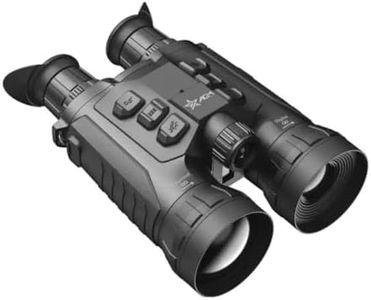
AGM Global Vision ObservIR LRF 60-1280 Fusion Thermal Imaging Binoculars
Most important from
25 reviews
The AGM Global Vision ObservIR LRF 60-1280 Fusion is a high-end range-finder binocular that combines thermal imaging with a 4K optical channel, making it a versatile tool for day and night use. Its key feature is the ultra-high thermal resolution of 1280×1024 pixels paired with a 60mm lens, allowing detection of heat signatures up to 3,100 meters away—ideal for serious outdoor activities like wildlife observation, security, or search and rescue. The built-in laser rangefinder measures distances up to 1,000 meters, providing accurate range data that is crucial for precise target assessment. Magnification reaches up to 18x optically and 20x thermally, giving sharp, detailed views without sacrificing clarity. The 4K CMOS sensor enhances image quality during the day and in low light, with smooth zoom and a bright display.
Portability is manageable with its mid-sized build (18x25 cm) and rugged polycarbonate casing rated IP67, ensuring it resists water and dust well, suitable for tough environments. Battery life allows for about 7.5 hours of continuous use with fast USB-C charging, supporting extended missions. Extras like 64GB storage, video/audio recording, Wi-Fi streaming, GPS, and compass add convenience and operational flexibility. On the downside, the device may be heavier and bulkier compared to simpler range-finders, which could be a consideration if you need something ultra-light or very compact. Also, the 1,000-meter laser rangefinder, while adequate for many, is shorter than the thermal detection range, meaning distance measurement capability doesn’t fully match its maximum viewing range.
This binocular is best suited for professional or serious users who need advanced imaging, accurate ranging, and robust weather resistance, rather than casual users looking for a basic or lightweight model.
Most important from
25 reviews
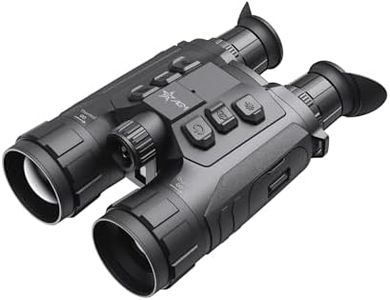
AGM Global Vision ObservIR LRF 50-640 Fusion Thermal Imaging Binoculars
Most important from
25 reviews
The AGM Global Vision ObservIR LRF 50-640 is a high-end binocular range-finder designed for serious outdoor and tactical use. It combines a sharp 640×512 thermal sensor with a bright 4K optical channel, offering excellent visibility both day and night. Its thermal zoom (up to 20x) and 50mm lens allow detection of heat signatures up to 2,600 meters, which is quite far and useful for activities like wildlife observation, hunting, or security. The built-in Class 1 laser rangefinder accurately measures distances up to 1,000 meters, which is solid for most long-range spotting tasks. Magnification reaches 18x (optical) and 22x (digital), giving users detailed views of distant targets.
The display quality is crisp thanks to the high-resolution thermal core and CMOS sensor, helping to identify targets clearly in low-light conditions. It’s relatively compact and rugged with an IP67 rating, meaning it resists dust, water, and rough handling well — a significant advantage for outdoor adventures or tough environments. Battery life is strong at about 8.5 hours, and the device supports fast charging via USB-C, useful for extended field use.
Additional features like built-in GPS, digital compass, Wi-Fi streaming, and 64GB storage make it versatile for data recording and navigation. While the laser rangefinder range is good, it doesn’t reach as far as the thermal detection distance, which might limit precise distance readings at the longest detection ranges. The device’s price and complexity might be more than needed for casual users or simple hunting trips. For professionals or serious enthusiasts needing reliable, all-weather, day-and-night range-finding with multiple advanced features, the ObservIR binocular offers a robust, well-rounded package backed by a 5-year warranty.
Most important from
25 reviews
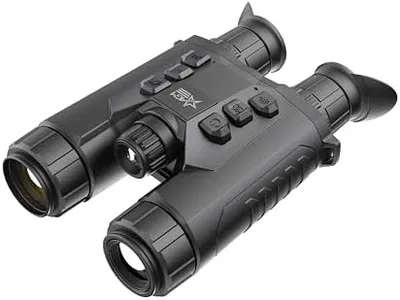
AGM Global Vision ObservIR LRF 35-640 Fusion Thermal Imaging Binoculars
The AGM Global Vision ObservIR LRF 35-640 is a high-end range-finder binocular built for professional use in hunting, tactical, and outdoor settings. Its dual-spectrum capability allows seamless switching between thermal imaging for clear heat signatures and a 4K digital day/night optical channel, making it versatile for all lighting conditions. The built-in laser rangefinder measures distances accurately up to 1,000 meters, which is sufficient for most field applications. Magnification ranges from 3x to 22x thermal zoom and up to 18x optical zoom, offering flexibility for spotting targets at varying distances. The display combines a thermal sensor and a high-resolution optical system, providing sharp images day or night.
Despite its advanced features, the binocular remains reasonably lightweight at 901 grams and sized for handheld use, with added tripod mounting options for stability. Weather resistance is strong with an IP67 rating, ensuring it can handle rain, dust, and rough environments without issue. Battery life supports about 8 hours of continuous use with smart power-saving features and USB-C charging, which is convenient for extended trips. Additional perks include built-in GPS and compass for navigation, Wi-Fi streaming for remote viewing, and 64GB of storage for photos and videos.
On the downside, the device’s price and feature set may be more than casual users need, and the 25mm objective lens diameter is moderate, which might limit some low-light performance compared to larger lenses. This binocular is particularly well suited for serious outdoor enthusiasts and professionals who require accurate range measurements combined with versatile imaging capabilities in rugged conditions.
Buying Guide for the Best Range Finders
Shopping for a range-finder can feel overwhelming if you're new to the market, but the key is to match the device to your specific activities—such as golfing, hunting, or surveying. Think about how and where you'll use it, as well as what features will make your experience easier without getting bogged down by unnecessary extras. Understanding how core specifications affect real-world performance will help you pick a model that makes measuring distance simple and accurate.FAQ
Most Popular Categories Right Now


