We Use CookiesWe use cookies to enhance the security, performance, functionality and for analytical and promotional activities. By continuing to browse this site you are agreeing to our privacy policy

10 Best Solar Power Banks 2026 in the United States
How do we rank products for you?

Our technology thoroughly searches through the online shopping world, reviewing hundreds of sites. We then process and analyze this information, updating in real-time to bring you the latest top-rated products. This way, you always get the best and most current options available.

headphones-stars

Our Top Picks

#1

Winner

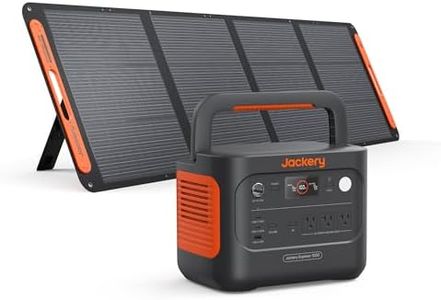
Jackery Solar Generator 1000 v2 with 200W Solar Panel,1070Wh Portable Power Station LiFePO4 Battery,1500W AC/100W USB-C Output, 1Hr Fast Charge for Outdoor,Off-Grid Living,RV,Emergency

Rating
10.0
Chosen by1,198
Battery Capacity (mAh)
Solar Charging Panel Size and Efficiency
Output Ports and Charging Speed

Most important from
1320 reviews

Battery Capacity (mAh)
The 1070Wh LiFePO4 battery offers an impressive lifespan of over 4,000 cycles, ensuring safety and durability for more than a decade of regular use.
Solar Charging Panel Size and Efficiency
Paired with the 200W SolarSaga panel, it can maintain power indefinitely in remote locations, with solar charging times of around 4 to 6 hours depending on sunlight conditions.
Output Ports and Charging Speed
Fast recharging is a standout feature, reaching full charge in about an hour via wall outlet with Emergency Super Charging, far quicker than typical solar generators.
Durability and Weather Resistance
The rugged, well-built design features a sturdy ergonomic handle and weather-resistant elements, making it dependable in rain or shine and suitable for outdoor adventures.
Size and Weight
Strikes a perfect balance between portability and real-world power, light enough for one-handed carry yet powerful enough to keep kitchen setups and essential electronics running during outages.

The Jackery Solar Generator 1000 v2 is a robust and versatile portable power solution, well suited for outdoor enthusiasts, RV users, and those needing reliable emergency backup power. It features a large 1,070Wh lithium iron phosphate (LiFePO4) battery, known for durability and a long life of over 10 years, which is impressive compared to typical solar power banks. The 200W solar panel is monocrystalline silicon, offering decent solar charging efficiency, though fully charging via solar can take around 6 hours under ideal sunlight.

One standout feature is the exceptionally fast charging capability: the power station can be fully charged in just one hour when emergency mode is activated via the companion app, which is much quicker than most portable solar chargers. It also supports a variety of charging methods including AC outlets, USB-C and USB-A ports, and even a car DC port, allowing simultaneous charging of multiple devices. The 1500W AC output (with 3000W surge) can power larger appliances like fridges or electric pots, which is beyond typical solar power banks aimed mainly at small electronics.

Weighing about 24 pounds, it is portable but heavier than smaller solar banks, reflecting its larger battery and power capacity. Its rugged design and smart app control add convenience but the solar panel and main unit ship separately, which may require extra setup time. It offers good durability with its battery chemistry and includes weather-resistant features, though it is not as compact or lightweight as simpler solar power banks designed for casual day hikes. This makes the Jackery Solar Generator 1000 v2 ideal for users who need a powerful, reliable off-grid power source with quick charging and multiple output options, especially if they want to run larger appliances and can accommodate the extra weight and cost associated with higher capacity and advanced features.

Rating
10.0
Chosen by1,198
Battery Capacity (mAh)
Solar Charging Panel Size and Efficiency
Output Ports and Charging Speed

Most important from
1320 reviews

Battery Capacity (mAh)
The 1070Wh LiFePO4 battery offers an impressive lifespan of over 4,000 cycles, ensuring safety and durability for more than a decade of regular use.
Solar Charging Panel Size and Efficiency
Paired with the 200W SolarSaga panel, it can maintain power indefinitely in remote locations, with solar charging times of around 4 to 6 hours depending on sunlight conditions.
Output Ports and Charging Speed
Fast recharging is a standout feature, reaching full charge in about an hour via wall outlet with Emergency Super Charging, far quicker than typical solar generators.
Durability and Weather Resistance
The rugged, well-built design features a sturdy ergonomic handle and weather-resistant elements, making it dependable in rain or shine and suitable for outdoor adventures.
Size and Weight
Strikes a perfect balance between portability and real-world power, light enough for one-handed carry yet powerful enough to keep kitchen setups and essential electronics running during outages.
#2

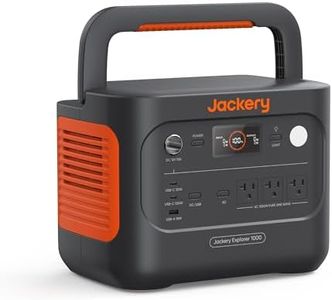
Jackery Explorer 1000 v2 Portable Power Station,1070Wh LiFePO4 Battery,1500W AC/100W USB-C Output, 1 Hr Fast Charge, Solar Generator for Camping,Emergency, RV, Off-Grid Living(Solar Panel Optional)

Rating
9.4
Battery Capacity (mAh)
Size and Weight
Output Ports and Charging Speed

Most important from
3424 reviews

Battery Capacity (mAh)
Delivers flawless high-power performance, running a microwave at around 1370 watts for 5 minutes using only 12% of the battery.
Size and Weight
Lightweight and portable design makes it easy to carry for camping and outdoor use without sacrificing power.
Output Ports and Charging Speed
The app control allows for easy monitoring and customization of charging speed to extend battery lifespan.
Solar Charging Panel Size and Efficiency
Fast recharge time of about 1.7 hours provides quick turnaround for extended use during trips or emergencies.

The Jackery Explorer 1000 v2 is a powerful portable power station designed for camping, emergencies, and off-grid living. Its 1,070Wh LiFePO4 battery offers a large capacity that can power appliances like fridges or electric pots, which is a big plus if you need reliable energy on the go. With a 1500W AC output and 3000W surge, it handles many devices simultaneously. It features multiple output ports, including two USB-C ports (with fast 100W charging), USB-A, DC car port, and three AC outlets, so you can charge phones, laptops, and small appliances at the same time. One standout feature is the fast charging ability, which can fully recharge the battery in about one hour using a special emergency mode via the app — though normal charging takes about 1.7 hours to protect battery life.

The battery is durable, promising over 10 years lifespan with 4,000 charge cycles, thanks to its LiFePO4 technology. However, the product does not include solar panels, and it only supports Jackery’s own solar panels for solar charging, which means you’ll need an additional purchase to charge it with solar power. At 23.8 pounds, it’s heavier than smaller solar power banks, making it less ideal for ultra-light backpacking but still portable enough for camping and RV use. The unit is compact with a foldable handle, and the rugged design suits outdoor conditions, though specific weather resistance ratings aren’t mentioned.

This power station is ideal if you want a robust, multi-use power source with fast charging and long battery life, but it is less suited for those seeking a lightweight, all-in-one solar charger package.

Rating
9.4
Battery Capacity (mAh)
Size and Weight
Output Ports and Charging Speed

Most important from
3424 reviews

Battery Capacity (mAh)
Delivers flawless high-power performance, running a microwave at around 1370 watts for 5 minutes using only 12% of the battery.
Size and Weight
Lightweight and portable design makes it easy to carry for camping and outdoor use without sacrificing power.
Output Ports and Charging Speed
The app control allows for easy monitoring and customization of charging speed to extend battery lifespan.
Solar Charging Panel Size and Efficiency
Fast recharge time of about 1.7 hours provides quick turnaround for extended use during trips or emergencies.
#3

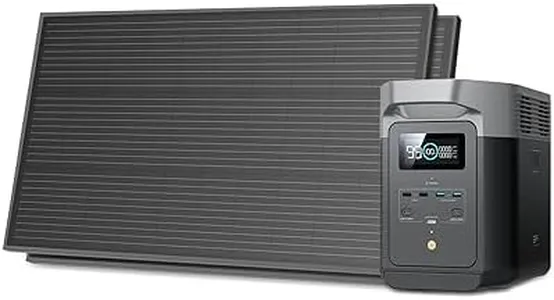
EF ECOFLOW Solar Generators, DELTA 2 Portable Power Station with 2PCS 100W 12V Solar Panels, 1024Wh LFP Battery, Fast Charging, Power Station for Home Backup, Camping&RVs

Rating
9.1
Battery Capacity (mAh)
Output Ports and Charging Speed
Durability and Weather Resistance

Most important from
497 reviews

Battery Capacity (mAh)
The EcoFlow Delta 2 delivers powerful, reliable backup power capable of running multiple essential devices simultaneously without any strain.
Output Ports and Charging Speed
Its fast recharge capability stands out, making it convenient to restore power quickly compared to traditional generators.
Durability and Weather Resistance
The build quality is solid and the device operates much quieter than gas-powered alternatives, enhancing user experience.
Size and Weight
Despite its weight, the unit remains portable enough for home use and occasional relocation.

The EF ECOFLOW DELTA 2 Solar Generator is a powerful and versatile option for those needing reliable solar-powered energy on the go or as a home backup. With a large 1024Wh battery capacity, it can power most household appliances and outdoor devices, making it ideal for camping, RVs, or emergency use. The included two 100W solar panels offer a strong 23% conversion rate, allowing relatively fast solar recharge times—about 5 hours with two panels or less with an additional panel—which is impressive for solar charging. It supports up to 15 devices simultaneously with a robust 1800W continuous output and 2700W surge, so it can handle a wide range of equipment without producing noise or fumes like traditional generators. The LFP battery technology ensures a long lifespan of over 3000 cycles, meaning it should last for many years, and the built-in battery management system adds safety and reliability. Another plus is the expandable battery capacity up to 3kWh, giving flexibility for larger power needs.

However, the unit is fairly heavy at 27 pounds and somewhat bulky (15.7" x 8.3" x 11.1"), which may limit portability compared to smaller solar power banks. Also, while solar panels are efficient, charging speed still depends heavily on sunlight conditions, so it’s not a quick charge option if you have limited sun exposure. This product is well-suited for users who want a serious, quiet, and eco-friendly power source with plenty of output options and long-term durability, though it may be more than necessary for those simply seeking a small, lightweight solar charger for phones or small gadgets.

Rating
9.1
Battery Capacity (mAh)
Output Ports and Charging Speed
Durability and Weather Resistance

Most important from
497 reviews

Battery Capacity (mAh)
The EcoFlow Delta 2 delivers powerful, reliable backup power capable of running multiple essential devices simultaneously without any strain.
Output Ports and Charging Speed
Its fast recharge capability stands out, making it convenient to restore power quickly compared to traditional generators.
Durability and Weather Resistance
The build quality is solid and the device operates much quieter than gas-powered alternatives, enhancing user experience.
Size and Weight
Despite its weight, the unit remains portable enough for home use and occasional relocation.

Buying Guide for the Best Solar Power Banks

Choosing a solar power bank means looking for a portable way to keep your devices charged using solar energy, especially when you're outdoors or away from plugs. To find the best one for your needs, it’s important to focus on a few key specs that determine how well and how quickly your devices will be powered, and how easily you can carry and use the power bank in different situations.
Battery Capacity (mAh)Battery capacity, measured in milliampere-hours (mAh), tells you how much energy the power bank can store. This number indicates how many times you can recharge your devices. Lower capacities (5,000-10,000 mAh) are good for light use such as charging phones once or twice, while mid-range capacities (10,000-20,000 mAh) can support multiple charges and even power larger devices like tablets. High capacities (above 20,000 mAh) are best for heavy use or charging several devices, but make the bank bulkier and heavier. Choose a capacity based on how many devices you need to power and how long you’ll be away from electricity.
Solar Charging Panel Size and EfficiencyThe solar panel is the part that collects sunlight and turns it into electricity for your power bank. Larger panels or those with higher efficiency can convert sunlight into power faster, but will add size and weight. Small, built-in panels are convenient for emergencies and topping up the power bank slowly, whereas larger fold-out panels can actually recharge the bank in a reasonable time but can be less portable. If you plan on relying mostly on solar charging while outdoors, prioritize larger or multi-panel designs. For everyday use or just emergency backup, a smaller panel is enough.
Output Ports and Charging SpeedThe number and type of output ports determine what devices you can charge and how quickly. Standard USB ports cover most phones and gadgets, while USB-C is necessary for some modern devices and can offer faster charging. Power banks also come with different output speeds (measured in Amps, such as 1A, 2A, or more). Faster outputs recharge your devices more quickly, which is useful if you have less time or multiple gadgets to plug in. Pick a power bank with enough ports and speeds to match the devices you use regularly.
Durability and Weather ResistanceSince solar power banks are often used outside, durability is important. Some are made to withstand drops, dust, or water splashes, which is handy for camping, hiking, or outdoor work. Look for terms like 'water-resistant' or an IP rating (like IP65) if you expect rougher conditions. If your plan is mostly city or home use, these features are less critical.
Size and WeightPortability matters based on how and where you’ll be using your power bank. Smaller, lighter banks are easier to carry on trips or hikes, but may have lower capacity and smaller solar panels. Larger models can store more energy and have bigger panels but can be harder to pack. Decide based on your typical use—if you’ll be carrying it all day, lighter is better; if you need longer use without charging, go bigger.

FAQ

Most Popular Categories Right Now