10 Best Subwoofer Amplifier 2026 in the United States

Related Products
Up to 13% off

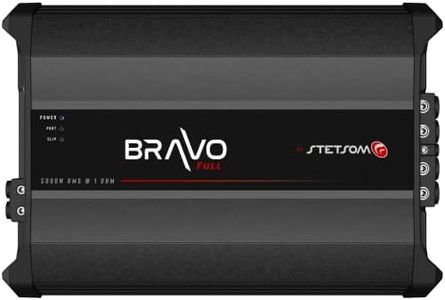
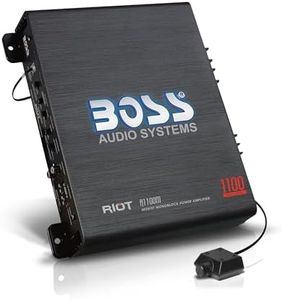
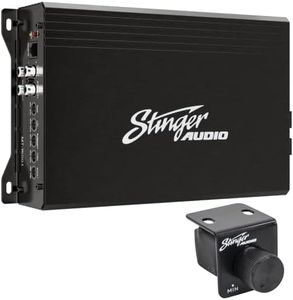
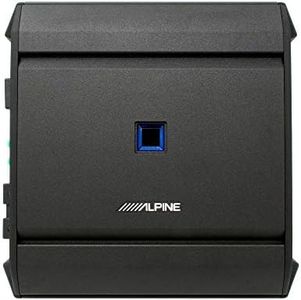
How do we rank products for you?
Our technology thoroughly searches through the online shopping world, reviewing hundreds of sites. We then process and analyze this information, updating in real-time to bring you the latest top-rated products. This way, you always get the best and most current options available.
Buying Guide for the Best Subwoofer Amplifier
Choosing the right subwoofer amplifier can significantly enhance your audio experience, whether you're setting up a home theater system or upgrading your car audio. The key is to understand the specifications that matter most and how they align with your specific needs. By focusing on the right specs, you can ensure that your subwoofer amplifier delivers the power, clarity, and performance you desire.Power Output (RMS)Power output, measured in watts RMS (Root Mean Square), indicates the continuous power the amplifier can deliver to the subwoofer. This spec is crucial because it determines how loud and clear your subwoofer will sound. Generally, amplifiers with higher RMS power can drive subwoofers more effectively, producing deeper and more impactful bass. For casual listeners or smaller spaces, an amplifier with 200-400 watts RMS might suffice. For larger rooms or more intense listening experiences, consider amplifiers with 500 watts RMS or more. Match the amplifier's RMS power to your subwoofer's RMS rating for optimal performance.
ImpedanceImpedance, measured in ohms, refers to the resistance the amplifier will face when driving the subwoofer. This spec is important because it affects the compatibility and efficiency of your system. Most subwoofers and amplifiers are designed to work with 2-ohm, 4-ohm, or 8-ohm loads. Ensure that the amplifier's impedance rating matches the subwoofer's impedance to avoid potential damage and to ensure efficient power transfer. For example, if your subwoofer is rated at 4 ohms, choose an amplifier that can handle a 4-ohm load.
Frequency ResponseFrequency response, measured in Hertz (Hz), indicates the range of frequencies the amplifier can reproduce. This spec is important for ensuring that the amplifier can handle the low frequencies that subwoofers are designed to produce. A good subwoofer amplifier should have a frequency response that extends down to at least 20 Hz, which is the lower limit of human hearing. For the best bass performance, look for amplifiers with a frequency response range of 20 Hz to 200 Hz.
Signal-to-Noise Ratio (SNR)The signal-to-noise ratio (SNR) measures the level of the desired signal compared to the level of background noise, expressed in decibels (dB). A higher SNR indicates a cleaner, clearer sound with less background noise. This spec is important for achieving high-quality audio performance. Aim for an amplifier with an SNR of at least 90 dB for a good listening experience. Higher values, such as 100 dB or more, are preferable for audiophiles seeking the best sound quality.
Total Harmonic Distortion (THD)Total Harmonic Distortion (THD) measures the amount of distortion the amplifier introduces to the audio signal, expressed as a percentage. Lower THD values indicate cleaner sound reproduction. This spec is important for maintaining audio fidelity, especially at higher volumes. Look for amplifiers with a THD of 1% or lower for good sound quality. For the best performance, aim for THD values of 0.1% or lower.
Crossover ControlsCrossover controls allow you to set the frequency at which the amplifier sends signals to the subwoofer, ensuring that only low-frequency sounds are amplified. This spec is important for optimizing the performance of your subwoofer and achieving a balanced sound. Look for amplifiers with adjustable crossover controls, typically ranging from 40 Hz to 200 Hz. Set the crossover point based on your subwoofer's capabilities and your overall sound system to achieve the best integration and performance.
Input and Output OptionsInput and output options determine how the amplifier connects to your audio source and subwoofer. This spec is important for ensuring compatibility with your existing equipment. Common input options include RCA and speaker-level inputs, while output options may include speaker terminals and preamp outputs. Ensure the amplifier has the necessary inputs and outputs to connect to your audio system. For example, if you're connecting to a home theater receiver, make sure the amplifier has RCA inputs.
Most Popular Categories Right Now


