We Use CookiesWe use cookies to enhance the security, performance, functionality and for analytical and promotional activities. By continuing to browse this site you are agreeing to our privacy policy

10 Best Weather Radios 2026 in the United States

#3
How do we rank products for you?

Our technology thoroughly searches through the online shopping world, reviewing hundreds of sites. We then process and analyze this information, updating in real-time to bring you the latest top-rated products. This way, you always get the best and most current options available.

headphones-stars

Our Top Picks

#1

Winner

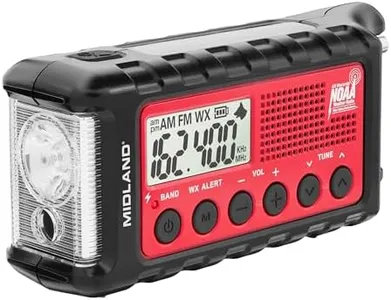
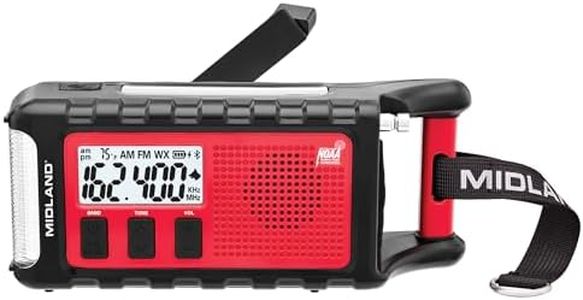
Midland - ER310, Emergency Crank Weather AM/FM Radio - Multiple Power Sources, SOS Emergency Flashlight, Ultrasonic Dog Whistle, & NOAA Weather Scan + Alert (Red/Black)

Rating
10.0
Chosen by1,411
Alert Type
Power Source
Frequency Bands

Most important from
5936 reviews

Alert Type
The weather alert siren is loud enough that you definitely can't sleep through it, even from another room.
Power Source
The unit can be powered by USB port, solar cell, internal lithium battery, and AA batteries, making it incredibly versatile.
Frequency Bands
The NOAA weather radio works well, though it requires some finesse with the antenna for the best reception.
Durability
This radio is durable and survived several drops before it finally broke.

The Midland ER310 Emergency Crank Weather Radio stands out as a reliable choice for anyone needing a dependable weather alert system, especially useful for outdoor enthusiasts, campers, or those living in storm-prone areas. One of its biggest strengths is its multiple power sources, including a solar panel, hand crank, and a rechargeable battery, which ensures you can stay informed even during power outages. The 32-hour battery life is impressive for extended use, and the ability to charge other devices via USB adds convenience.

The NOAA Weather Scan and Alert feature is particularly beneficial, as it automatically finds the strongest weather channel to keep you updated on severe conditions, which is crucial during emergencies. Additionally, the inclusion of an SOS flashlight that can signal distress with Morse code further enhances its practical utility in crisis situations.

However, while it boasts numerous features, there are some limitations to consider. The radio requires 6 AA batteries as a backup, which are not included, and some users may find this inconvenient, especially if they are unprepared. Additionally, the size and weight mean it’s not the most compact option available; its dimensions could make it less portable than other models designed for easy carry. Another aspect to watch out for is the reliance on the NOAA channels for weather updates. In areas with limited reception or during severe weather events, the effectiveness of the alerts may vary. Although the AM/FM radio option is a nice touch, the primary focus remains on weather alerts, which might not be appealing to everyone.

The Midland ER310 is a robust weather radio ideal for emergencies, offering excellent power options and essential features. Keep in mind its size and battery requirements when considering it for your needs.

Rating
10.0
Chosen by1,411
Alert Type
Power Source
Frequency Bands

Most important from
5936 reviews

Alert Type
The weather alert siren is loud enough that you definitely can't sleep through it, even from another room.
Power Source
The unit can be powered by USB port, solar cell, internal lithium battery, and AA batteries, making it incredibly versatile.
Frequency Bands
The NOAA weather radio works well, though it requires some finesse with the antenna for the best reception.
Durability
This radio is durable and survived several drops before it finally broke.
#2

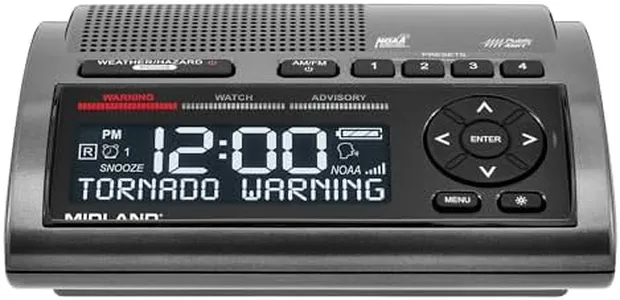
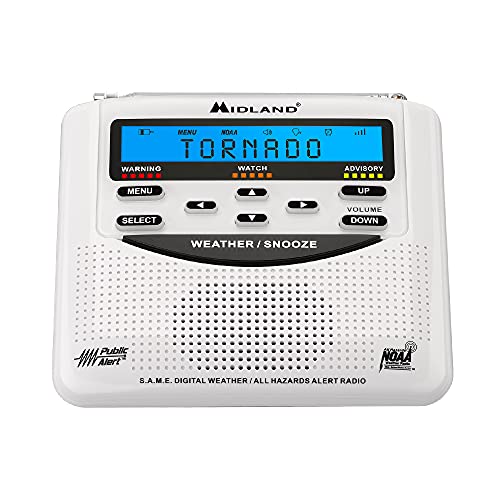
Midland - WR400 Weather Radio Deluxe - NOAA Emergency Alert Scanner – Home Use with Battery Backup - Local County Programming Over 80 Emergency Voice Flashing Alerts – Alarm Clock AM/FM Radio

Rating
10.0
Alert Type and Coverage
Power Source Options
Extra Features

Most important from
4595 reviews

Alert Type and Coverage
The variety of alert options—visual, sound, and voice—ensures you won’t miss critical warnings.
Power Source Options
Keeping batteries installed while plugged in is a smart way to ensure the radio stays ready during power outages.
Extra Features
Programming the radio is intuitive and straightforward, allowing quick setup without needing the manual.

The Midland WR400 Weather Radio is a solid choice for home users wanting reliable weather alerts. It automatically scans NOAA weather channels to find the strongest signal and supports S.A.M.E programming, so you can receive alerts specifically for your county or up to 25 others. This means you get accurate, localized emergency warnings, including severe weather and AMBER alerts. Alerts can be customized to sound an 85 dB siren, a voice message, or show a flashing LED, which makes it effective for different alert preferences.

Power options include plugging in via the included adapter or using four AA batteries (not included), allowing it to work during power outages or outdoors, which adds to its versatility. The radio is fairly lightweight and compact, making it easy to place around the house but it isn’t waterproof, so it’s not ideal for outdoor exposure in bad weather. Audio quality is decent for alerts and AM/FM radio listening, with a built-in speaker loud enough for most rooms, though not very powerful for large spaces.

Additional features include an alarm clock with snooze, and the radio automatically switches from AM/FM to weather alerts, so you won’t miss important warnings even if you’re listening to music. There’s also a USB port to charge small devices, which is a handy extra. However, it lacks smart home compatibility, so it won’t integrate with modern smart assistants or systems. The Midland WR400 fits well for users wanting a dependable, easy-to-use weather radio with strong alert customization, backup power options, and useful extras like the alarm clock and USB charging. It might not suit those needing rugged outdoor use or smart home features, but it covers the essentials of an emergency alert radio effectively.

Rating
10.0
Alert Type and Coverage
Power Source Options
Extra Features

Most important from
4595 reviews

Alert Type and Coverage
The variety of alert options—visual, sound, and voice—ensures you won’t miss critical warnings.
Power Source Options
Keeping batteries installed while plugged in is a smart way to ensure the radio stays ready during power outages.
Extra Features
Programming the radio is intuitive and straightforward, allowing quick setup without needing the manual.
#3

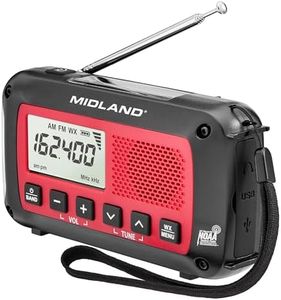
Midland ER40 Emergency Crank Radio

Rating
9.1
Portability and Size
Power Source Options
Alert Type and Coverage

Most important from
299 reviews

Portability and Size
Compact and heavy-duty design delivers excellent durability and portability.
Power Source Options
Multiple charging options—including solar, hand crank, and rechargeable battery—ensure reliable power availability in any situation.
Alert Type and Coverage
The built-in NOAA weather alerts provide timely and effective storm warnings.
Audio Quality and Alert Volume
Alarm siren is very loud and distinctive, so it’s best not to leave the radio unattended with alerts activated to avoid disturbing neighbors.
Extra Features
Includes a powerful LED flashlight with high, low, and SOS flashing modes for added emergency utility.

The Midland ER40 Emergency Crank Radio is a compact and portable device weighing just under a pound, making it easy to carry or store for emergency situations. It covers basic radio bands (AM/FM) and supports NOAA emergency alerts, which are crucial for receiving weather warnings. One of its biggest strengths is the multiple power options: it runs on a rechargeable lithium-ion battery, can be powered by solar energy, and includes a hand crank for manual charging. This versatility ensures you can keep it running even when other power sources are unavailable.

The unit features a clear LCD display and is equipped with a USB port, allowing you to charge small devices like smartphones, which adds a practical extra feature. Its size is convenient, though the audio quality and alert volume are standard for radios in this category—loud enough to hear alerts but not exceptional for music or detailed broadcasts. The radio’s traditional design is straightforward and user-friendly, but it lacks some advanced features like weather band-specific tuning or digital alerts found in higher-end models.

If you want a reliable, easy-to-use emergency radio with flexible power options and basic alert capabilities, the Midland ER40 is a solid choice. For those seeking top-notch sound quality or more specialized weather features, exploring other options may be beneficial.

Rating
9.1
Portability and Size
Power Source Options
Alert Type and Coverage

Most important from
299 reviews

Portability and Size
Compact and heavy-duty design delivers excellent durability and portability.
Power Source Options
Multiple charging options—including solar, hand crank, and rechargeable battery—ensure reliable power availability in any situation.
Alert Type and Coverage
The built-in NOAA weather alerts provide timely and effective storm warnings.
Audio Quality and Alert Volume
Alarm siren is very loud and distinctive, so it’s best not to leave the radio unattended with alerts activated to avoid disturbing neighbors.
Extra Features
Includes a powerful LED flashlight with high, low, and SOS flashing modes for added emergency utility.

Buying Guide for the Best Weather Radios

Choosing the perfect weather radio is all about matching your needs for reliability, portability, and ease of use. Weather radios are designed to keep you informed about severe weather and emergency alerts even when other communication channels are down. When picking one, it's important to focus on features that make the device dependable and convenient during both everyday use and critical situations. Here’s what to consider to find a weather radio that’s the best fit for you.
Alert Type and CoverageWeather radios can pick up different types of alerts, including NOAA weather warnings, AM/FM signals, and sometimes local emergency broadcasts. This spec determines the range and variety of information you’ll receive. Some radios only pick up basic weather updates, while others give specific area alerts or even non-weather emergency messages. If you live in an area prone to severe weather or want to stay updated on all types of emergencies, choose a radio with SAME (Specific Area Message Encoding) technology that allows you to select alerts for your region. If you just want general weather updates, a basic NOAA-only model may work fine. Your need for detailed, location-specific alerts versus general information should guide this choice.
Power Source OptionsThe power source determines how the radio operates during outages. Weather radios come with different power options such as batteries, hand crank, solar panels, AC adapters, or a combination. Battery-only models are simple and portable but require spare batteries. Radios with hand-crank and solar charging are designed for long-term emergencies as they don’t rely on electricity or fresh batteries. If you want maximum reliability in storms or power cuts, a multi-power-source radio is ideal. Think about when you’ll be using the radio—at home, camping, or on-the-go—and choose a power setup that best matches your situation.
Portability and SizePortability and size affect how easy it is to carry and store the radio. Compact radios are lightweight and easily fit in a backpack or emergency kit, making them great for outdoor activities, travel, or quick evacuation. Larger models may offer more features or better sound quality, but are less convenient to move. Consider how and where you’ll use the weather radio—if you need something you can grab quickly or take anywhere, smaller is better. If it will mostly stay at home, a larger model with extra features might be more appealing.
Audio Quality and Alert VolumeAudio quality and alert volume are about how clearly you can hear the broadcasts and emergency alerts. Some radios provide loud, adjustable alerts and clear audio, which is important if you might be asleep, in a noisy environment, or hard of hearing. Basic models might be quiet or have less sharp sound, which works in small or quiet spaces. Choose a radio with higher alert volume and good sound clarity if you need to be sure you won’t miss an important message, especially in larger spaces or if distractions are common.
Extra FeaturesExtra features add convenience and versatility to your weather radio, but aren’t essential for everyone. These might include LED flashlights, USB charging ports for devices, sirens, clocks, or even Bluetooth capability. Radios with these extras can act as all-in-one emergency tools, which is ideal if you want to rely on a single device in critical situations. Decide which features would actually be useful for your routine or emergencies—such as needing a flashlight during a blackout or charging your phone if the power goes out—and choose accordingly.

FAQ

Most Popular Categories Right Now