We Use CookiesWe use cookies to enhance the security, performance, functionality and for analytical and promotional activities. By continuing to browse this site you are agreeing to our privacy policy

10 Best Winter Grass Seed 2026 in the United States

How do we rank products for you?

Our technology thoroughly searches through the online shopping world, reviewing hundreds of sites. We then process and analyze this information, updating in real-time to bring you the latest top-rated products. This way, you always get the best and most current options available.

headphones-stars

Our Top Picks

#1

Winner

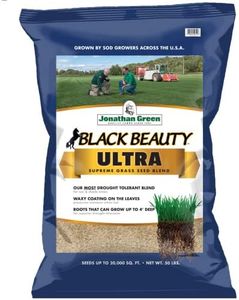
Jonathan Green (10324) Black Beauty Ultra Grass Seed - Cool Season Lawn Seed (50 lb)

Rating
10.0
Chosen by1,301
Germination Rate
Cold Tolerance
Drought Resistance

Most important from
5634 reviews

Germination Rate
The seed germinates well and starts growing quickly as long as it is kept watered frequently.
Cold Tolerance
Even in chilly weather, the grass seed produces healthy, deep green sprouts.
Drought Resistance
Despite dry spells, the grass stays vibrant and healthy with less frequent watering.

The Jonathan Green Black Beauty Ultra Grass Seed is designed for cool season lawns and includes a mix of tall fescues, Kentucky bluegrass, and perennial ryegrass. This blend is known for producing a dense, dark-green lawn that is both attractive and durable. One of its standout features is its ability to establish new yards quickly and fill in bare spots, making it ideal for invigorating thin or damaged lawns.

The roots can grow up to 4 feet deep and have a waxy leaf coating, which helps retain moisture and reduce evaporation, making it suitable for drought-resistant lawns and areas with heavy traffic. It can cover a significant area, seeding up to 10,000 square feet for new lawns and 20,000 square feet for overseeding, with a germination time of 7 to 14 days. The seed mix grows best in full sun to partial shade and is best planted in mid-August to mid-October or mid-March to mid-May for optimal results.

It has strong cold tolerance and does well in sandy soil, but it might not be the best choice for extremely shaded areas. The product weighs 50 pounds, which might be cumbersome for some users. While it claims to be organic, it's essential to ensure proper soil preparation and maintenance to achieve the best results.

Rating
10.0
Chosen by1,301
Germination Rate
Cold Tolerance
Drought Resistance

Most important from
5634 reviews

Germination Rate
The seed germinates well and starts growing quickly as long as it is kept watered frequently.
Cold Tolerance
Even in chilly weather, the grass seed produces healthy, deep green sprouts.
Drought Resistance
Despite dry spells, the grass stays vibrant and healthy with less frequent watering.
#2

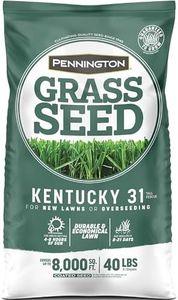
Pennington Kentucky 31 Tall Fescue Penkoted Grass Seed 40 lbs

Rating
9.4
Grass Type
Seed Blend
Germination Rate

Most important from
5274 reviews

Grass Type
The blades are finer and softer when young, requiring limited foot traffic until the grass matures for a lush finish.
Seed Blend
Achieving good soil contact is crucial; simply spreading seed on bare soil is ineffective without blending it into the soil or adding topsoil.
Germination Rate
The seed thrives with proper timing and moisture, showing green shoots in as little as one to three weeks with moderate rain and good soil contact.
Shade Tolerance
It performs surprisingly well in filtered sunlight and even under pine needle buildup, creating a tough lawn in challenging, shaded areas.
Drought Resistance
Once established, the grass grows quickly and shows strong drought resistance, especially in medium shade to full sun conditions.

The Pennington Kentucky 31 Tall Fescue Penkoted Grass Seed is a solid choice if you want a tough, economical lawn that performs well in cooler seasons, especially spring and fall. Kentucky 31 is known for its durability and can handle foot traffic, making it suitable for yards that see regular use. It grows into thick, lighter green blades that resist drought, which is a big plus if you live in areas with occasional dry spells. This seed tolerates medium shade and full sun, giving some flexibility if your yard isn't perfectly sunny all day. You can expect to see green shoots within about one to three weeks after planting, which is fairly standard.

While this grass is good in cooler weather, it might not be the softest or most lush-looking lawn compared to some premium blends. It’s also best suited for clay soils and requires regular watering to thrive. If your priority is a low-maintenance, sturdy lawn that can handle different weather conditions without needing constant care, this seed fits well.

If you're looking for a very fine, soft lawn or a seed blend specifically optimized for heavy shade or rapid germination, there might be better options available.

Rating
9.4
Grass Type
Seed Blend
Germination Rate

Most important from
5274 reviews

Grass Type
The blades are finer and softer when young, requiring limited foot traffic until the grass matures for a lush finish.
Seed Blend
Achieving good soil contact is crucial; simply spreading seed on bare soil is ineffective without blending it into the soil or adding topsoil.
Germination Rate
The seed thrives with proper timing and moisture, showing green shoots in as little as one to three weeks with moderate rain and good soil contact.
Shade Tolerance
It performs surprisingly well in filtered sunlight and even under pine needle buildup, creating a tough lawn in challenging, shaded areas.
Drought Resistance
Once established, the grass grows quickly and shows strong drought resistance, especially in medium shade to full sun conditions.
#3

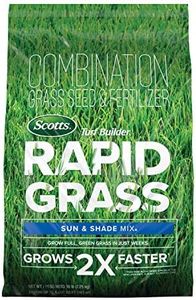
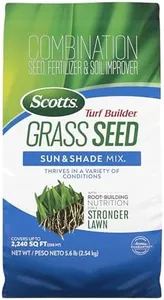
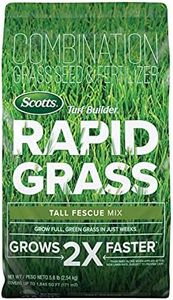
Scotts Turf Builder Rapid Grass Sun and Shade Mix, Combination Grass Seed and Fertilizer, Grows Green Grass in Just Weeks, 16 lbs.

Rating
8.8
Germination Rate

Most important from
8998 reviews

Germination Rate
Noticeable growth and a tinge of green across all seeded areas by day 12.

The Scotts Turf Builder Rapid Grass Sun and Shade Mix is designed to grow grass up to twice as fast as using seed alone, thanks to its combination of seed and fertilizer. This product is particularly effective for large problem areas or when establishing new grass, making it a great choice for those looking to quickly improve their lawn's appearance. One 16 lb. bag covers up to 2,395 sq. ft. for new lawns and up to 8,000 sq. ft. for overseeding, which is quite substantial.

The mix is best applied in the spring or fall when temperatures are between 60°F and 80°F for optimal results. It is specifically formulated to thrive in both sunny and shady areas, which adds to its versatility. However, it’s important to note that availability may vary by state, so you should check local availability before purchasing.

On the downside, it requires proper care, including regular watering, to achieve the best results, which might be a bit demanding for some users. Additionally, while it’s effective in moderate climates, its performance in extremely cold or drought-prone areas isn’t highlighted, which might be a consideration for those in such regions. If you’re looking for a reliable and fast-growing grass seed and fertilizer mix that works well in both sun and shade, and you’re willing to invest time in proper lawn care, Scotts Turf Builder Rapid Grass Sun and Shade Mix is a strong contender.

Rating
8.8
Germination Rate

Most important from
8998 reviews

Germination Rate
Noticeable growth and a tinge of green across all seeded areas by day 12.

Buying Guide for the Best Winter Grass Seed

Choosing the right winter grass seed is crucial for maintaining a lush, green lawn during the colder months. The right seed will ensure that your lawn remains healthy and vibrant despite the lower temperatures and reduced sunlight. When selecting winter grass seed, consider factors such as climate, soil type, and the specific needs of your lawn. Understanding the key specifications will help you make an informed decision and achieve the best results for your lawn.
Grass TypeGrass type refers to the species of grass that the seed will grow into. This is important because different grass types have varying levels of tolerance to cold weather, shade, and foot traffic. Common winter grass types include ryegrass, fescue, and bluegrass. Ryegrass is known for its quick germination and bright green color, making it ideal for overseeding. Fescue is more shade-tolerant and drought-resistant, suitable for areas with less sunlight. Bluegrass is hardy and can withstand cold temperatures well. Choose a grass type that matches your climate and lawn conditions.
Seed BlendSeed blend refers to the mixture of different grass species or varieties within the seed package. This is important because a blend can offer a more resilient and adaptable lawn. Blends often combine the strengths of different grasses, such as the quick establishment of ryegrass with the durability of fescue. When selecting a seed blend, consider the specific challenges your lawn faces, such as shade, foot traffic, or soil type. A well-chosen blend can provide a balanced and robust lawn that thrives in various conditions.
Germination RateGermination rate indicates the percentage of seeds that are expected to successfully sprout and grow. This is important because a higher germination rate means more of the seeds you plant will develop into healthy grass. Germination rates are typically expressed as a percentage, with higher percentages indicating better quality seed. For winter grass seed, look for a germination rate of at least 85% to ensure a thick and even lawn. If you need quick results, opt for seeds with a higher germination rate.
Cold ToleranceCold tolerance refers to the ability of the grass to withstand low temperatures without damage. This is crucial for winter grass seed, as it will be exposed to cold weather conditions. Grass varieties with high cold tolerance will remain green and healthy throughout the winter months. When choosing winter grass seed, consider the typical winter temperatures in your area. If you live in a region with harsh winters, select a grass type known for its cold tolerance, such as bluegrass or certain fescue varieties.
Shade ToleranceShade tolerance indicates how well the grass can grow in areas with limited sunlight. This is important if your lawn has shaded areas due to trees, buildings, or other structures. Grass varieties with high shade tolerance can thrive in lower light conditions, ensuring a uniform lawn. When selecting winter grass seed, assess the amount of sunlight your lawn receives. If you have significant shaded areas, choose a grass type like fescue, which is known for its shade tolerance.
Drought ResistanceDrought resistance refers to the grass's ability to survive and remain healthy during periods of low water availability. This is important for maintaining a resilient lawn, especially in areas with dry winters or water restrictions. Grass varieties with high drought resistance require less frequent watering and can recover more quickly from dry conditions. When choosing winter grass seed, consider the typical rainfall and water availability in your area. If you expect dry conditions, opt for a drought-resistant grass type like fescue.

FAQ

Most Popular Categories Right Now