10 Best Tankless Water Heaters 2026 in the United States



Related Products
Up to 5% off
Recommended lists

Our technology thoroughly searches through the online shopping world, reviewing hundreds of sites. We then process and analyze this information, updating in real-time to bring you the latest top-rated products. This way, you always get the best and most current options available.

Our Top Picks
Winner
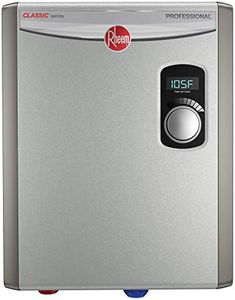
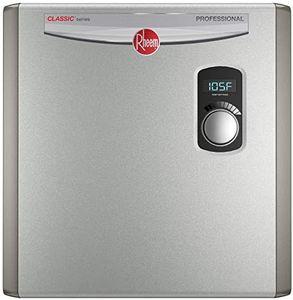
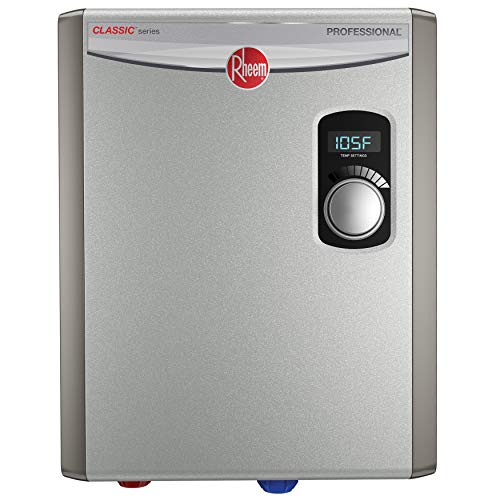
Rheem 18kW 240V Tankless Electric Water Heater, Gray
Most important from
4058 reviews
The Rheem 18kW 240V Tankless Electric Water Heater is a compelling option for those looking for an efficient, easy-to-install solution for their hot water needs. One of its standout features is the external digital thermostatic control with an LED display, which offers precise temperature control with +/- 1 degree accuracy. This makes it user-friendly and ensures you always get the perfect water temperature.
Its advanced self-modulation technology is another highlight, as it adjusts power usage based on your hot water demand, contributing to energy efficiency and potentially reducing your energy bills over time. The unit's flow rate is up to 4.4 gallons per minute (GPM), which should be sufficient for small to medium households but might not meet the demands of larger families with high simultaneous water usage.
The heater uses durable copper immersion heating elements that are field-serviceable, enhancing its longevity and ease of maintenance. Installation is straightforward with bottom 3/4 inch NPT water connections and threaded design, making it simple to replace existing water heaters. The compact size (14.5 inches wide and 18.25 inches high) allows it to fit in tight spaces, adding to its versatility. However, as an electric unit, it may not be as powerful as gas models in terms of temperature rise, especially in very cold climates.
Most important from
4058 reviews
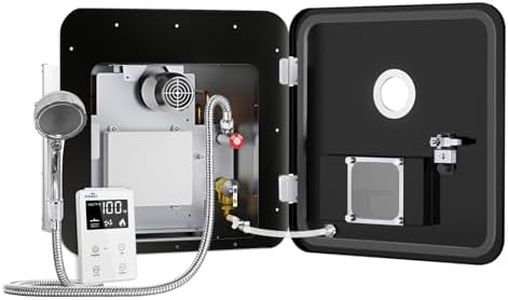
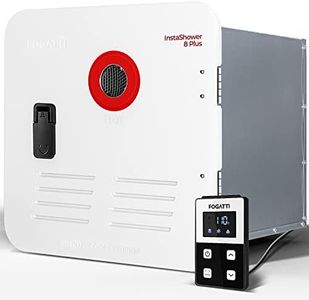
FOGATTI InstaShower 8 Plus RV Tankless Water Heater, 3 Door Size Options (15"x15"/15"x18"/18"x18") for Easy Retrofit, 12V DC, Remote Controller, Propane, Ideal for RV Families & Campers, Gen 3
Most important from
988 reviews
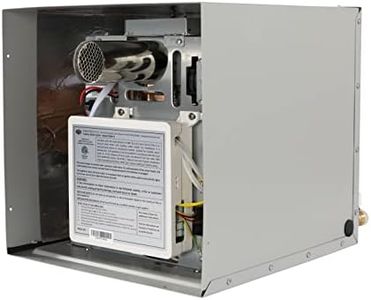
The Fogatti InstaShower 8 Plus is designed specifically for RV users and campers looking for a reliable, propane-powered tankless water heater. It delivers up to 2.9 gallons per minute, which is quite good for RV use, allowing multiple showers without running out of hot water quickly. The unit is energy efficient with 55,000 BTUs and runs on propane, so you don’t have to worry about electrical hookups while traveling. It’s also high-altitude ready, working effectively up to 9,800 feet, which is a useful feature if you camp in mountainous areas.
Installation is flexible with three door size options to retrofit existing water heater openings, making it a practical choice for replacing older tank or tankless models from popular brands. The water heater includes helpful safety features like automatic gas shut-off and frost protection, plus it has a built-in pressure relief valve and remote controller for ease of use. Its maximum temperature is limited to 123°F, which might be lower than some users prefer, and while the flow rate is solid for RV needs, it may not meet the demands of larger households or full-time RVers requiring higher water volumes.
The unit’s size at 15”x15” is compact but may require door modification for larger replacements. Maintenance is simplified by built-in protections; however, as a propane device, it requires regular checks for safe operation. This heater is well-suited for families and campers who want continuous hot water without the wait of tank heaters, offering easy installation and strong safety features tailored to RV lifestyles.
Most important from
988 reviews
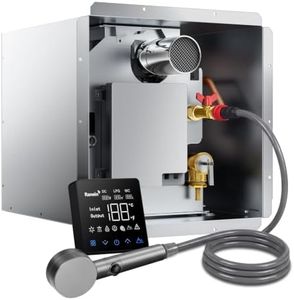
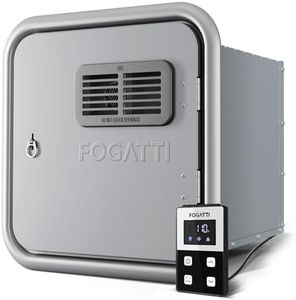
FOGATTI InstaShower 9 Pro RV Tankless Water Heater, 66,000 BTU (Highest Output), Built-in Mixing Tank, 15x15 Inches Black Door, Remote Controller, Ideal for RVers' Everyday Use, Gen 3
Most important from
258 reviews
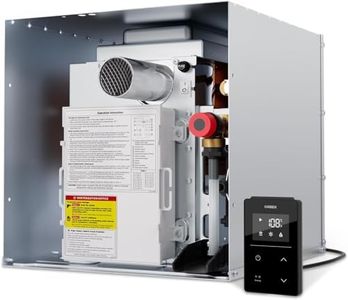
The FOGATTI InstaShower 9 Pro is a high-output propane tankless water heater designed especially for RVs, providing a strong 3.6 gallons per minute flow rate. This allows it to supply hot water simultaneously to both bathroom and kitchen without waiting, which is ideal for families or frequent users. It features precise temperature control within ±1°F and a built-in mixing tank that helps keep water temperature stable, enhancing comfort during showers. With a 66,000 BTU power rating, it is suitable for colder climates or higher altitudes, supported by a robust fan system that operates effectively even in windy conditions and up to 9,800 feet elevation.
Installation is fairly straightforward for RV owners replacing a tank water heater, as it fits common opening sizes and includes a 15x15 inch door and trim, plus a wired remote control for convenient temperature adjustments from inside the RV. Safety features like automatic gas shut-off, anti-freeze protection, and a pressure relief valve are built in, reducing additional costs and concerns. However, it runs on liquid propane, requiring a compatible fuel source and proper venting, which may be a consideration for those who prefer electric models.
The unit weighs around 31 pounds and is compact in size (15 inches square), but it is not smart home compatible, so remote control is limited to the included wired controller. Maintenance is simplified thanks to a dust and sand filter screen, though periodic checks and cleaning are necessary to ensure safe operation. This heater suits RVers who need reliable, instant hot water with strong flow and precise temperature control, especially when traveling in varying weather and altitude conditions.
Most important from
258 reviews
Buying Guide for the Best Tankless Water Heaters
Choosing a tankless water heater can be a smart way to ensure you have hot water on demand without taking up much space or worrying about running out. Unlike traditional heaters with storage tanks, tankless models heat water only when it's needed, making them energy-efficient and generally more durable over time. To find the best fit for your household, it's essential to understand the main specifications and features, as these will directly affect your experience and satisfaction.FAQ
Most Popular Categories Right Now


