10 Best House Water Filter System 2026 in the United States

Related Products
Up to 10% off

Recommended lists
Water Filter Systems
Our technology thoroughly searches through the online shopping world, reviewing hundreds of sites. We then process and analyze this information, updating in real-time to bring you the latest top-rated products. This way, you always get the best and most current options available.

Our Top Picks
Winner
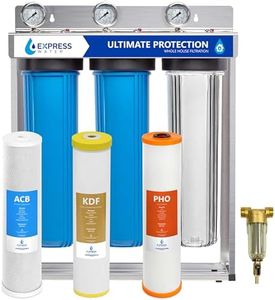
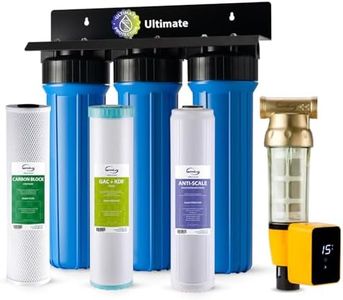
Express Water Whole House Water Filter System | Ultimate Protection | 3 Stage Water Purifier Whole Home, Heavy Metal + Anti-Scale Filters, High Reduction in Scale, Chlorine, PFAs, Lead, Arsenic & more
Most important from
122 reviews
The Express Water Whole House Water Filter System offers a strong three-stage filtration process that includes a reusable 50-micron spin down sediment filter, which helps protect the main filters and maintain water flow. It uses activated carbon, heavy metal, and anti-scale filters to reduce common contaminants like chlorine, lead, arsenic, PFAs, and scale. With a maximum flow rate of 17 gallons per minute, it can supply clean water throughout your entire home without a noticeable drop in pressure. The filters last about 6 months or up to 100,000 gallons, which is fairly standard for systems in this category.
Installation requires some space (around 29 x 8.5 x 30 inches) and basic plumbing knowledge since it's designed as a whole house system with 1-inch connections. The system includes handy features like pressure gauges and a stainless steel stand, making maintenance easier. It doesn't connect to smart home devices, so monitoring must be manual. This filter is ideal if you want comprehensive protection against heavy metals and scale, especially if your water has noticeable contaminants or you want to extend the life of your plumbing and appliances.
One consideration is that the system is quite bulky and somewhat heavy at 66 pounds, which may be challenging for small spaces or DIY installation. While it effectively removes many impurities, it does not specify removal of all possible contaminants like bacteria or viruses, so additional treatment might be needed depending on your water source. This system provides solid filtration and durability for whole home use but requires adequate space and some setup effort.
Most important from
122 reviews
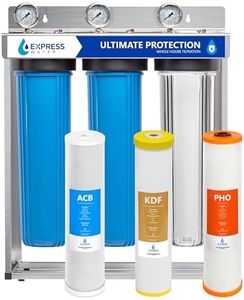
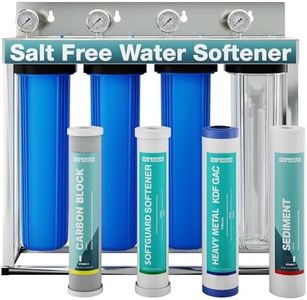
Express Water 3-Stage Whole House Water Filter System, Reduces Heavy Metals, Scale, Chloramine, Chlorine, PFAs, Lead & Arsenic, Free-standing Stainless Steel Frame & 3 Pressure Gauges
Most important from
412 reviews
The Whole House Water Filter System by Express Water provides comprehensive protection with its 3-stage filtration process, ensuring crystal clear water from every faucet. This system excels in contaminant removal, targeting heavy metals like lead, arsenic, mercury, and chromium, along with chlorine and chloramine. Additionally, it offers anti-scale protection, which is beneficial for maintaining the longevity of pipes and appliances by preventing scale and dirt build-up.
The high flow rate of up to 17 gallons per minute makes this system suitable for larger households, ensuring no drop in water pressure during usage. The filtration system requires regular maintenance, with filters needing replacement every 6-12 months or after 100K gallons of water filtration, depending on usage and water quality. This could be seen as a drawback for users looking for a more low-maintenance solution. Another potential downside is that it does not reduce Total Dissolved Solids (TDS), so if TDS reduction is important, a reverse osmosis system may be needed.
The installation is freestanding, which offers flexibility but may require considerable space due to its dimensions (29 x 8.5 x 30 inches) and weight (63 pounds). Installation and maintenance are relatively straightforward with features like pressure release buttons and pressure gauges for ease of filter changes and monitoring. This water filter system is robust and designed for households looking to tackle a wide range of contaminants while ensuring high water quality and flow rate.
Most important from
412 reviews
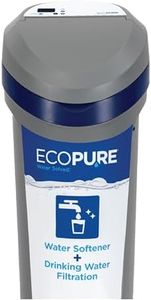
EcoPure EPH130 Whole House Water Softener & Filtration System – 2-in-1 Design for Soft & Better-Tasting Drinking Water, AutoSense AI Technology
The EcoPure EPH130 is a 2-in-1 whole house water system that softens water while also filtering it to improve taste and clarity. This combination is useful if you want both softer water to reduce scale buildup and better-tasting drinking water from the tap. It uses ion exchange for softening and includes integrated filtration media, all packed into a compact cabinet, saving space compared to traditional multi-tank setups.
The system is designed for larger families of up to 5 people, supporting multiple bathrooms without performance drops. It also features AutoSense AI technology, which adjusts salt usage based on your water consumption, potentially reducing salt use by up to 40%. This can help lower maintenance costs and is a more environmentally friendly approach. Installation should be straightforward with the included bypass valve, although it is not compatible with smart home controls, so remote monitoring or control is not available.
The unit is sizable but compact enough for most utility rooms. It carries a 1-year parts and labor warranty, which is somewhat standard but may feel short for an investment this size. If you want a programmable, efficient system that handles both softening and filtration in one unit, the EcoPure EPH130 fits well. However, if smart home features or longer warranties are important to you, you might want to explore other options.
Buying Guide for the Best House Water Filter System
Choosing the right house water filter system is crucial for ensuring that you and your family have access to clean and safe drinking water. The right system can remove contaminants, improve taste, and provide peace of mind. To make an informed decision, it's important to understand the key specifications and how they align with your specific needs. Here are the key specs to consider when selecting a house water filter system.FAQ
Most Popular Categories Right Now


