We Use CookiesWe use cookies to enhance the security, performance, functionality and for analytical and promotional activities. By continuing to browse this site you are agreeing to our privacy policy

10 Best Noaa Weather Alert Radios 2026 in the United States
How do we rank products for you?

Our technology thoroughly searches through the online shopping world, reviewing hundreds of sites. We then process and analyze this information, updating in real-time to bring you the latest top-rated products. This way, you always get the best and most current options available.

headphones-stars

Our Top Picks

#1

Winner

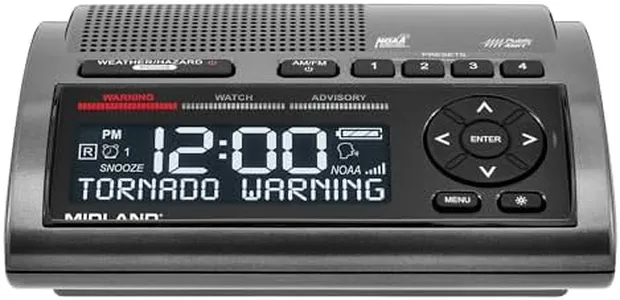
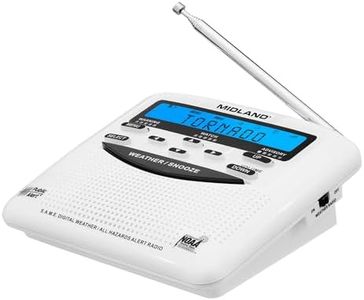
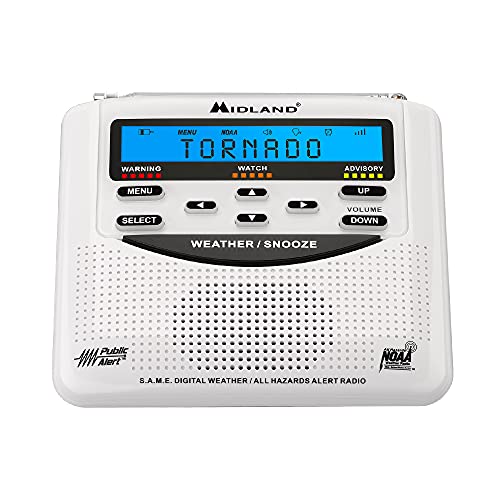
Midland - WR120B - NOAA Emergency Weather Alert Radio - Localized Programming, Trilingual Display, 60+ Emergency Alerts, Alarm, Selectable Alert Tone

Rating
10.0
Chosen by1,327
Alert Type
SAME Technology
Power Options

Most important from
23900 reviews

Alert Type
The radio covers around 80 different types of alerts, including civil emergencies like Amber alerts and radiological alerts.
SAME Technology
The latest revision (WR120-DSP) offers a more convenient system, avoiding the need to enter county codes manually.
Power Options
Battery backup works well, with an electric cord long enough for most setups.
Reception Quality
Reception is unbelievable, even inside a thick-walled tornado shelter where cell phones get no signal.
Additional Features
Pressing a button for an immediate weather forecast is a sweet feature.

The Midland WR120B NOAA Emergency Radio is designed to keep you informed about weather hazards and emergencies, making it a useful tool for anyone living in areas prone to severe weather. It supports S.A.M.E technology, which allows you to set alerts specific to your local area, ensuring you receive relevant warnings. This radio can notify you of over 60 types of emergencies, including tornadoes, hurricanes, and floods, making it a comprehensive alert system.

It's easy to set up: you just select your country, state, and county without needing to look up codes. You can also program it to receive alerts from up to 25 different counties, which is great if you travel frequently or live near a county border. The alert system is robust with color-coded indicators and a selectable alert tone, meaning you can adjust the volume based on your needs. It meets the public alert requirements with a 90 dB siren, voice alerts, and flashing LED warnings, which are very effective in grabbing attention.

In terms of power, it can run on both electric power and AA batteries, ensuring it works during power outages. However, it uses six AA batteries, which might be a bit much for some users over time. The radio is portable and comes with a built-in clock and alarm, adding extra convenience. One drawback might be its reception quality, which can vary depending on your location. Some users might also find the interface a bit dated, but it serves its purpose effectively. The Midland WR120B is a solid choice for anyone needing a reliable weather alert radio with localized programming and a variety of useful features.

Rating
10.0
Chosen by1,327
Alert Type
SAME Technology
Power Options

Most important from
23900 reviews

Alert Type
The radio covers around 80 different types of alerts, including civil emergencies like Amber alerts and radiological alerts.
SAME Technology
The latest revision (WR120-DSP) offers a more convenient system, avoiding the need to enter county codes manually.
Power Options
Battery backup works well, with an electric cord long enough for most setups.
Reception Quality
Reception is unbelievable, even inside a thick-walled tornado shelter where cell phones get no signal.
Additional Features
Pressing a button for an immediate weather forecast is a sweet feature.
#2

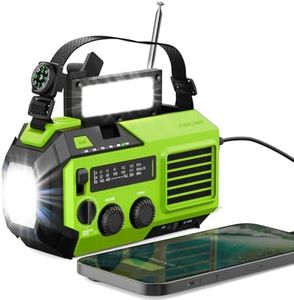
FosPower Emergency Weather Radio (Model A6) NOAA/AM/FM with 19240mWh Portable Power Bank, USB/Solar/Hand Crank Charging, Battery Operated, SOS Alarm & Flashlight for Indoor/Outdoor Emergency - Green

Rating
8.2
Reception Quality
Power Options
Portability

Most important from
285 reviews

Reception Quality
Delivers reliable reception for both local commercial stations and NOAA weather alerts even during severe weather conditions.
Power Options
The hand crank is sturdy and the solar panel effectively alleviates concerns about battery life during extended use.
Portability
Compact and well-built design makes it highly portable for outdoor use or emergency kits.
Additional Features
Setup is intuitive and straightforward, requiring no tools to install batteries or deploy the antenna.

The FosPower Emergency Weather Radio (Model A6) is a versatile and reliable choice for anyone needing dependable weather alerts and emergency information. It receives NOAA weather alerts using SAME technology, which helps deliver localized warnings so you're informed about your area specifically. Its reception quality covers NOAA channels along with AM/FM stations, giving you access to broad audio updates.

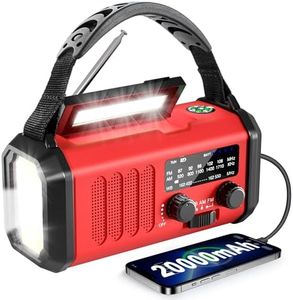
One of this radio’s standout features is its multiple power options. It includes a 5200mAh power bank that can charge your devices, plus solar and hand crank charging methods, so you’re not left powerless during outages or when away from traditional power sources. You can also use regular batteries or recharge via USB-C for convenience. This makes it highly portable and great for outdoor activities or emergency kits.

Additionally, it offers useful extras like an SOS alarm with a loud siren and flashing light, plus two light sources—a flashlight and a reading light—which are handy in blackout situations. The compact size and lightweight design make it easy to carry and store. The radio requires AA batteries as an option, so keeping spares handy is advisable. While solar and hand crank charging work well, they can be slower compared to plugging in. Also, AM/FM reception may vary depending on location and antenna placement. This radio is well-suited for those seeking a reliable and multi-powered NOAA weather alert device with added emergency tools, making it particularly good for campers, travelers, and anyone wanting peace of mind during power outages or severe weather events.

Rating
8.2
Reception Quality
Power Options
Portability

Most important from
285 reviews

Reception Quality
Delivers reliable reception for both local commercial stations and NOAA weather alerts even during severe weather conditions.
Power Options
The hand crank is sturdy and the solar panel effectively alleviates concerns about battery life during extended use.
Portability
Compact and well-built design makes it highly portable for outdoor use or emergency kits.
Additional Features
Setup is intuitive and straightforward, requiring no tools to install batteries or deploy the antenna.
#3

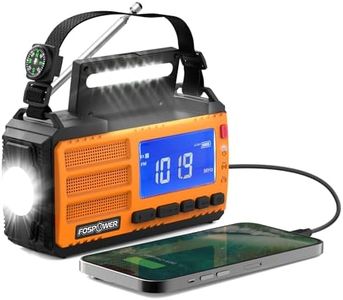
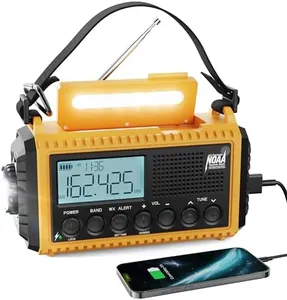
FosPower NOAA Emergency Weather Radio A3 14800mWh Portable Power Bank, AM/FM, USB/Solar/Hand Crank Charging, SOS Alarm & Flashlight for Indoor/Outdoor Emergency - Orange

Rating
8.2
Reception Quality
Power Options
Portability

Most important from
2145 reviews

Reception Quality
Provides clear and reliable reception for both NOAA and local commercial radio stations, performing well indoors and during storms.
Power Options
The hand crank and solar panel power options effectively eliminate worries about battery life during emergencies.
Portability
Compact and well-built design makes it easy to carry for outdoor activities or keep handy during power outages.
Additional Features
Setup is incredibly straightforward with no tools required, making it ready to use right out of the box.

The FosPower Emergency Weather Radio (Model A3) is a solid choice for anyone wanting a reliable NOAA weather alert radio that works well both indoors and outdoors. It picks up NOAA emergency broadcasts along with AM and FM radio stations, which covers all basic alert types you’d need for weather updates and emergency info. While it doesn’t specifically mention SAME technology, its ability to access NOAA channels ensures you’ll get up-to-date local alerts.

One of its standout features is the variety of power options: you can charge it via a hand crank, solar panel, or USB-C cable, and it also has a built-in 4000mAh power bank that can keep your phone or other USB devices charged during power outages or outdoor trips. This makes it highly portable and dependable when you’re off-grid or facing an emergency. The radio weighs just over a pound and is compact, making it easy to carry or store in an emergency kit. It also offers useful additional features like an SOS alarm with flashing light to call for help, a flashlight, and a reading light with a motion sensor to save power. These extras add practical value, especially for outdoor use or power outages.

A consideration is that the radio requires a single AA battery to operate alongside the rechargeable options, meaning you’ll need to keep spare batteries on hand. Additionally, while the reception quality is reliable for NOAA and standard AM/FM stations, it doesn’t have advanced tuning technology that some pricier models offer. For those seeking a straightforward, versatile emergency weather radio with multiple power sources and handy extras, this FosPower model is a thoughtful pick that balances usefulness with portability.

Rating
8.2
Reception Quality
Power Options
Portability

Most important from
2145 reviews

Reception Quality
Provides clear and reliable reception for both NOAA and local commercial radio stations, performing well indoors and during storms.
Power Options
The hand crank and solar panel power options effectively eliminate worries about battery life during emergencies.
Portability
Compact and well-built design makes it easy to carry for outdoor activities or keep handy during power outages.
Additional Features
Setup is incredibly straightforward with no tools required, making it ready to use right out of the box.

Buying Guide for the Best Noaa Weather Alert Radios

When choosing a NOAA weather alert radio, it's important to consider several key specifications to ensure you get a device that meets your needs. These radios are essential for staying informed about severe weather conditions and other emergencies, so selecting the right one can make a significant difference in your safety and preparedness. Here are the key specs to consider and how to navigate them to find the best fit for you.
Alert TypeThe alert type refers to how the radio notifies you of an emergency. This can include audible alarms, visual alerts, and vibration alerts. Audible alarms are loud sounds that can wake you up or grab your attention, which is crucial during nighttime or when you're not actively monitoring the radio. Visual alerts, such as flashing lights, are useful in noisy environments or for individuals with hearing impairments. Vibration alerts are beneficial for those who may not hear the alarm, such as people with hearing loss or in very loud settings. Consider your environment and personal needs when choosing the alert type.
SAME TechnologySAME (Specific Area Message Encoding) technology allows the radio to receive alerts for specific geographic areas. This is important because it ensures you only receive alerts relevant to your location, reducing unnecessary alarms. Radios with SAME technology can be programmed with your county or region codes, so you get precise alerts. If you live in an area with frequent weather changes or multiple counties nearby, a radio with SAME technology is highly recommended.
Power OptionsPower options refer to how the radio is powered, which can include batteries, AC adapters, hand cranks, and solar panels. Having multiple power options is crucial for ensuring the radio works during power outages. Battery-powered radios are portable and can be used anywhere, but you need to keep spare batteries on hand. AC adapters are convenient for home use but rely on electricity. Hand cranks and solar panels provide alternative power sources during extended outages. Consider your typical usage scenarios and choose a radio with power options that ensure reliability in emergencies.
PortabilityPortability refers to the ease with which you can carry and use the radio in different locations. Portable radios are lightweight and compact, making them ideal for travel, outdoor activities, and emergency kits. Larger, stationary models may offer more features but are less convenient to move around. If you need a radio for on-the-go use or to include in an emergency preparedness kit, prioritize portability. For home use, a larger model with more features might be more suitable.
Reception QualityReception quality determines how well the radio can receive NOAA weather broadcasts. Good reception is crucial for timely and accurate alerts. Factors affecting reception include the radio's antenna, location, and surrounding obstructions. Radios with extendable antennas or external antenna ports generally offer better reception. If you live in a rural area or a place with poor signal strength, look for a radio known for strong reception capabilities.
Additional FeaturesAdditional features can enhance the functionality and convenience of the radio. These may include built-in flashlights, USB charging ports, AM/FM radio, and Bluetooth connectivity. Built-in flashlights are useful during power outages, while USB ports can charge other devices. AM/FM radio provides entertainment and additional information sources. Bluetooth connectivity allows you to use the radio as a speaker for your phone. Consider which additional features would be most beneficial for your needs and choose a radio that offers those.

FAQ

Most Popular Categories Right Now